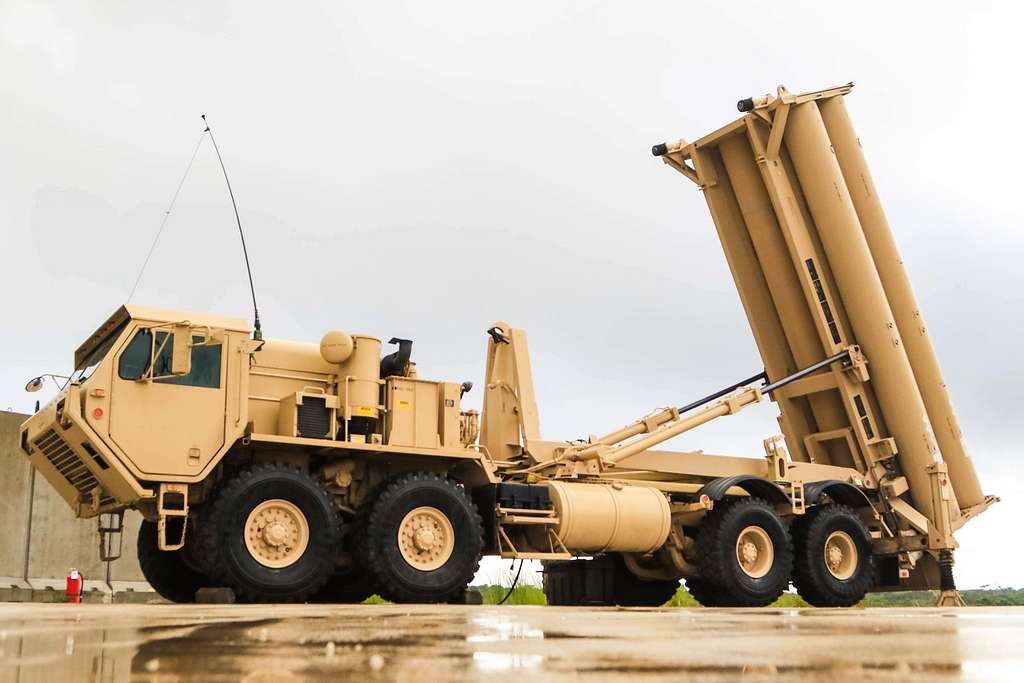
Lockheed Martin Plans to Raise Missile-Defense Interceptor Output From 96 to 400
400 interceptors per year is the target Lockheed Martin has set for its Terminal High Altitude Area Defense production system, up from 96 annually. Reaching that number will require more than expanding final assembly: the company is adding U.S. factory space, preparing workers for robotics and digital manufacturing, and coordinating a network of approximately 750 domestic suppliers.

The expansion is supported by a seven-year U.S. government procurement agreement valued at up to $35 billion. The longer commitment is critical because it gives Lockheed Martin and its suppliers a more predictable demand signal before they commit money to buildings, tooling, hiring and qualification. The Pentagon is also working directly with component suppliers as part of the broader effort to increase interceptor capacity.
Factory space is only one part of the ramp
Lockheed Martin has started construction on an 87,000-square-foot munitions production center in Troy, Alabama. The building is expected to nearly double that site’s capacity and support both current THAAD manufacturing and development of the Next Generation Interceptor.
A missile assembly hall has also opened in Courtland, Alabama, while a Munitions Acceleration Center in Camden, Arkansas, is training personnel to use robotics and digital manufacturing tools. Across the program, Lockheed Martin reports more than 340,000 square feet of THAAD operations at nine U.S. locations.
Those investments show why moving from 96 to 400 cannot be treated as a simple line-speed increase. Interceptor production depends on specialized structures, propulsion equipment, thermal-protection hardware, electronics and other components arriving in the right sequence. More floor space at the prime contractor provides limited value if one qualified supplier cannot raise its own output at the same rate.
Northrop Grumman, for example, supplies THAAD structural and thermal-protection components and is being asked to expand production alongside Lockheed Martin. Its work includes the load-bearing shell core, aft bulkhead assemblies and heat-shield assemblies. That parallel supplier investment is an important part of the production plan because final integration cannot outrun the slowest critical component stream.
Seven years changes the investment calculation
Defense manufacturers have historically faced a difficult capacity decision: construct facilities for urgent demand without knowing whether annual orders will remain high enough to pay for them. A multiyear commitment reduces that uncertainty. It can support larger equipment orders, workforce development and longer arrangements with lower-tier suppliers that would otherwise hesitate to expand for a short production surge.
The agreement’s value of up to $35 billion nevertheless represents a ceiling associated with the procurement framework, not evidence that every dollar has already been spent or that 400 completed interceptors are immediately available. Production capacity must be built, staffed, qualified and stabilized before the annual target becomes repeatable output.
Lockheed Martin says it is financing capacity expansion through its cash flow and balance sheet. The THAAD work sits within a broader $9 billion plan to modernize and expand munitions facilities through 2030. Chief Financial Officer Evan Scott has cautioned that early expansion costs could temporarily pressure the company’s margins, illustrating the near-term cost of installing capacity before higher delivery volumes arrive.
For taxpayers and procurement agencies, the tradeoff is straightforward. Longer commitments can improve manufacturing continuity and encourage suppliers to invest, but they also make production planning dependent on sustained public funding and disciplined contract execution. The government must obtain enough durable capacity to justify that commitment without paying indefinitely for facilities that could become underused if requirements change.
Other missile programs compete for the same industrial resources
Lockheed Martin is simultaneously working to triple production of its Patriot Advanced Capability-3 Missile Segment Enhancement interceptor and accelerate Precision Strike Missile deliveries. Those programs are secondary to the THAAD expansion, but they matter because they can draw from overlapping pools of skilled labor, specialized machinery, factory capital and qualified suppliers.
Robotics and digital manufacturing can improve repeatability and help workers handle higher throughput, but automation does not eliminate qualification work or supplier dependencies. New processes still have to produce hardware that meets program requirements consistently. A separate agreement valued at up to $2.8 billion also supports continued THAAD technical development, meaning the company must manage product development while scaling the production system.
Lockheed Martin’s reported 17 successful intercepts in 17 flight-test attempts describes the system’s test record, not proof that the manufacturing ramp will proceed without friction. The decisive industrial milestone will be whether nine facilities and roughly 750 U.S. suppliers can increase qualified output together. The 400-per-year goal ultimately depends less on any single new building than on keeping that entire production network synchronized.
By David Whitaker — Associate editor for AMI’s aerospace and drone systems desk, translating flight systems, aircraft programs, spaceflight, and UAV developments into accessible technical stories.