Boeing F-15 Framework Sets $131.2 Billion Ceiling, but Orders Remain Undetermined
$131.2 billion is the maximum value of a new Boeing F-15 contracting framework, not the price of a completed aircraft order. The United States signed the sole-source, indefinite-delivery/indefinite-quantity agreement to cover F-15 production, modernization, systems integration and long-term support, according to the official Aug. 24 contract notice.

The distinction is substantial for taxpayers and the aerospace industrial base. The exact ceiling is $131.23 billion, but only $343,740 in fiscal 2026 research, development, test and evaluation funding was obligated when the framework was awarded. Aircraft quantities, upgrade packages, delivery schedules and most spending will be established through subsequent orders rather than by the framework itself.
A contracting channel, not a $131 billion purchase
The agreement gives the Air Force a common vehicle for ordering several kinds of F-15 work. Its scope includes aircraft production, systems integration, modernization, upgrades, retrofits, sustainment and the creation of government depot-maintenance capability. That breadth helps explain why the ceiling is far larger than a conventional order for a specified batch of fighters.
Orders can initially be placed through Aug. 24, 2031, with an option to extend the ordering window through Aug. 24, 2036. Work ordered under the contract is expected to be completed by August 2037. This creates a long-duration procurement channel, but it does not guarantee that Boeing will receive orders approaching the ceiling during that period.
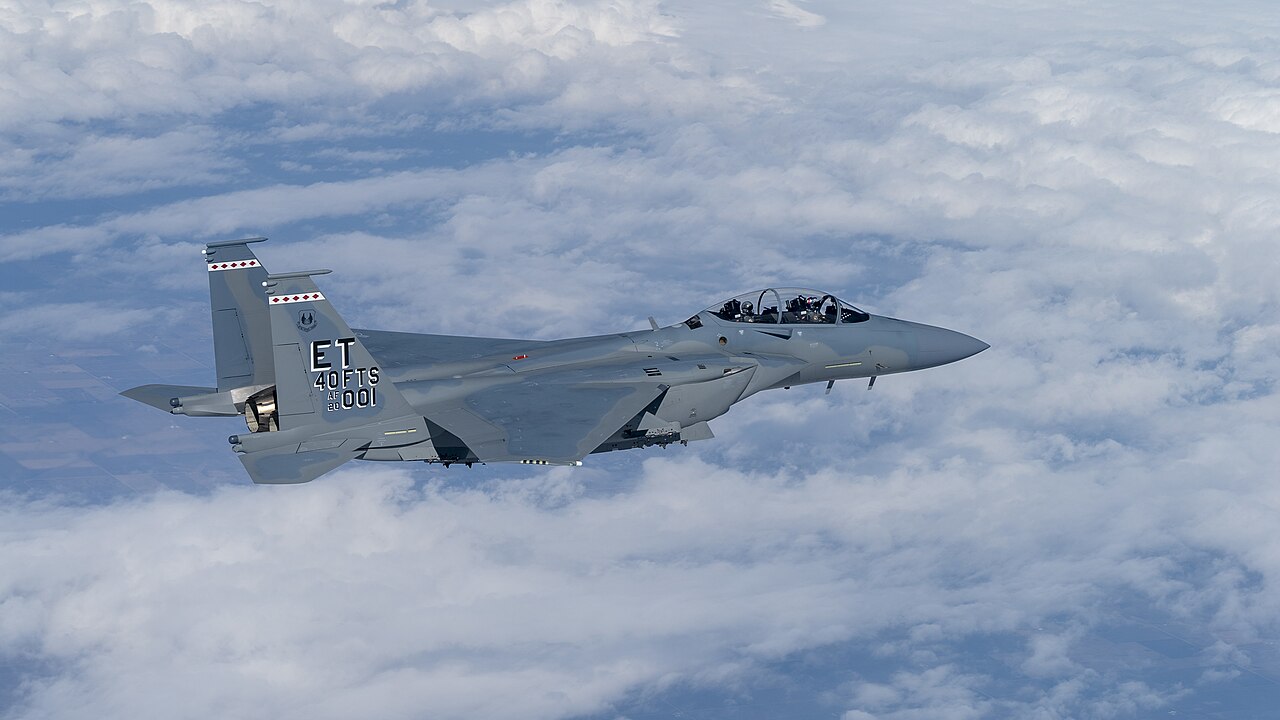
For Boeing and its suppliers, the framework removes the need to establish an entirely new overarching contract every time an eligible customer requires covered work. It can accommodate new F-15EX Eagle II aircraft as well as modernization and support for F-15s already in service. That flexibility matters for a fighter family whose customers operate different configurations and require different combinations of production, integration, upgrades and maintenance support.
What the framework does not provide is a firm manufacturing demand signal by itself. Boeing cannot treat the ceiling as a confirmed production backlog, and suppliers cannot assume it represents funded demand for engines, structures, avionics or other components. Those signals become meaningful only when customers place orders with quantities, schedules and funding attached.
Production capacity remains a separate constraint
The Air Force could use the agreement to buy F-15EX aircraft beyond its previously planned fleet of about 100 fighters. Additional aircraft are intended to replace aging F-15E Strike Eagles and preserve strike capacity, but the framework alone does not specify how many additional jets will be purchased.
A larger F-15EX fleet would also require more than contractual authority. The Air Force has separately identified production delays, quality problems, component obsolescence and material shortages in the fighter-engine supply base. It projects peak demand of more than 180 engines annually by fiscal 2034 across relevant fighter programs. A broad aircraft framework can simplify ordering, but it cannot by itself produce specialized castings, forgings, titanium and nickel materials, or qualified manufacturing capacity.
The support provisions are therefore as important as the new-aircraft language. Establishing depot-maintenance capability and ordering sustainment work can reduce dependence on one production line for every modification or repair. It also recognizes that fleet availability depends on parts, trained maintenance organizations and repair throughput over decades not simply on how many aircraft leave Boeing’s St. Louis facility.
Named countries are not confirmed buyers
The framework permits foreign military sales involving Japan, Israel, Saudi Arabia, South Korea, Singapore, Indonesia and Poland. The first five are current F-15 operators, while Indonesia and Poland have been discussed as prospective customers. Their inclusion establishes access to the contracting mechanism; it does not show that every listed country has purchased aircraft.
Indonesia had discussed as many as 36 aircraft under the F-15IDN designation, but no government-to-government Letter of Offer and Acceptance for that proposal is approved. Poland has also been associated with a possible 36-aircraft purchase, yet it has made no official commitment, and no State Department approval of a Polish request has been announced. Neither prospective sale should be counted as completed demand.
Boeing already has an F-15EX production contract for Israel and continues to market the aircraft to other operators, including Saudi Arabia. Future U.S. and international orders could extend production and support activity well into the 2030s, giving the Air Force and allied customers a common route for buying aircraft and maintaining existing fleets.
For public-cost accountability, however, the operative figures will be found in those later orders not in the $131.23 billion headline ceiling. Until quantities and funding arrive, the contract establishes room for a very large F-15 program without committing the government or eligible international customers to fill it.
| More aerospace and engineering stories, right in your MSN feed. Follow AMI on MSN |
By David Whitaker — Associate editor for AMI’s aerospace and drone systems desk, translating flight systems, aircraft programs, spaceflight, and UAV developments into accessible technical stories.