Elroy Air Cargo Drone Flight Gives FAA Integration Data, Not Certification
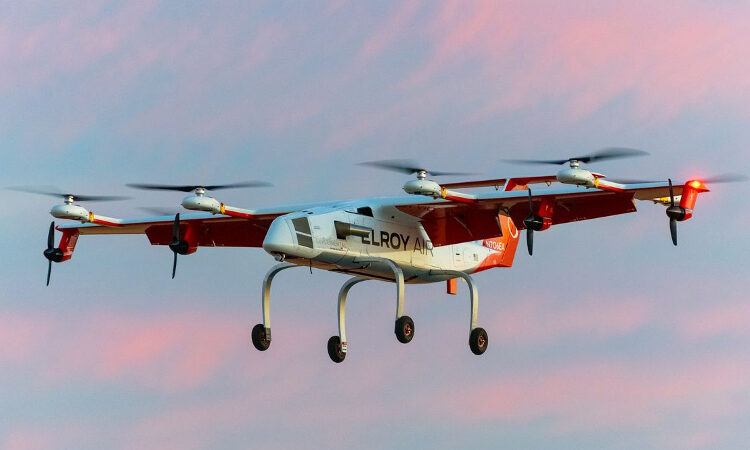
Elroy Air’s Chaparral has completed the first remotely piloted aircraft test flight under the Federal Aviation Administration’s electric vertical-takeoff integration program. The Louisiana demonstration gives regulators a real operation from which to examine remote control, hybrid-electric propulsion and cargo-aircraft integration but it does not certify the aircraft or establish readiness for routine deliveries.
The FAA announced the August 31, 2026 demonstration after Elroy Air and the Louisiana Department of Transportation and Development conducted it at Houma-Terrebonne Airport. Chaparral is a highly automated hybrid-electric vertical-takeoff-and-landing aircraft designed to move heavy cargo between sites that may lack conventional airport infrastructure.
What the flight actually established
The confirmed milestone is regulatory and operational rather than commercial. It places a remotely piloted cargo aircraft inside the FAA’s eVTOL Integration Pilot Program, creating an opportunity for the agency to observe how an uncrewed aircraft, a ground-based pilot and existing aviation procedures interact in a real airport environment.
That distinction matters because integrating an uncrewed cargo aircraft requires more than proving that it can take off, fly and land. Regulators must understand how the complete operating system handles communications, navigation, surveillance, weather, nearby traffic and abnormal conditions. The pilot may be on the ground, but the operation still needs dependable command authority, clear responsibility and procedures that fit into the National Airspace System.
FAA Administrator Bryan Bedford said the demonstration provides data intended to help move such concepts “from trial to deployment.” The agency plans to use lessons from the program to identify gaps, improve procedures and support broader advanced-air-mobility integration. Additional flights by Louisiana and other participating projects are planned through the remainder of 2026.
The unanswered control questions
The FAA announcement does not disclose the flight duration, route, weather conditions, communications architecture or contingency scenarios exercised in Louisiana. Those omissions limit what can be concluded about the maturity of the remote-control system.
Future testing will need to show how the aircraft and its operators respond when conditions depart from the planned mission. Relevant questions include how command and control remain reliable, how the aircraft reacts to changing weather or traffic, what happens during a degraded communication link, and how operators coordinate with air traffic services and other airspace users. These are certification and operating-rule questions, not simply software features.
Chaparral is also described as highly automated, while the FAA characterizes the milestone as remotely piloted. Automation and remote piloting are related but not interchangeable. A remotely located pilot can retain operational authority while automated systems manage parts of the flight. Before routine service, regulators will need a precise account of which functions are automated, when human intervention is expected and how responsibility is maintained across normal and contingency conditions.
Hybrid propulsion adds another certification layer
Chaparral’s hybrid-electric architecture introduces questions beyond those facing a conventional remotely piloted aircraft. Certification work must address batteries, electric motors, power-management equipment and the interactions between electric and conventional propulsion components. The complete system must manage multiple energy sources without creating ambiguous failure responses or excessive operator workload.
The Louisiana flight did not establish fuel savings, emissions reductions or lower operating costs. Those remain potential advantages rather than measured results from this demonstration. The FAA also did not publish payload, range, speed or propulsion-architecture details for the aircraft used, so the event cannot substantiate broader performance claims.
Elroy Air is pursuing a separate development track with the U.S. Army, which awarded the company a $46.1 million contract in August for testing and development of Chaparral in military logistics applications. That work may broaden the aircraft’s technical test record, but military experimentation does not substitute for FAA certification or civil operating approval.
The next useful data point
The eVTOL Integration Pilot Program includes eight projects spanning 26 states, giving the FAA opportunities to compare aircraft and operating concepts under different conditions. For Chaparral, the most consequential future disclosures would be the operational scenarios tested, the reliability of its control and communications functions, the contingencies demonstrated and the certification path selected for aircraft and operations.
The Louisiana flight opens that examination; it does not close it. The program’s value will depend on whether subsequent demonstrations turn a first remotely piloted flight into repeatable data that the FAA can use for standards, procedures and an eventual approval decision.
| More aerospace and engineering stories, right in your MSN feed. Follow AMI on MSN |
By Stephen Wallace — Editor for AMI’s aerospace integration and unmanned mobility coverage, focused on drone manufacturing, VTOL systems, autonomous networks, and air-ground mobility links.