Port Authority Activates Rescue-Vehicle Tracking After Fatal LaGuardia Collision
A rescue truck carrying a tracking transponder becomes more than a radio call or a vehicle that controllers must see from the tower. Its identity and position appear on air-traffic-control displays, allowing controllers and the surveillance systems supporting them to associate a named vehicle with movement near aircraft.

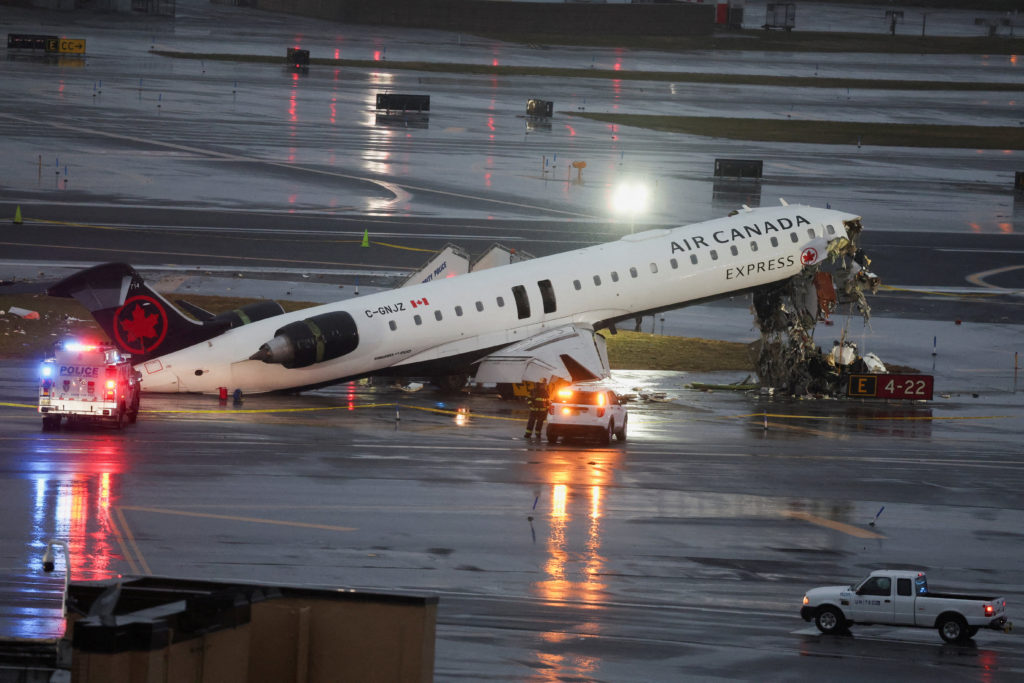
The Port Authority of New York and New Jersey has now activated that capability on rescue and firefighting vehicles at LaGuardia, John F. Kennedy International, Newark Liberty International and Teterboro airports. The change followed a March collision at LaGuardia between an Air Canada Express jet and a fire truck, which killed two pilots. Investigators identified the truck’s lack of a transponder as a key factor because the tower warning system did not correlate the aircraft’s path with the vehicle identified as “Truck 1.”
That finding documents a surveillance gap, but it does not establish that a transponder alone would certainly have prevented the collision. Airport-surface safety depends on overlapping layers: controller instructions, driver compliance, radio communication, visual awareness, procedures and electronic surveillance. A vehicle transmitter strengthens the electronic layer by making an equipped truck a distinct, continuously identifiable object in the traffic picture.
Why vehicle identity matters
Position information is only part of the benefit. A distinct electronic identity helps a controller determine which truck is moving, rather than treating a radar return or visually observed vehicle as an uncertain object. That distinction matters when emergency equipment needs rapid access to controlled pavement while aircraft are taxiing, landing or crossing runways.
The system also gives warning technology usable data for comparing vehicle and aircraft paths. At LaGuardia, investigators found that the warning system did not match Truck 1’s movement with the jet’s path because the truck lacked the relevant transmitter. The Port Authority’s rollout addresses that specific information deficit by making equipped rescue vehicles electronically visible.
The benefit can become more important when direct observation is difficult. Richmond International Airport, which is conducting a separate expansion of the same general technology, has described vehicle transmitters as particularly useful in rain, fog and other low-visibility conditions. Richmond already had devices on 38 airport-owned vehicles and received a $205,200 Federal Aviation Administration grant for about 60 more, according to the airport’s local grant announcement and reporting. That comparison shows the technology is part of a broader federal effort rather than a New York-only response.
An active system, but an unfinished deployment
The Port Authority says tracking is active at all four airports, but that does not mean every vehicle planned for the program is already equipped. The current number of installed units has not been specified. Approximately 200 vehicles at each of the three major hubs LaGuardia, JFK and Newark are expected to receive the equipment by late 2028.
That distinction is operationally important. A controller’s electronic picture is most complete when the vehicles that routinely enter movement areas are equipped and correctly identified. Until the broader installation is finished, the safety benefit will depend on which vehicles have transmitters and where they operate. Teterboro is included among the airports with active devices, although the approximately 200-vehicle figure applies to the three major hubs.
The FAA had urged airports to adopt vehicle-tracking technology for years before the LaGuardia collision and is renewing that recommendation. The agency’s continued push reflects a basic systems-integration issue: aircraft surveillance is less complete on the ground when authorized vehicles sharing controlled pavement do not participate in the same position-and-identity picture.
A separate probe found that two air-traffic controllers left their posts an hour early shortly before the collision. That finding is part of the operational context, but the available information does not establish how it relates causally to the crash or to the missing vehicle signal. The transponder program addresses the documented electronic-visibility gap, not every human or procedural question raised by the investigation.
For passengers, the upgrade should be largely invisible: it does not add a checkpoint, traveler requirement or announced schedule change. Its significance is behind the scenes at airports that collectively handle about 140 million travelers annually. The immediate improvement is active tracking for rescue fleets; the remaining systems challenge is completing installation across hundreds of vehicles at each major hub by late 2028.
| More aerospace and engineering stories, right in your MSN feed. Follow AMI on MSN |
By Thomas Caldwell — AMI’s senior editor for mechanical and mobility engineering, covering vehicle electronics, systems integration, electrification, chassis systems, propulsion, and safety policy.