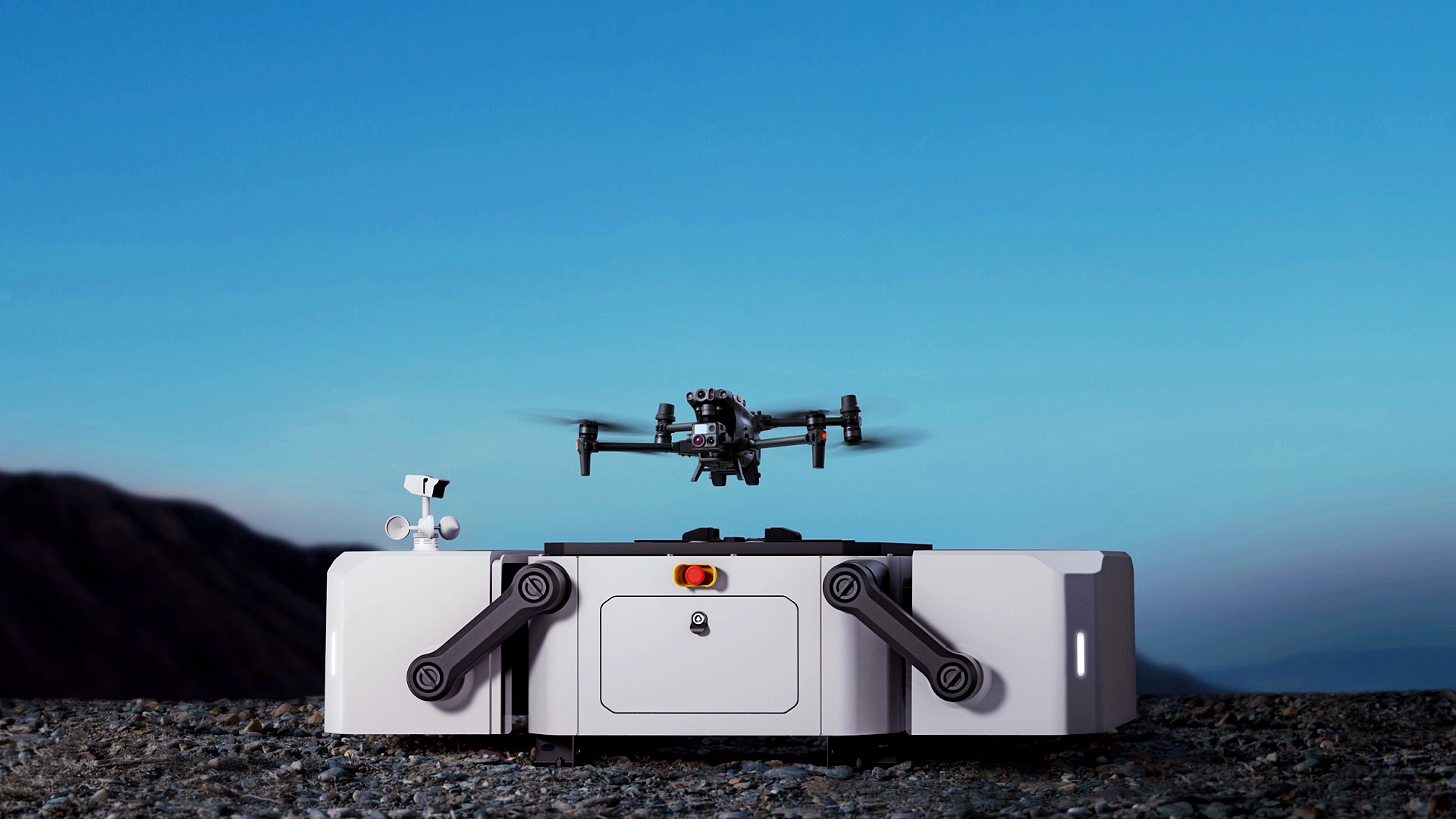
Jaunt Chooses Passive-Cooled Drone Batteries to Reduce Cooling Mass and Complexity
Removing pumps, coolant lines and other liquid-cooling hardware can simplify an aircraft battery installation, but it also shifts more responsibility onto cell layout, airflow and pack structure. Jaunt Air Mobility is pursuing that tradeoff for its JC-250 and JX-250 hybrid-electric vertical-takeoff drones, selecting Calogy Solutions to design a battery system around passive air cooling.
AIRO Group Holdings announced the selection on August 3, 2026. Calogy’s proprietary Uni.T architecture is intended to deliver thermal performance comparable to conventional liquid cooling without the associated mass and complexity. The companies also say the battery will be designed to operate across varied environmental conditions and help limit thermal-runaway propagation. Those remain design objectives: no battery capacity, cooling-test results, aircraft performance figures or certification evidence were disclosed.
Why passive cooling changes the aircraft integration problem
A liquid-cooled battery generally requires more than a heat exchanger. Pumps, lines, fittings, coolant and control hardware add components that must be packaged, powered, monitored and maintained. A passive air-cooled system can potentially remove some of that equipment, purchasing lower system complexity and mass for an aircraft where every subsystem competes for payload and endurance.
That does not make passive cooling inherently superior. The engineering question is whether the pack can maintain acceptable cell temperatures and temperature uniformity throughout the JC-250 and JX-250 operating envelope. Vertical takeoff, changing power demand and exposure to different ambient conditions can create thermal loads that must be addressed at the complete installation level, not merely at an individual cell.
The battery will form part of Jaunt’s hybrid-electric propulsion architecture. Jaunt says that architecture is intended to support power management, aircraft performance, endurance and operational flexibility. Because the release provides no battery capacity or aircraft performance data, it is not yet possible to quantify how much mass the passive design could save or how that saving might affect range, payload or endurance.
Thermal-runaway control requires more than normal cooling
Managing routine operating heat and limiting thermal-runaway propagation are related but distinct requirements. Normal thermal management seeks to keep cells within an acceptable temperature range. Propagation protection addresses what happens if a cell enters an uncontrolled heat-producing failure and threatens neighboring cells, modules, structures or systems.
A joint FAA-European Union Aviation Safety Agency framework illustrates the depth of that problem. The authorities’ propulsion-battery thermal-runaway document describes layered protection spanning prevention, cell-to-cell propagation evaluation and containment at module or pack level. It also says containment must be demonstrated through full-scale testing, while modeling can support the identification of critical cases.
That framework is not evidence that Jaunt’s battery has met any certification requirement. It shows why Calogy’s propagation claim eventually needs pack-level substantiation covering temperature, pressure, heat-transfer duration, battery state of charge and effects on surrounding aircraft systems. Environmental aging and operational conditions also matter because a lightweight thermal architecture must continue performing after exposure to the aircraft’s intended service environment.
Calogy is based in Sherbrooke, Quebec, and specializes in battery engineering and thermal management for aerospace, advanced-air-mobility, industrial and defense applications. Jaunt is a core AIRO business focused on vertical-takeoff aircraft for defense and dual-use missions. AIRO is headquartered in McLean, Virginia, and also operates in Canada and Denmark, giving the program a direct North American manufacturing and integration context.
Testing is now the decisive milestone
Jaunt President Eric Côté said Calogy’s battery and thermal-management work aligns with the company’s goal of building a safe, reliable aircraft for demanding environments. He also said the program is moving toward flight testing and commercialization, but Jaunt supplied no date for either stage and disclosed no production schedule or contract value.
The selection therefore defines an engineering direction rather than proving readiness. The next meaningful evidence will be thermal data showing how the passive architecture handles representative power loads and environmental conditions, followed by propagation and containment testing at relevant scale. Until those results emerge, the clearest confirmed advantage is architectural: Jaunt is trying to avoid liquid-cooling hardware while assigning Calogy the harder task of demonstrating that a simpler, lighter system can still control heat and contain battery failures.
| More aerospace and engineering stories, right in your MSN feed. Follow AMI on MSN |
By Stephen Wallace — Editor for AMI’s aerospace integration and unmanned mobility coverage, focused on drone manufacturing, VTOL systems, autonomous networks, and air-ground mobility links.