Drone Attack Stops Russia’s Kirishi Refinery With Half Its Capacity Already Offline
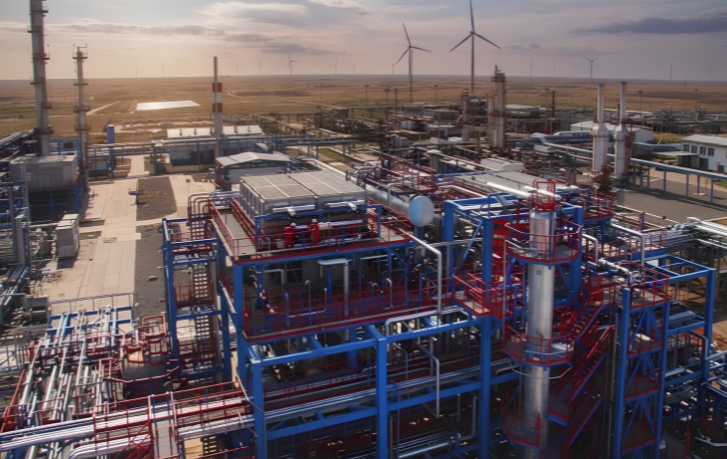
A drone attack reportedly stopped all crude processing at Russia’s Kirishinefteorgsintez refinery on August 30, even though the two units said to have been damaged represented only 48% of its capacity. The decisive constraint was elsewhere: the units covering the remaining 52% were already offline, leaving Russia’s second-largest refinery with no reported crude-processing capacity available.
The September 2 account, drawing on The Moscow Times, Reuters and the Financial Times, did not include confirmation from the refinery or Russian authorities. Two industry sources cited by Reuters identified the affected equipment as the AVT-6 and AT-1 primary processing units. That attribution matters because the shutdown and equipment-damage details remain industry-source reporting rather than an independently confirmed official finding.
Why damage to 48% reportedly stopped 100%
Capacity percentages can be misleading when they are treated as a simple measure of physical damage. A refinery’s operating capacity depends on which processing trains are available at the same time, not just how much equipment remains physically present.
AVT-6 can process a reported 22,860 tonnes of oil per day, or about 40% of Kirishi’s capacity. AT-1 adds 4,860 tonnes per day, or another 8%. The refinery’s other primary units, AT-6 and AVT-2, accounted for the remaining 52% but were already unavailable. Losing the two operating units therefore eliminated the plant’s reported ability to process incoming crude.
Primary crude separation sits near the front of refinery production. As the U.S. Energy Information Administration explains, refineries first heat and separate crude into fractions before conversion, treatment and blending turn those streams into finished fuels. Downstream equipment may still exist, but it requires suitable intermediate material from earlier processing stages. This is why available front-end capacity, rather than the nominal condition of the entire site, is the relevant measure here.
Earlier outages removed the operating margin
Kirishi reportedly stopped for repairs after drone attacks on March 26 and May 5 and had not fully recovered before the latest incident. It was operating at roughly half capacity during August. In reliability terms, that meant the refinery entered the August 30 event without the parallel capacity that might otherwise have limited the interruption.
This is not evidence that every refinery interruption will produce a complete shutdown. The outcome depends on equipment configuration and the availability of alternate processing trains. At Kirishi, however, the reported combination was unusually consequential: 48% affected in the latest event and 52% already offline produced zero available crude-processing capacity.
The facility’s scale magnifies that loss. Owned by Surgutneftegas, Kirishi has a design capacity of 20 million tonnes of oil per year and represents about 7% of Russia’s total refining capacity. It normally produces approximately 2 million tonnes of gasoline and 7 million tonnes of diesel annually, while serving as a major supplier to St. Petersburg and northwestern Russia.
A shutdown inside an already constrained fuel system
The interruption did not occur against normal national output. Seven Russian refineries reportedly halted or reduced fuel production because of drone attacks during August. Reuters estimated late-August gasoline production at about 80,000 tonnes per day, compared with domestic consumption near 115,000 tonnes per day. On those estimates, production was approximately 30% below consumption before the full effect or duration of Kirishi’s shutdown was established.
Russia had already been drawing on foreign gasoline supplies. Energy-analytics firm Vortexa reported that India, Turkey and Morocco supplied gasoline to Russia in August, while the country had extended a full gasoline export ban through January 2027. Imports and export restrictions can redirect available product, but they do not restore unavailable refining equipment or erase regional transport constraints.
The repeated interruptions also create a broader industrial-readiness burden. Fixed energy facilities require protection, inspection, repair labor, replacement components and carefully managed restarts. When several plants are reduced at once, those demands compete across the same refining system. The available reporting does not establish repair duration at Kirishi, the condition of downstream units or how much stored fuel can buffer the region.
Those unknowns will determine the consumer impact. The confirmed analytical point is narrower but substantial: Kirishi’s complete stoppage was reportedly caused not by damage to most of its rated capacity, but by the loss of its remaining operating share after earlier outages had already removed every alternative crude-processing unit.
| More aerospace and engineering stories, right in your MSN feed. Follow AMI on MSN |
By Stephen Wallace — Editor for AMI’s aerospace integration and unmanned mobility coverage, focused on drone manufacturing, VTOL systems, autonomous networks, and air-ground mobility links.