Israel Reportedly Shelves Merkava Tank Battalions While Shell Lines Face Closure
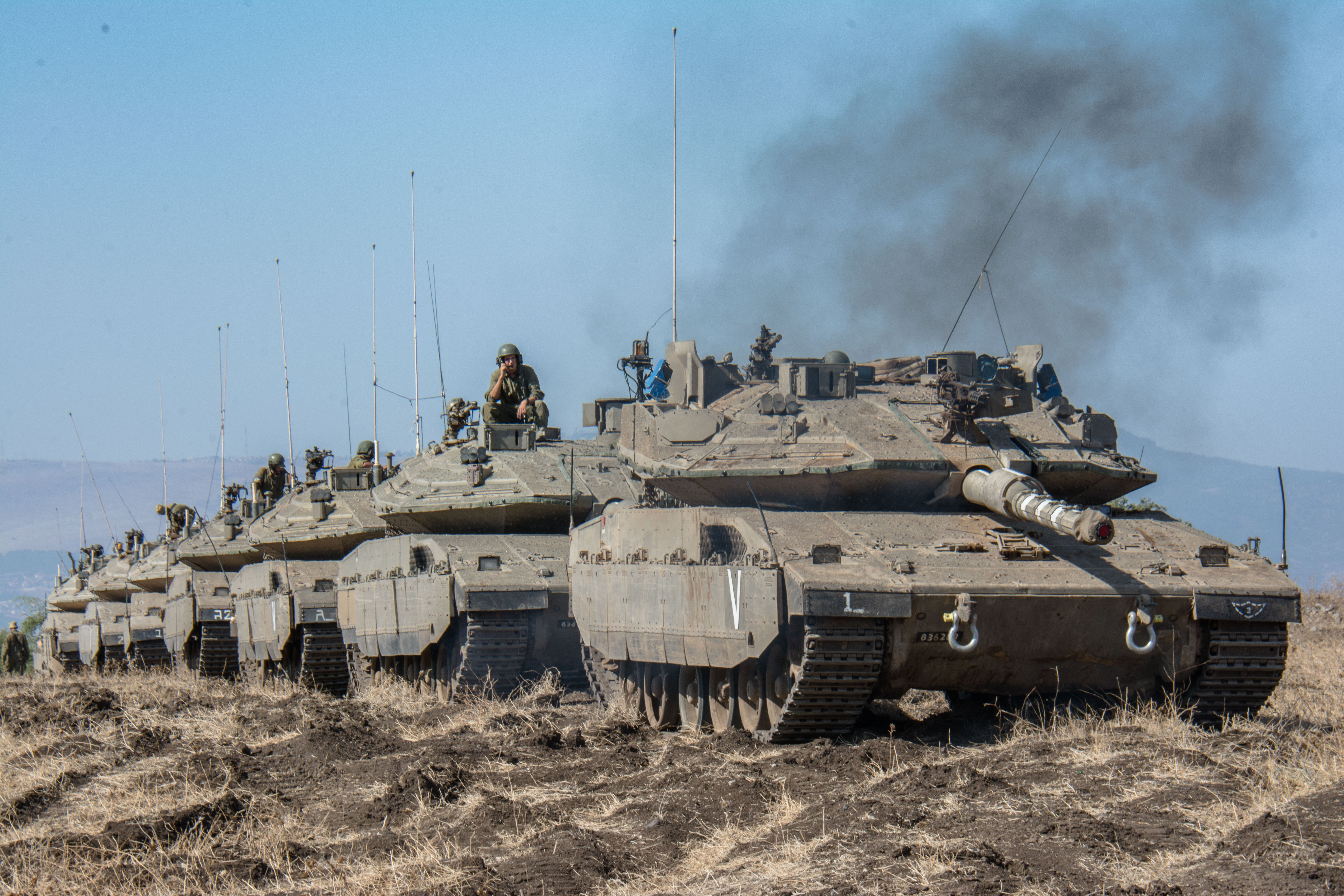
Israel’s military reportedly plans to take several Merkava tank battalions out of service as a budget crisis and spare-parts shortage restrict armored availability. The Sept. 3 report also warned that production of Merkava tank shells could stop within days, creating a second constraint at the ammunition factory rather than the maintenance depot.

Kan Reshet Bet attributed the battalion decision to funding pressure and scarce replacement parts. Officials in the Israel Defense Forces’ Intelligence Directorate reportedly warned of possible damage to operational readiness. Neither the affected battalions nor the number of tanks that could become unavailable was identified, and the IDF and Defense Ministry did not directly confirm the reported decision.
The distinction matters because a tank fleet is not sustained by vehicle count alone. Availability depends on a continuing supply of serviceable components, maintenance capacity and funding to move parts through repair and replacement cycles. A battalion can retain its tanks on paper while still losing practical availability if too few vehicles can be maintained for service.
Production continuity is the harder problem to reverse
The industrial warning extends beyond tank parts. Defense officials reportedly said Elbit Systems could halt production of shells for Merkava tanks within days. An artillery-shell line is expected to close in October, while a mortar-shell line is expected to follow in November. These remain threatened or expected closures; there is no confirmation that they have already happened.
A production line is more than its building and installed equipment. Continuous output retains machine operators, tooling knowledge, inspection routines, supplier relationships and process control. If a shutdown disperses trained workers or removes specialized machinery, restoring production can require rehiring, equipment recommissioning and renewed quality checks. That makes an interrupted line slower and potentially more expensive to recover than one maintained at a reduced but continuous operating rate.
This is the central tension in the reported crisis. Israel recently committed substantial funding to expand domestic ammunition capacity and reduce dependence on foreign supply. In March, the Defense Ministry announced a contract worth approximately $48 million, or more than NIS 150 million, for tens of thousands of 155mm artillery shells from Elbit. The ministry said thousands of employees at Elbit facilities across Israel were manufacturing ammunition around the clock in three shifts.
That order followed larger commitments. In May 2024, then-Defense Ministry director general Eyal Zamir, now identified as the IDF chief of staff, signed multi-year Elbit orders totaling approximately NIS 2.8 billion for land-forces ammunition. A separate Defense Ministry agreement announced in July 2024 was valued at approximately $340 million and included a new Israeli ammunition-production facility.
Those contracts show that procurement value and factory continuity are not the same thing. A multiyear order can fund output or expansion, but near-term production still depends on timely budget allocation, active purchase schedules and enough demand to retain personnel and equipment. If funding gaps interrupt that sequence, recently expanded capacity can coexist with immediate shortages elsewhere in the system.
Two constraints can reinforce each other
The reported tank and ammunition problems affect different parts of armored readiness. Spare-parts shortages determine how many existing vehicles can be kept serviceable. Shell-line interruptions determine whether domestic factories preserve the workforce and equipment required to replenish ammunition. One reduces near-term vehicle availability; the other can weaken the ability to restore production later.
The available information does not establish which component shortages are driving the reported battalion removals, whether the units could return quickly, or how long any production interruption might last. It also does not support estimating the number of affected Merkava tanks.
What is clear is the industrial consequence officials reportedly fear: once workers, machinery and production expertise leave a line, restarting it becomes a reconstruction task rather than a simple decision to resume shifts. The next decisive milestones are therefore the threatened Merkava-shell stoppage and the expected artillery and mortar-line closures in October and November deadlines that will show whether recent domestic-production expansion can survive the present funding strain.
| More aerospace and engineering stories, right in your MSN feed. Follow AMI on MSN |
By Edward Collins — Senior editor for AMI’s performance systems and mechanical design coverage, focused on powertrains, drivetrain systems, manufacturing precision, materials, and high-performance engineering.