Ukrainian Drone Disruption Precedes Crimea’s Four-Hour Daily Fuel Sales Limit
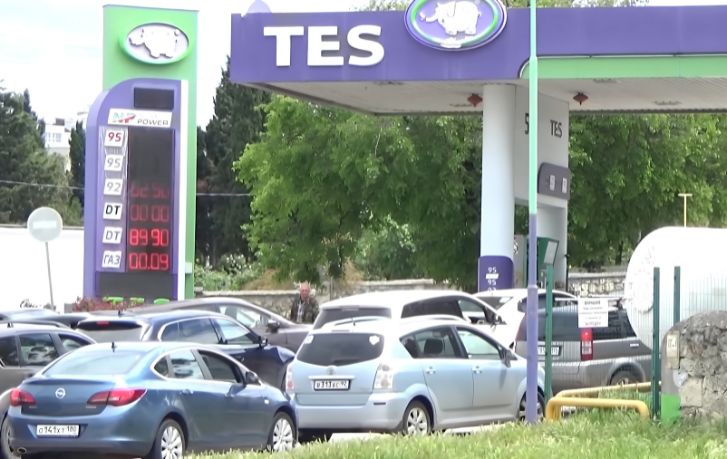
Four hours now define civilian access to gasoline and diesel in Crimea. Authorities have restricted retail sales to 8:00-10:00 a.m. and 6:00-8:00 p.m., saying available fuel does not meet residents’ needs. The schedule leaves motorists with two short purchasing windows each day amid a wider fuel crisis linked partly to Ukrainian long-range drone attacks on Russian refining and transportation infrastructure.
The restriction is a concrete consumer consequence, but it is not a precise measure of drone effectiveness. Sergey Aksyonov, the Moscow-appointed head of Crimea, attributed the decision to insufficient supplies. Available information does not quantify inventories, daily demand, missed deliveries or the respective contributions of refinery disruption, transportation constraints and other factors.
Four hours can reveal a distribution problem without explaining its cause
A restricted sales schedule is fundamentally a tool for managing throughput. When stations cannot sustain normal operations, concentrating sales into fixed periods can help authorities direct customers toward locations known to have fuel, preserve limited inventories and reduce the number of outlets operating without dependable resupply.
That does not mean fuel is available consistently during either window. The local fuel and energy ministry plans to publish station-availability information through an interactive map one hour before morning sales begin. This short notice suggests inventory visibility is changing quickly enough that residents cannot simply assume their usual station will have gasoline or diesel.
The map also shows why a fuel shortage is more than a refinery-capacity issue. Finished fuel must be produced, moved, received, stored and allocated before a pump can serve a customer. A disruption or delay at any stage can reduce retail availability even if some fuel remains elsewhere in the broader network. Conversely, an empty station does not by itself establish that total refining output has stopped.
Crimea’s restrictions have tightened over time. Unrestricted sales were suspended at the end of June, and local authorities subsequently declared a state of emergency. Earlier reporting described weekly quantity limits and prepaid coupons before civilian sales were halted. NPR reported that a previous rationing system allowed 20 liters per vehicle owner per week and that the coupons were quickly claimed.
A repeated drone campaign creates pressure beyond individual strikes
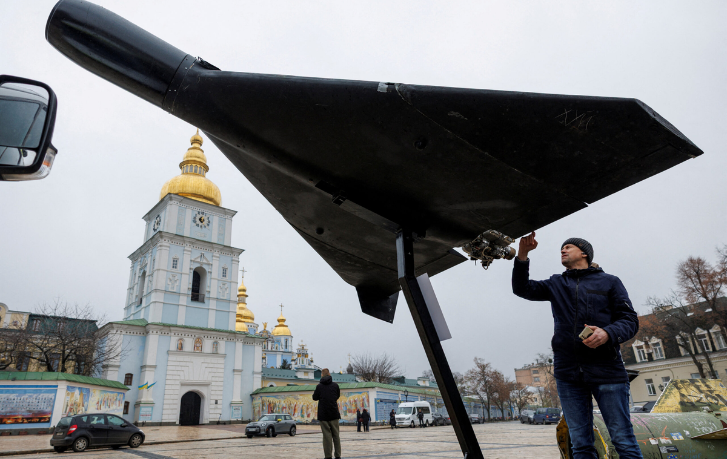
Ukraine’s long-range drone campaign has targeted Russian oil refineries, while attacks have also been reported against fuel transportation serving Crimea. At a systems level, repeated operations matter because fuel networks depend on predictable production and delivery cycles. Even temporary interruptions can compound when inventories are already limited or when transportation cannot replace supplies at the rate consumers draw them down.
This is also an industrial-capacity contest. Ukraine has expanded its ability to develop and field medium- and long-range unmanned aircraft, allowing it to sustain a campaign rather than rely on a single isolated operation. Russia, meanwhile, must maintain air-defense readiness across a wide geographic area while also repairing infrastructure and managing fuel distribution. Russian claims about the number of drones intercepted indicate the scale of that defensive burden, but interception totals alone do not establish how much fuel production or transportation was lost.
The distinction is important because retail restrictions are a downstream indicator, not a technical damage assessment. The four-hour schedule confirms that Crimea’s available supply cannot support ordinary sales. It does not show which facility, transportation interruption or inventory decision created the shortfall, and it cannot establish that drone attacks were the sole cause.
The BBC previously documented a more restrictive phase in which civilian fuel sales were suspended and supplies reserved for government agencies responsible for Crimea’s functioning and security. The return of limited public sales therefore indicates some retail availability, but not a return to normal distribution.
No timetable has been announced for lifting the two-window schedule, and no inventory or sales-volume figures have been released. Until those numbers or a dependable resupply timeline emerge, the most defensible measure of the disruption remains the one residents encounter directly: just 120 minutes in the morning and another 120 minutes in the evening to find an identified station and attempt to buy fuel.
| More aerospace and engineering stories, right in your MSN feed. Follow AMI on MSN |
By Stephen Wallace — Editor for AMI’s aerospace integration and unmanned mobility coverage, focused on drone manufacturing, VTOL systems, autonomous networks, and air-ground mobility links.