DJI-Led Drone Market Faces 25% and 100% U.S. Tariffs
A drone’s weight and installed equipment now determine whether it enters the United States under a 25% tariff or the much steeper 100% rate. Imported drones weighing more than 25 kilograms, drones with thermal-imaging capability, and systems with docking stations fall into the highest tier under a tariff program detailed by the White House.
Smaller drones without the specified capabilities generally face a 25% duty. The tariffs took effect September 3 after the order was signed in August, although duties on some components described as less sensitive are scheduled to begin February 9, 2027. The structure immediately changes sourcing calculations in a commercial market led by China’s DJI, but it does not establish how quickly U.S. factories can replace imported aircraft or components.
Why the 25-kilogram line matters
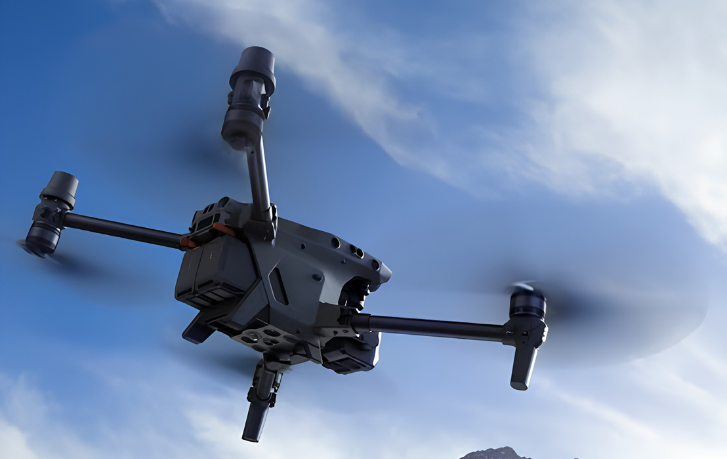
The weight threshold roughly separates most familiar commercial drones from larger aircraft. The International Trade Administration says the vast majority of civil and commercial drones weigh less than 25 kilograms, or 55 pounds. Those smaller systems support applications including construction, agriculture, insurance, energy, public safety and government surveying.
That means the 25% tier potentially reaches a broad and price-sensitive part of the market, even though it is far below the top rate. A tariff is charged on an imported product’s value, so it raises the importer’s landed cost. How much of that cost ultimately reaches an operator, public agency or consumer depends on supplier pricing, inventory, contracts and the availability of alternatives. The available information does not support a specific retail-price forecast.
The 100% category cuts across weight by also capturing thermal-imaging drones and docking-related systems. Thermal cameras are used for specialized inspection, public-safety and industrial work, while docking stations support remotely managed operations by housing, charging or preparing aircraft between flights. Applying the highest tariff to those capabilities therefore affects more than large airframes; it can alter the economics of automated fleets and sensor-intensive missions built around smaller aircraft.
For operators, changing suppliers is not necessarily a simple aircraft substitution. A drone system can include the aircraft, remote pilot station, command-and-control link, payload, data transmission and software. Replacing an imported platform may consequently require new training, spares, batteries, data workflows and maintenance arrangements. The tariff schedule changes acquisition cost directly, but these integration expenses will help determine whether buyers switch systems, delay purchases or continue importing at the higher rate.
DJI’s scale sets the industrial challenge
DJI, founded in 2006, has held more than two-thirds of the global drone market in recent years, according to studies cited in coverage of the industry. That scale is central to the policy tension: tariffs can make imported products less economically attractive, but they do not themselves create production lines, qualified suppliers or service networks.
U.S. companies hold strong positions in drone software, analytics, sensors and services, while the International Trade Administration describes domestic civil-aircraft manufacturing as largely small-scale and niche. Expanding complete-system output requires more than final assembly. Manufacturers need dependable access to motors, flight-control electronics, radios, cameras, batteries and other parts, along with quality controls capable of supporting repeatable fleet operations.
The order authorizes the commerce secretary to establish an onshoring program tied to new U.S. manufacturing investment. That provision may matter more to long-term capacity than the tariff rate alone because it addresses where additional production could be built. However, no current domestic-capacity figure, expected output increase or timetable for replacing Chinese supply has been established.
Qualifying products from several allied markets receive lower treatment: certain drones and components from the European Union, Japan, Liechtenstein, South Korea, Switzerland and Taiwan face a 15% rate, while qualifying British drones face 10%. Those rates depend on substantially all hardware, software and technology originating in the named countries or the United States. Origin verification therefore becomes an important compliance and supply-chain issue, not merely the location of final assembly.
The White House characterizes imported drones and components as a national-security threat and argues that foreign dependence could create disruption and cybersecurity risks. Those are the government’s stated grounds for the action, not independently established findings here. DJI has also contested its placement since 2022 on a U.S. list of Chinese companies linked to China’s military.
China has urged the United States to withdraw the tariffs, arguing that they will disrupt the global supply chain and weaken fair competition. The practical result will be measured less by that dispute than by manufacturing evidence: whether U.S. and allied suppliers can deliver comparable aircraft, sensors, docking infrastructure and support at the volumes buyers require. Until production capacity and pricing are documented, the tariffs clearly change import economics but not yet the market’s ability to replace DJI-led supply.
| More aerospace and engineering stories, right in your MSN feed. Follow AMI on MSN |
By Stephen Wallace — Editor for AMI’s aerospace integration and unmanned mobility coverage, focused on drone manufacturing, VTOL systems, autonomous networks, and air-ground mobility links.