Russia’s Jet-Powered Drones Over Kyiv Give Ukraine Less Time to Intercept
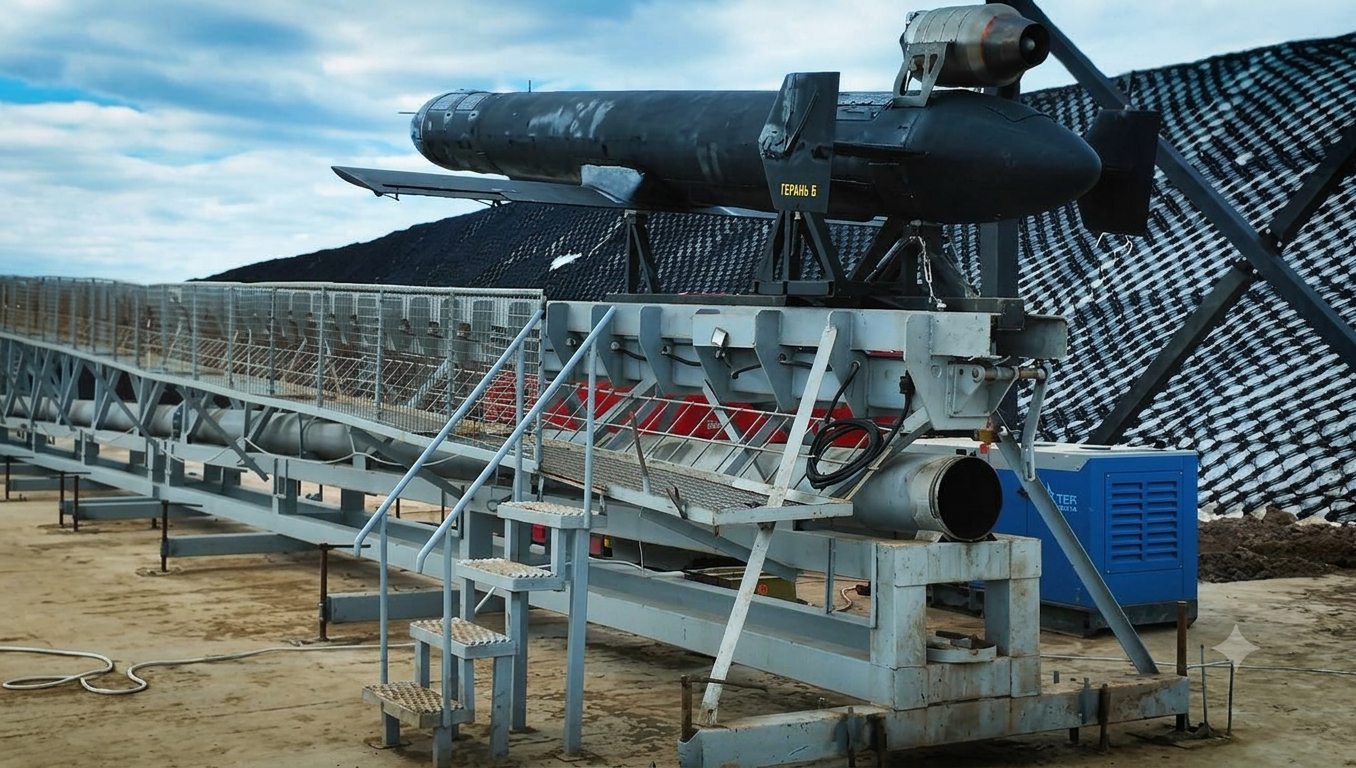
Russia is increasingly using jet-powered drones in strikes on Kyiv, adding faster incoming weapons to an air-defense problem previously dominated by slower, propeller-driven Shaheds and their Russian-made Geran derivatives. The immediate consequence is straightforward: greater speed leaves Ukrainian defenses less time to detect, classify and intercept a drone approaching the capital.

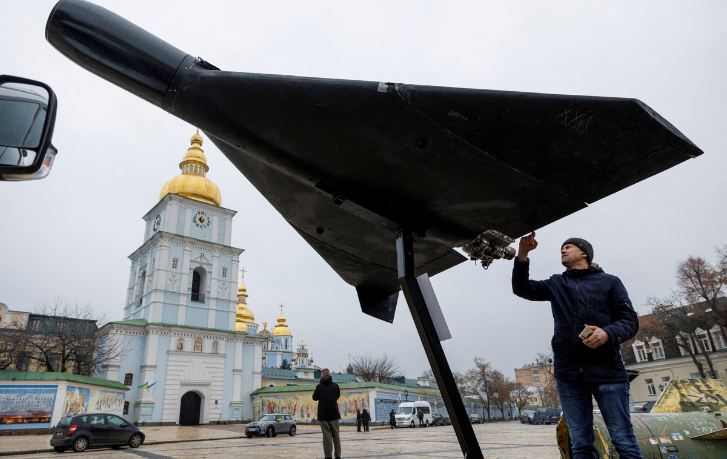
The contrast begins with propulsion. Russia started launching Iranian-made Shahed drones against Ukraine in fall 2022 and later mass-produced domestic versions known as Gerans. Those triangular aircraft use small piston engines to turn propellers, fly relatively slowly at low altitude and announce their presence with a distinctive engine noise. Over several years, Ukraine adapted its layered defenses to those characteristics.
The newer jet-powered weapons change that timing equation. Reporting on an Aug. 29 briefing, the Kyiv Independent said Ukraine had tested four potential interceptor systems as Russia increased its use of jet-powered drones. The outlet reported speeds of up to 600 kilometers per hour, more than three times those of piston-powered Shaheds. Those figures and the names assigned to individual variants should still be treated as attributed reporting rather than a complete, independently verified technical specification.
Speed compresses the entire defensive process
Interception is not determined by top speed alone. A defensive network must first detect an aircraft, distinguish it from other objects, track its path, select an appropriate response and complete the engagement. A faster target reduces the time available for every stage, including human decisions and the transfer of tracking data between sensors and defensive units.
That is why analysts describe the jet-powered aircraft as blurring the boundary between one-way attack drones and cruise missiles. The label does not establish that the two have identical performance, guidance or payloads. It instead reflects an operational similarity: both can present a relatively fast, powered aerial target that demands a rapid response.
The comparison also exposes an economic and maintenance problem. Ukraine developed lower-cost methods for dealing with large numbers of slower drones, reducing the need to assign more expensive air-defense missiles or high-performance aircraft to every incoming object. If faster drones exceed the practical limits of some inexpensive interceptors, defenders may have to rely more heavily on scarce systems with higher operating costs.
For aircraft, that burden is not limited to fuel or weapons. Additional sorties consume finite flying hours, accelerate scheduled maintenance requirements and use airframe fatigue life. A 2026 analysis cited by Breaking Defense warned that regularly assigning fighters to drone interception could create an unsustainable flying-hour burden, diverting aircraft and resources from threats that fewer defensive systems can handle.
Ukraine is developing a faster defensive layer
Ukraine’s response indicates that the propulsion shift is being treated as a production and integration challenge, not simply a request for a faster airframe. Four prospective interceptor systems had undergone field testing by late August, according to the Ukrainian defense minister cited in the Kyiv Independent report. The stated objective was to bring suitable designs to the required performance level and then scale production into the thousands.
Ukraine’s Defense Ministry has also announced the delivery of a domestically developed jet-powered interceptor. Ukrainska Pravda reported the ministry’s announcement on Aug. 21. That development shows the direction of the engineering response, although delivery of an initial system does not by itself establish production capacity, interception reliability or effectiveness across operating conditions.
Scaling such an interceptor involves more than securing a compact jet engine. Manufacturers must repeatedly produce airframes, control systems, sensors and communications equipment that remain reliable at higher speeds. Defensive units must then integrate those aircraft with detection networks and command systems without creating delays that erase the benefit of added interceptor performance.
Jet propulsion also carries tradeoffs for the attacking drone. Compact turbojets are generally more demanding than the small piston engines used by slower Shahed-type aircraft, while higher fuel consumption can work against endurance. The available information does not establish the newer drones’ range, payload, guidance architecture, production cost or exact relationship to every aircraft carrying a Geran designation. It would therefore be inaccurate to describe all Gerans as jet-powered or assume the newer weapons will replace propeller-driven versions.
The emerging fleet is better understood as an additional layer. Slower piston-powered drones retain advantages in endurance and potential production economy, while jet-powered aircraft purchase speed at the expense of other design priorities. For Ukraine, the challenge is maintaining an affordable defense against both categories at once. Its next measurable milestone is not merely fielding a fast interceptor, but demonstrating that reliable systems can be manufactured in the thousands quickly enough to match the growing jet-powered threat.
| More aerospace and engineering stories, right in your MSN feed. Follow AMI on MSN |
By Stephen Wallace — Editor for AMI’s aerospace integration and unmanned mobility coverage, focused on drone manufacturing, VTOL systems, autonomous networks, and air-ground mobility links.