Two Moscow Airports Record 372 Flight Disruptions Amid Ukraine Drone Pressure
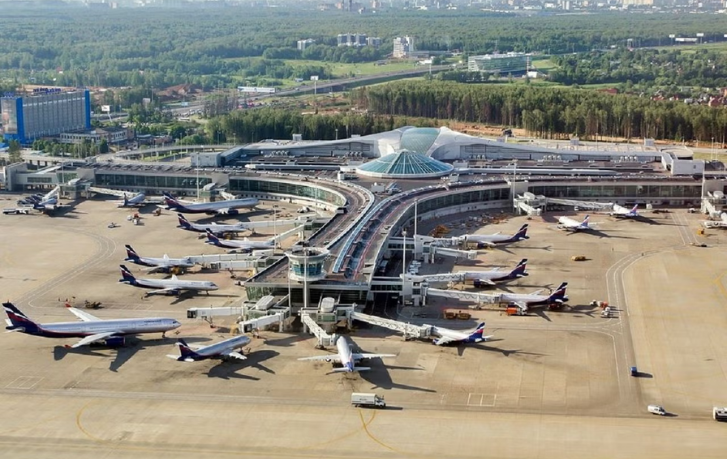
372 flights 43 cancellations and 329 delays measure the immediate loss of schedule certainty at two of Moscow’s major civilian airports. Sheremetyevo and Vnukovo restricted arrivals and departures for a second consecutive night on Sept. 2, 2026, as drone activity increased concern about the continuity of Russian airspace.
FlightRadar24 data counted 21 cancellations and 235 delays at Sheremetyevo, along with 22 cancellations and 94 delays at Vnukovo. Russia’s Federal Air Transport Agency, Rosaviatsia, announced that “temporary restrictions on the arrival and departure of aircraft have been introduced.” Tracking into Sept. 3 showed almost every scheduled afternoon arrival at Sheremetyevo delayed or canceled, with a similar pattern at Vnukovo.
The restrictions followed Ukrainian President Volodymyr Zelensky’s warning that drones would operate over Russia at a scale airlines would have to consider. He said Russian airspace “will be de facto closed,” although he supplied few operational details. Ukraine also formally notified the International Civil Aviation Organization that it considered Russian airspace unsafe, according to a Reuters account of the aviation warning.
Temporary controls can create network-wide delays
The reported totals do not prove that every affected flight encountered a drone or that each cancellation was ordered in response to a specific incursion. Rosaviatsia did not specify the duration of the controls or tie every operational decision to an identified aircraft. The defensible conclusion is narrower: recurring drone-related risk coincided with precautionary restrictions, and those controls sharply reduced airport continuity.
Airport capacity depends on the predictable sequencing of arrivals, departures, gates, crews and ground services. When authorities temporarily stop or limit aircraft movements, flights already approaching the network may need to wait, divert or be rescheduled. Departures then lose their planned slots, while aircraft and crews can be left out of position for later services. That propagation helps explain why disruption can remain visible after an individual restriction is lifted.
This is also why a nationwide closure is not required to produce a large civilian consequence. Sheremetyevo and Vnukovo are major nodes, so interruptions at both can remove substantial operating capacity from the same regional system. The combined 372 reported disruptions show the practical reach of localized controls: passengers lose dependable departure and arrival times, while airlines must rebuild schedules around uncertain access to the airports.
Airspace management becomes a readiness burden
For aviation authorities, the central problem is balancing continuity against uncertain risk. Keeping an airport open preserves capacity, but temporary restrictions provide separation between civilian traffic and an evolving security situation. The repeated use of those restrictions shifts pressure onto air traffic controllers, airport services and airline operations centers, which must manage changing permissions without knowing exactly how long each interruption will last.
Previous Moscow-area controls illustrate the broader operating cost. Reported restrictions on transit traffic and permitted altitude near the capital have been associated with longer routes, additional flight time and higher fuel consumption. Those earlier measures are not proof of what caused the Sept. 2 delays, but they demonstrate how airspace constraints can impose costs even on flights that ultimately operate.
The scale of drone production or the number of aircraft involved in the latest activity has not been independently established. Zelensky described an intended scale large enough to influence airline decisions, but that remains an attributed warning rather than a verified measure of industrial capacity or operational reach. Claims involving a longer-running effort called “Operation Carpet” likewise rely on unnamed people familiar with the matter and require independent confirmation.
Airlines must separate warnings from confirmed operating information
Pegasus Airlines canceled Russia services scheduled overnight from Sept. 1 to Sept. 2, citing “technical and operational reasons.” The carrier said flights from Sept. 2 onward were operating as scheduled. No confirmed information directly links those cancellations to a particular drone event, so they should not be counted as proof that the warning alone changed airline policy.
That distinction matters for carriers, insurers and passengers trying to assess continuity. Public warnings can alter risk perception, but flight planning ultimately depends on current airspace notices, airport availability and each airline’s operational assessment. At Sheremetyevo and Vnukovo, the firmest indicator is not a prediction of permanent closure. It is the documented second night of restrictions and the 43 cancellations and 329 delays that followed across two critical civilian airports.
| More aerospace and engineering stories, right in your MSN feed. Follow AMI on MSN |
By Stephen Wallace — Editor for AMI’s aerospace integration and unmanned mobility coverage, focused on drone manufacturing, VTOL systems, autonomous networks, and air-ground mobility links.