Volkswagen Plans 50,000 Job Cuts, €135 Billion Investment, Reviews Four Factories
Volkswagen plans to invest approximately €135 billion while eliminating about 50,000 positions and reconsidering production at four German factories. That tension sits at the center of the automaker’s newly approved Future Plan 2030: substantial capital spending does not necessarily preserve the existing workforce, model range or manufacturing footprint.

The planned workforce reduction is not a completed outcome. Volkswagen has not specified when all the positions would be removed or how the reductions would be distributed among brands, regions and job categories, although management positions are included. The company has about 650,000 employees, making the proposed reduction equivalent to roughly one position in every 13 across the current global workforce.
The investment is similarly large but not yet detailed. Volkswagen intends to spend approximately €135 billion from 2027 through 2031, but it has not provided an allocation by factory, brand, region or technology. Without that breakdown, the figure cannot establish which vehicle programs will receive priority, whether particular plants will be retooled or how much of the spending will support manufacturing rather than other corporate requirements.
Four factories lack guaranteed follow-on production
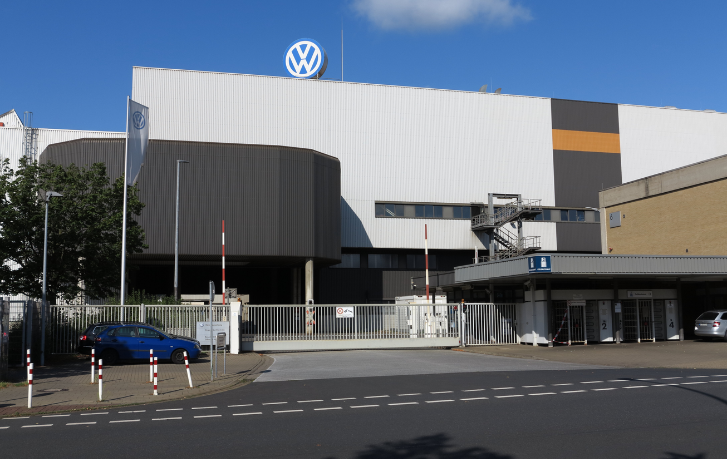
The most immediate manufacturing uncertainty concerns Emden, Zwickau, Hanover and Neckarsulm. Volkswagen says competitive follow-on production is not currently secured for those plants. Alternative uses are being explored, but final roles have not been announced.
That distinction matters. A factory can remain part of an industrial group without continuing its present vehicle-production mission, but repurposing is not a simple substitution. Vehicle plants are configured around specific body dimensions, assembly sequences, tooling, logistics flows, supplier deliveries and workforce skills. A new use can therefore require fresh equipment, process validation, worker training and a viable production volume. Volkswagen has not disclosed which, if any, of those changes it is considering at the four sites.
The company has identified excess European production capacity of about 500,000 vehicles. Its plan also foresees reducing the number of models by around half. In manufacturing terms, a smaller product portfolio can concentrate more volume on each remaining model, spread fixed costs across longer production runs and reduce the tooling and component complexity associated with low-volume variants.
That potential efficiency comes with a boundary: fewer models and fewer assigned factories provide less assurance that existing plants and production lines will retain their current work. Until Volkswagen identifies the surviving products and their production locations, the effect on plant utilization, suppliers and regional employment cannot be determined.
Financial targets depend on changes that remain ahead
Volkswagen is targeting a 9% operating return on sales. Its strategic plan estimates that reaching that target would produce approximately €31 billion in operating profit. Both numbers are objectives, not reported results, and they depend on the broader restructuring delivering lower costs and greater operating efficiency.
The supervisory board has also directed management to develop a new corporate structure and decision-making framework. Under the proposed approach, the supervisory board would reserve its approval authority for material decisions affecting the wider group, bringing governance closer to practices at other companies in Germany’s DAX index. Shorter approval paths could help Volkswagen make product and capacity decisions more quickly, but no governance redesign by itself determines whether a factory receives a future vehicle.
For the U.S. market, the plan is relevant because Volkswagen cited U.S. tariffs among the pressures behind its restructuring, alongside changing demand, technological shifts and competition in China. However, the absence of a regional investment breakdown means the plan does not yet establish what will change for U.S.-market products, production or supply arrangements.
The next consequential information will be operational rather than financial: where the 50,000 positions are expected to come out, how the €135 billion will be divided and what work if any will replace current vehicle programs at Emden, Zwickau, Hanover and Neckarsulm. Until Volkswagen answers those questions, the investment total describes the scale of the transformation, not its factory-level outcome.
| More aerospace and engineering stories, right in your MSN feed. Follow AMI on MSN |
By Thomas Caldwell — AMI’s senior editor for mechanical and mobility engineering, covering vehicle electronics, systems integration, electrification, chassis systems, propulsion, and safety policy.