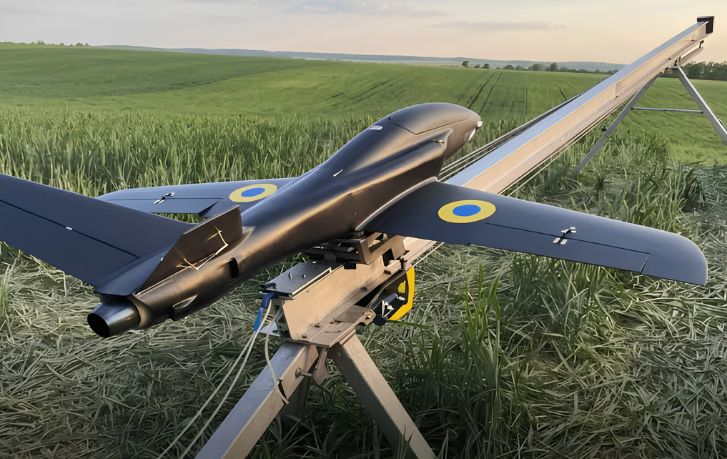
Ukraine Accelerates Interceptor Drones After Reporting 2,800 Jet-Powered Drones in August
Ukraine has interceptor-drone prototypes, but it does not yet have confirmed production at the scale demanded by a rapidly expanding threat. The country’s Staff of the Supreme Commander-in-Chief has assigned manufacturers tasks and deadlines to improve and accelerate high-speed interceptor drones after Ukraine’s Air Force reported more than 2,800 Russian jet-powered drones during August.
President Volodymyr Zelenskyy said Ukrainian manufacturers can perform the work and that specialists are already improving prototype performance. The objective is to supply enough high-speed interceptors and inexpensive missiles to defend populated areas as Russia increases its use of faster attack drones. Production targets, deadlines and required performance figures have not been disclosed, so this remains a development and manufacturing push not evidence that the interceptors are deployed in operational quantities.
Speed and scale must improve together
The production order reflects two connected problems. An interceptor must first demonstrate enough performance and reliability to meet its requirement. Manufacturers must then reproduce that performance in sufficient volume, without allowing rushed production to introduce inconsistent propulsion, control, sensor or assembly quality.
Four possible interceptor-drone types are under consideration, although Ukraine has not identified them. Maintaining several candidates can give officials alternatives while testing continues, but it also creates a potential industrial tradeoff. Multiple designs may draw on different suppliers and spread technical risk, yet they can complicate procurement, operator preparation, maintenance and spare-parts planning if too many variants advance into production.
The Staff meeting also considered involving private businesses in producing, supplying and deploying selected air-defense systems. That could widen the manufacturing base beyond established defense producers. The unresolved question is whether those companies can deliver standardized hardware at repeatable quality and pace. In autonomous aircraft production, a prototype that works is only the starting point; configuration control, component availability, acceptance testing and field support determine whether it becomes a dependable fleet.
Affordable interception is a readiness requirement
Ukraine’s emphasis on inexpensive interceptors is not simply a budget preference. Large drone volumes can consume conventional missiles and add flying hours to crewed aircraft used for interception. A recent analysis of Ukraine’s evolving air defenses reported that repeated fighter use against drones places pressure on finite airframe life and maintenance capacity.
That does not mean the cheapest interceptor is automatically the correct one. A Center for Strategic and International Studies assessment of air and missile defense notes that interceptor cost must be weighed against effectiveness, coverage, operational risk and the value of what is being defended. For Ukraine, lower unit cost matters because it supports production volume, but an inexpensive system that cannot reliably satisfy its performance requirement does not solve the readiness problem.
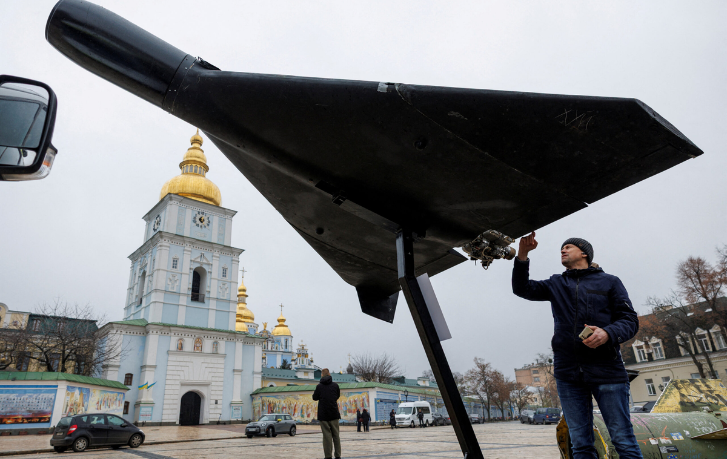
The reported attack tempo makes that balance more urgent. Zelenskyy said Russia launched nearly 1,500 drones of various types over four days, including about 800 jet-powered aircraft. Ukraine’s Air Force separately reported more than 2,800 jet-powered drones in August and said July use was five times June’s level before rising again in August. Those figures are Ukrainian official accounts and have not been independently verified here.
The duration of attacks also affects readiness beyond the number of aircraft involved. The Institute for the Study of War reported that a combined drone and missile attack beginning August 29 continued for more than 28 hours, primarily affecting Kyiv and the surrounding region. Sustained alerts increase the burden on civilians while requiring defensive systems, crews and support networks to remain available over extended periods.
Ukraine’s next meaningful milestone will not be another prototype announcement. It will be evidence that one or more of the four candidates have met defined requirements and moved into repeatable production, with enough supply and support capacity to make a measurable addition to layered air defense. Until production quantities, test status and deadlines are disclosed, the central tension remains unresolved: the prototypes exist, but performance and manufacturing scale still have to catch up with the reported rise in faster attacks.
| More aerospace and engineering stories, right in your MSN feed. Follow AMI on MSN |
By Stephen Wallace — Editor for AMI’s aerospace integration and unmanned mobility coverage, focused on drone manufacturing, VTOL systems, autonomous networks, and air-ground mobility links.