Elroy Air’s Uncrewed Cargo Flights Put Autonomy Under Air Traffic Control
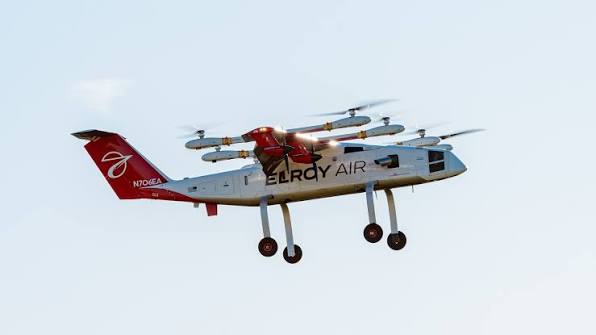
Elroy Air has completed a week of uncrewed Chaparral cargo demonstrations in Houma, Louisiana, placing an autonomous hybrid-electric vertical-takeoff aircraft under air traffic control oversight in the National Airspace System. The flights were the first uncrewed operations authorized through the federal electric vertical-takeoff aircraft Integration Pilot Program, according to Elroy Air.
The Federal Aviation Administration described the initial operation as the program’s first remotely piloted aircraft test flight. Elroy Air characterized the weeklong series more broadly as autonomous, with no pilot aboard. The distinction matters: “uncrewed” establishes where the pilot was not, while remote piloting and autonomy describe different allocations of control between human operators and aircraft systems. The available information does not detail that allocation for each phase of flight.
Elroy Air conducted the late-August demonstrations with LIFTOFF Louisiana and Bristow Group at Houma–Terrebonne Airport. Chaparral carried packages, medical supplies, food, water, spare parts and other industrial equipment. Those varied loads gave the participants an opportunity to collect operational information around cargo handling and aircraft use, rather than limiting the program to an empty technology flight.
The most consequential result was not a maximum-payload or maximum-range record. It was supervised operation in controlled U.S. airspace without a pilot aboard. Air traffic control oversight connects an autonomous-aircraft demonstration to the procedures, communications and responsibilities that govern the wider aviation system. That makes the Louisiana work a test of integration as well as aircraft performance.
FAA Administrator Bryan Bedford said the demonstration provides data that can help move these aircraft “from trial to deployment.” He added that the flights show how new aircraft could expand cargo options and improve logistics infrastructure. The federal program is intended to identify procedural gaps and use operational results to inform policy and the broader integration of advanced air mobility aircraft.
A runway-independent cargo configuration
Chaparral combines a hybrid-electric powertrain, vertical takeoff and landing, and interchangeable cargo pods. The vertical-flight configuration is intended to remove the need for a runway at a delivery site, while the pod system separates loading from the aircraft’s flight cycle. In principle, a pod can be prepared independently and exchanged rather than requiring cargo to be loaded piece by piece while the aircraft waits.
Elroy Air says Chaparral is designed to carry more than 500 pounds, or 227 kilograms, and travel as far as 450 miles, or 724 kilometers. Those are design specifications, not demonstrated results from Louisiana. Neither Elroy Air’s account nor the FAA announcement establishes that the Houma flights validated either maximum figure.
That boundary is important for evaluating readiness. Carrying representative cargo under air traffic control answers a different question from proving maximum range, useful load or dispatch reliability across repeated commercial operations. The Louisiana series established a federally authorized operating context and generated integration data; it did not, on the available information, complete the aircraft’s certification case or demonstrate commercial-scale service.
Earlier tests focused on cargo release
Chaparral’s earlier Army-related work provides supporting context for its cargo-control system. During a July 15 test in Byron, California, the aircraft released a 68-pound load while hovering and a 70-pound load during forward flight at an altitude of 65 feet. The releases used preloaded coordinates and required no intervention during the release sequence. Elroy Air has also developed a third unattended method in which the aircraft lands and unloads autonomously.
Those tests addressed delivery mechanisms; the Louisiana flights addressed operation under a federal airspace-integration program. Together, they illustrate the layered development burden for an autonomous cargo aircraft: the vehicle must fly, manage its payload and fit into an aviation system built around clearly assigned human authority and certified procedures.
The FAA says it will use demonstrations under the program to identify gaps and improve procedures. Additional Louisiana test flights are planned through the rest of 2026. Those operations will need to build the record beyond a first authorized week, particularly around repeatability, supervision and the path from limited demonstrations to approved routine service. For Chaparral, the next meaningful measure is not its advertised 450-mile limit, but how consistently an uncrewed aircraft can operate within the same airspace framework as conventional traffic.
| More aerospace and engineering stories, right in your MSN feed. Follow AMI on MSN |
By Stephen Wallace — Editor for AMI’s aerospace integration and unmanned mobility coverage, focused on drone manufacturing, VTOL systems, autonomous networks, and air-ground mobility links.