Beijing Will Ban Possessing Drones and Key Components Citywide From Nov. 15
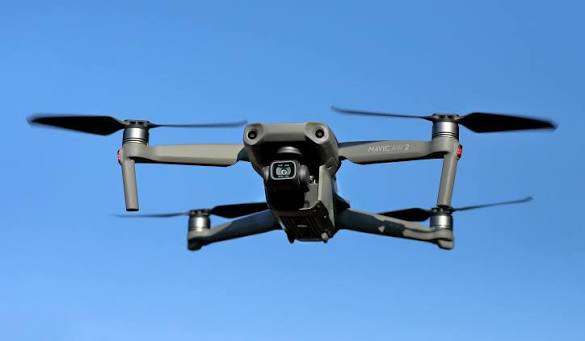
Beijing will prohibit individuals and organizations from possessing or storing drones and key components anywhere in the city beginning Nov. 15. The revised municipal regulation gives existing owners roughly two months to sell, recycle or remove their equipment from Beijing or risk confiscation and fines.
The deadline marks a substantial change for owners who complied with rules that took effect May 1. Those earlier requirements used real-name registration to identify existing aircraft while still allowing registered owners to retain them under strict conditions. Beijing completed its verification of existing devices on July 31, but that system will cease to apply when the possession ban begins.
The policy has progressed through three increasingly restrictive layers. Beijing first controlled unauthorized flights and treated its administrative area as restricted airspace. It then prohibited sales and barred people, including tourists, from bringing drones into the city. The November revision goes beyond airspace access and commercial distribution by regulating physical custody: even an aircraft that is never flown may not be kept in a home, business or storage facility unless it falls within an authorized exception.
Possession changes the regulatory boundary
Flight restrictions ordinarily focus on where and under what conditions an unmanned aircraft can operate. Registration adds accountability by connecting an aircraft to an identified owner. A possession ban creates a different compliance model because authorities no longer need an unauthorized flight to establish that prohibited equipment is present within the jurisdiction.
That distinction matters to recreational owners, commercial operators and technical organizations. A grounded drone can still represent a significant purchase, a business tool, a research platform or equipment held for future use. Beijing’s rule effectively removes ordinary civilian storage as an option, rather than simply suspending access to the airspace.
The inclusion of “key” or “core” components broadens the rule further, but the available public description does not specify a complete component list. That leaves an important technical boundary unresolved: it is not yet clear from the published account which propulsion, control, navigation, communications or structural items will qualify when held separately from a complete aircraft. Owners and businesses handling parts will need clear official guidance because a component-based prohibition can reach repair inventory and unfinished systems as well as ready-to-fly drones.
Exceptions are expected for specified public and institutional purposes, including emergency rescue, disaster relief, major events, teaching, scientific research and manufacturing. Eligible organizations must follow relevant national rules, establish safety-management systems and assign responsibility for operations. These exceptions mean the policy is not a literal elimination of every unmanned aircraft activity in Beijing; it shifts access toward approved organizations operating under defined management controls.
Registered owners now carry the disposal cost
For people who registered in good faith, the change replaces continuing ownership with a disposal or relocation deadline. Beijing has established designated buyback and recycling channels, with reported subsidies ranging from 100 yuan to 3,000 yuan per aircraft depending on the disposal route and applicable terms. Owners may also send verified drones to an address outside Beijing through China Post’s EMS service between Sept. 12 and Nov. 14 without paying the delivery fee, or remove the equipment themselves by the deadline.
Those measures reduce some of the immediate financial and logistical burden, but they do not guarantee that an owner will recover the equipment’s original cost or its value as a working system. The fairness issue is therefore not whether a compliance route exists it does but how much loss falls on people whose registered equipment was previously lawful to retain. Businesses may face a wider burden if they hold multiple aircraft, spare parts or storage inventory, although the financial effect cannot be quantified from the available details.
The affected population also extends beyond residents. Companies cannot treat Beijing as an ordinary storage or distribution point for covered equipment, while visitors are already prohibited from carrying drones into the city. Outdoor drone use remains possible elsewhere in China subject to real-name registration, so this is a Beijing municipal restriction rather than a nationwide prohibition.
The revision follows a late-June accident in which a small aircraft struck a Beijing skyscraper, killing its pilot and injuring 13 people. Public accounts do not identify that aircraft as a drone or establish the accident as the cause of the new rule, so it should not be treated as proof of either point.
By Nov. 15, Beijing’s dividing line will no longer be whether a civilian drone is registered or remains grounded. For most owners, the decisive fact will be whether the aircraft or a component ultimately defined as covered is physically inside the city.
| More aerospace and engineering stories, right in your MSN feed. Follow AMI on MSN |
By Stephen Wallace — Editor for AMI’s aerospace integration and unmanned mobility coverage, focused on drone manufacturing, VTOL systems, autonomous networks, and air-ground mobility links.