Webb Spectra Strengthen Black-Hole-Star Case, but Little Red Dots Stay Unsettled
A separate team analyzing broad hydrogen lines in several of the James Webb Space Telescope’s “little red dots” found that electron scattering may make those lines appear wider than the gas motion alone would produce. After the researchers digitally removed that scattering effect, the lines resembled light passing through a slowly churning shell of hydrogen the kind of envelope predicted around a proposed “black-hole star,” according to a detailed account of the widening astronomical debate.
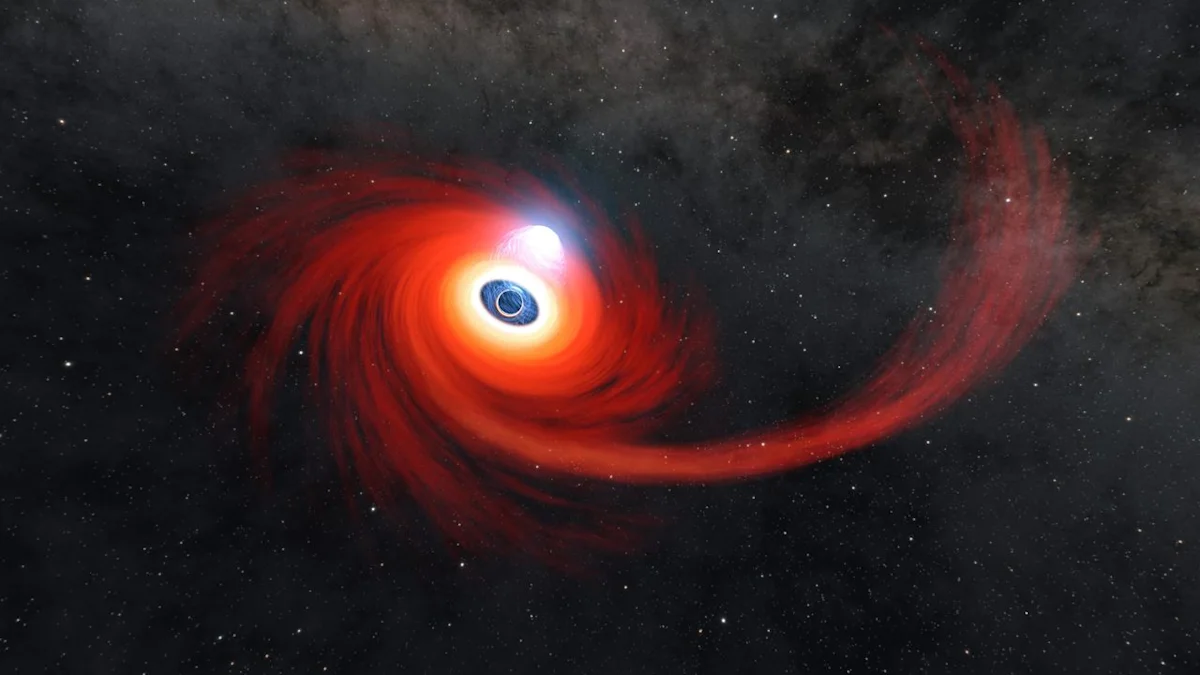
That result matters because it independently supports a key part of the black-hole-star model: a dense, moving hydrogen cocoon surrounding and reprocessing energy from an accreting black hole. It does not, however, establish that all little red dots or even the best-observed examples belong to this proposed class. Astronomers remain divided over whether Webb is seeing cocooned black holes, more conventional active black holes obscured by gas and dust, or a mixed population.
The dispute turns on what broad spectral lines actually measure. Astronomers often interpret a widened hydrogen line as evidence of rapidly moving gas under the influence of a black hole’s gravity. That motion can then help them estimate the black hole’s mass. But Vadim Rusakov of the University of Manchester and collaborators noticed that the line profiles in many little red dots had gentler slopes than expected from fast orbital motion alone.
Their alternative is that photons repeatedly scatter from free electrons before escaping. That interaction shifts and spreads their measured wavelengths, smudging a relatively narrow line into something broader. Correcting for the modeled scattering left a profile more consistent with light traversing a sluggishly churning hydrogen shell. In practical terms, the apparent line width may describe the envelope’s optical conditions as much as the speed of gas near the central engine.
One spectral clue does not select a unique model
The correction strengthens the cocoon interpretation, but it is not exclusive to it. Roberto Maiolino of the University of Cambridge agrees that electron scattering likely contributes to line broadening in some little red dots, while arguing that scattering can also occur around conventional supermassive black holes. In that competing picture, thick gas structures or patchy clouds obscure the central source without forming the spherical, star-like envelope envisioned by the black-hole-star model.
Geometry is therefore a central uncertainty. A cocoon can absorb and redistribute high-energy radiation, suppress rapid flickering and release the energy at longer wavelengths. But a more familiar black hole viewed through a thick, edge-on structure could reproduce some of the same red appearance and weak X-ray signature. The observation that Webb also detects “little blue dots” has encouraged the idea that red and blue sources could sometimes be similar engines viewed from different angles.
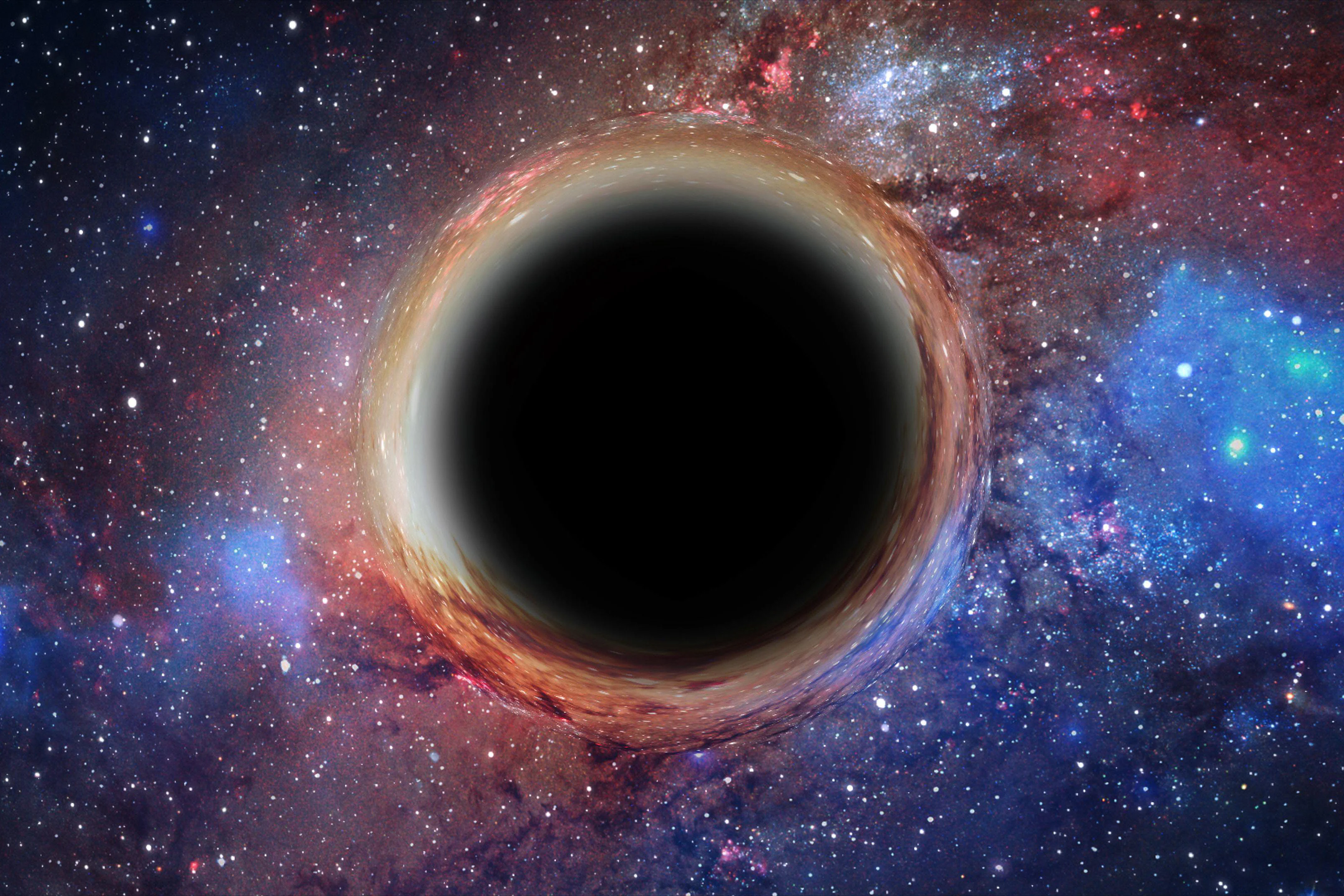
MoM-BH*-1 remains the black-hole-star camp’s clearest test case because its light appears unusually dominated by the compact central source. Briefly, the Nature modeling proposed a black hole of about 100,000 solar masses inside a dense hydrogen envelope. The object looks star-like, yet its reported energy output is far beyond what ordinary nuclear fusion can supply. Its strong hydrogen-shaped spectral break and red continuum are why researchers argue that the outer gas behaves more like a stellar atmosphere than a standard exposed accretion flow.
That model could also explain why little red dots are common in the early universe but largely disappear later. A young black hole might initially grow inside an opaque envelope, then consume or shed that material and emerge in a more recognizable active galactic nucleus. A 2026 census found preliminary evidence that the red-dot population declines as the universe approaches 2 billion to 3 billion years of age, a pattern consistent with but not proof of a temporary cocooned phase.
The decisive test must separate structure from appearance
The next step is not simply finding more red points. Astronomers need spectra precise enough to determine whether electron-scattered hydrogen profiles, dense-envelope signatures and the inferred central masses remain consistent across the population. A separate spectral framework for testing the quasi-star hypothesis reports no signs of overmassive black holes in its sample, underscoring that the theory must survive population-level measurements rather than rest on one unusually clear object.
For now, the broad-line reinterpretation removes one apparent objection to a slowly moving cocoon: the lines may look fast partly because electrons blur them. Yet conventional black-hole models can invoke some of the same physics, and current Webb observations can accommodate either explanation. The stronger claim that little red dots mark an unfamiliar, star-like stage in early black-hole growth will depend on finding a spectral pattern that obscuration and viewing angle cannot reproduce.
| More aerospace and engineering stories, right in your MSN feed. Follow AMI on MSN |
By David Whitaker — Associate editor for AMI’s aerospace and drone systems desk, translating flight systems, aircraft programs, spaceflight, and UAV developments into accessible technical stories.