California High-Speed Rail Selects Consortium for 119-Mile Track and Electrical Installation
California High-Speed Rail’s board has approved an American-led consortium of Kiewit, Stacy Witbeck and Herzog to install track and the operating systems needed across 119 miles of the Central Valley section. The contract’s scope includes the rails, a 25-kilovolt overhead electrical supply, train control and communications equipment that will turn civil infrastructure into an electrified railway.

The 150-acre southern railhead in Kern County has been prepared to receive rail and other long-lead materials, with installation expected to begin later in 2026 as completed sections become available. That is a significant staging milestone, but it does not mean passenger service has started or that the initial operating route is complete. Trains are not yet carrying passengers, and service between Bakersfield and Merced remains targeted for 2033, with that date still uncertain.
What the contract changes
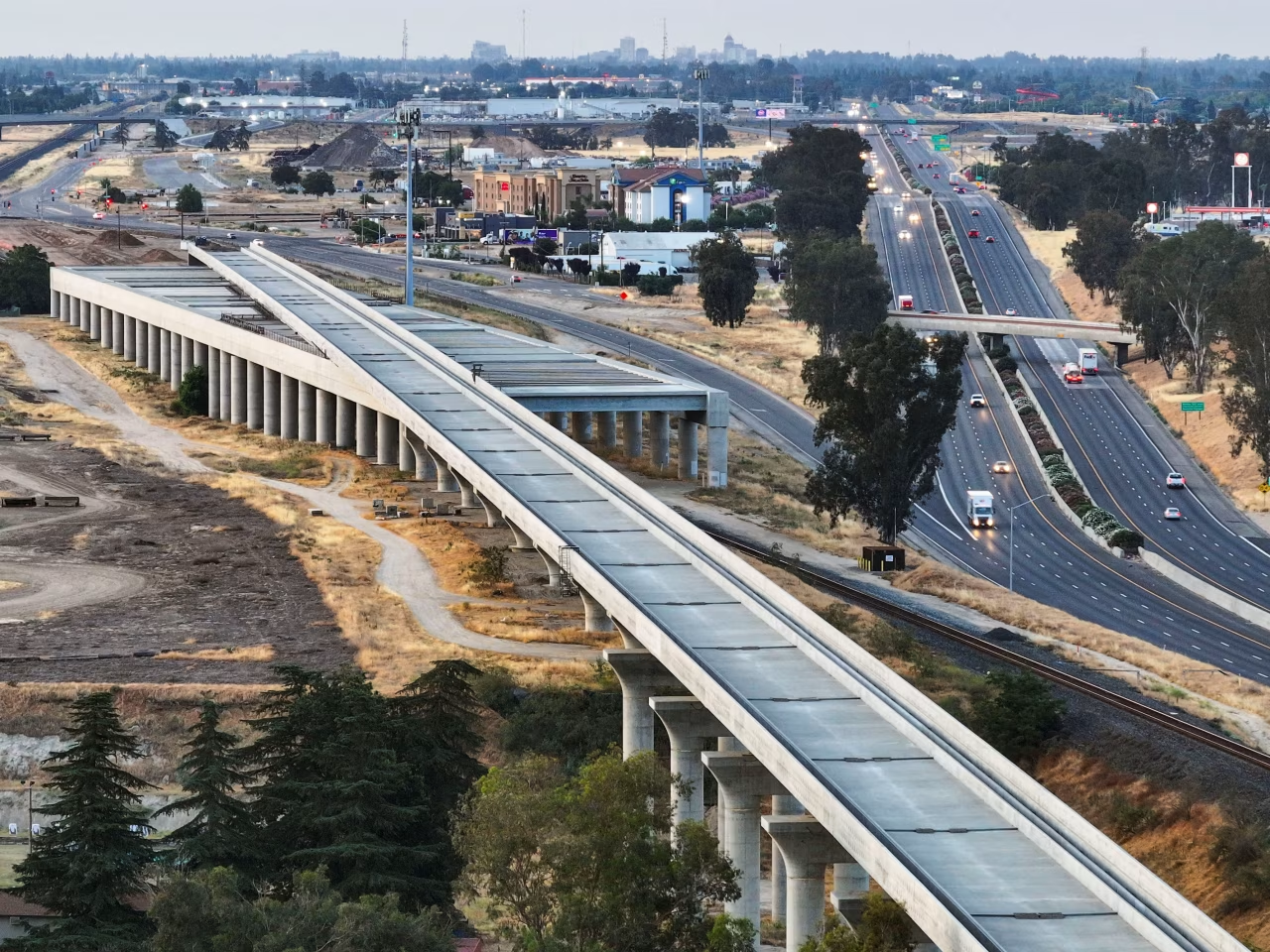
The award moves the program into a different systems-integration phase. Concrete structures and earthworks establish the route, but they cannot operate independently as a railroad. Track geometry, traction power, signaling, communications and control equipment must be installed as an interdependent system and then tested with trains under representative operating conditions.
The authority has structured the work in phases so the consortium can enter portions of the corridor as civil construction is completed. That approach can reduce the idle period between finishing a guideway and beginning railway installation. The authority has also procured long-lead items including rail, concrete ties and ballast directly, rather than waiting for the installation contractor to place every material order after award.
Those choices purchase schedule flexibility, but they also transfer coordination demands to the public authority. Materials must arrive in the right sequence, storage and distribution must be controlled, and finished civil works must meet the interfaces expected by the track and electrical designs. If one section remains unavailable, phased installation may allow work elsewhere, but it cannot eliminate dependencies among structures, utilities, power equipment and control systems.
The 25-kilovolt alternating-current supply is especially important because it marks the shift from a physical corridor to a powered transportation system. Overhead contact equipment must work consistently with the trains, substations and control architecture. Train-control and communications infrastructure must likewise be integrated across the route rather than treated as isolated hardware. Contract approval therefore establishes who will perform this work; it does not establish that integration, verification or operational acceptance has been completed.
A real milestone within a narrower program
The immediate contract covers the 119 miles under construction and is intended to support later extensions toward Merced and Bakersfield. Across the broader Central Valley program, 171 miles are under design and construction. More than 80 miles of guideway and 60 major structures have been completed, while another 30 structures are underway.
That progress matters to Central Valley communities and workers because it creates a clearer path from construction sites to a functioning regional rail segment. The contract carries a 25% small-business participation goal, including a 3% microbusiness component, plus a 3% goal for disabled-veteran business enterprises. At the same time, prospective passengers elsewhere in California will not receive the statewide service originally presented to voters on the initial schedule.
Voters approved a Los Angeles-to-San Francisco system in 2008 with a $33 billion estimate and a planned 2020 completion. The near-term operating focus is now the shorter Bakersfield-to-Merced route. The authority retains the longer-term objective of connecting Northern and Southern California, but the full system is estimated at approximately $126 billion and faces a funding shortfall of roughly $90 billion.
That distinction is central to judging the new contract fairly. Selecting an installation team and opening a railhead address a definable delivery risk: whether completed civil works can begin receiving track, electrical and control systems. They do not resolve the financing required to extend the railway statewide, nor do they reverse the accumulated schedule change.
The next evidence of progress will be physical and testable: long-lead materials arriving at the Kern County railhead, installation crews entering completed sections, and track and systems being assembled into a corridor that can eventually support train testing. Until those steps occur, the June approval is best understood as authorization to begin building the railway layer not the arrival of California high-speed passenger service.
| More aerospace and engineering stories, right in your MSN feed. Follow AMI on MSN |
By Thomas Caldwell — AMI’s senior editor for mechanical and mobility engineering, covering vehicle electronics, systems integration, electrification, chassis systems, propulsion, and safety policy.