Judge Lets Porsche Taycan Battery-Fire Class Action Proceed Despite Arbitration Clause
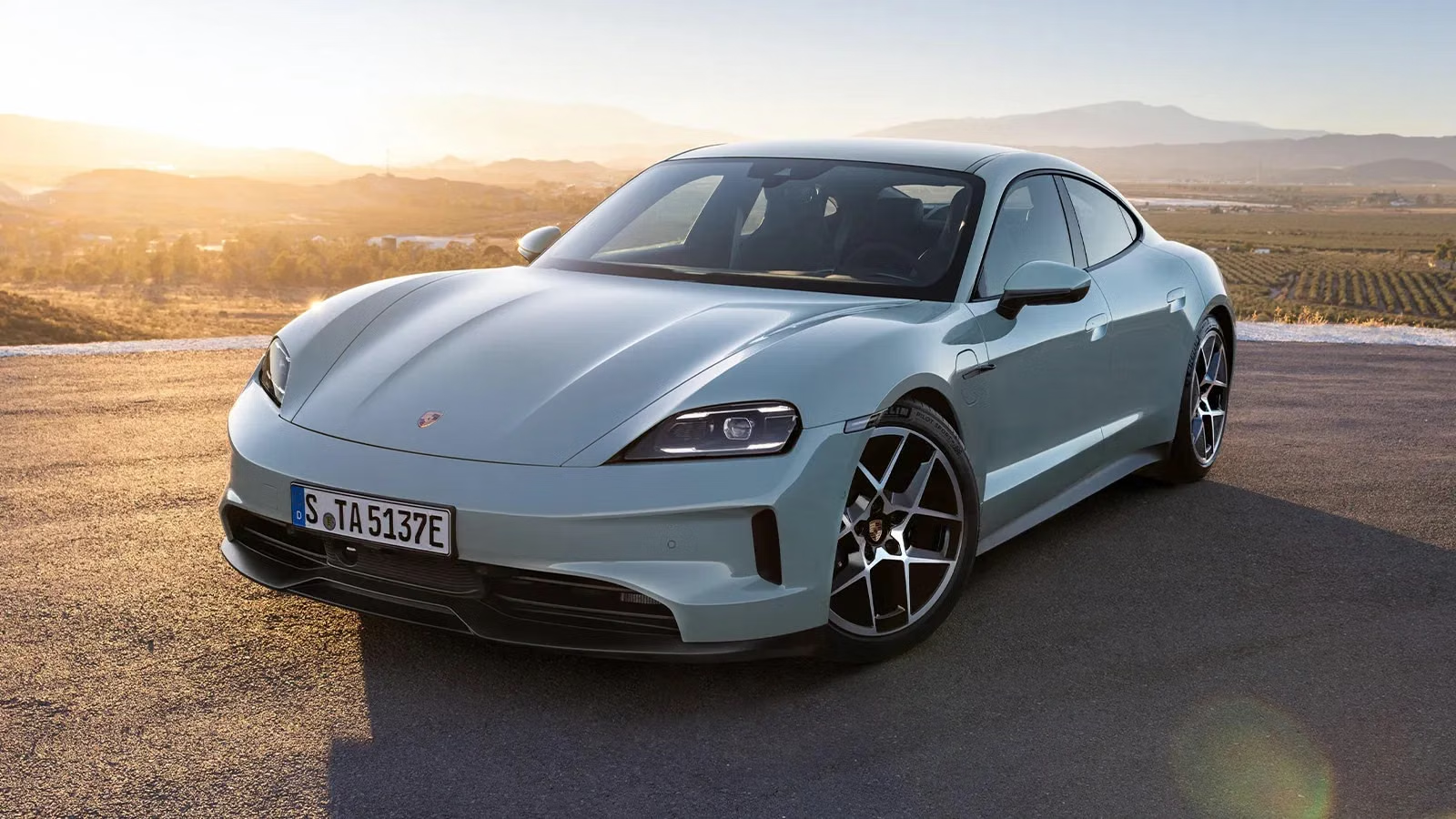
A federal judge has refused to move most of a proposed Porsche Taycan battery-fire class action out of court and into individual arbitration. The ruling by U.S. District Judge Eleanor Ross allows the bulk of the case to proceed despite language in Porsche purchase agreements that waives court proceedings and bars class claims.
The decision preserves a route for owners to pursue collective claims over the Taycan’s high-voltage battery and its effect on usable driving range. It does not establish that the batteries are defective or prone to fire, and it does not order Porsche to replace battery packs or buy back vehicles. Those questions remain unresolved as the litigation continues.
Why Porsche’s arbitration argument mattered
The proposed class action, filed two years ago in the Northern District of Georgia, concerns 2020 through 2024 Taycan models across multiple variants and trim levels. The owners allege that the cars’ 800-volt lithium-ion battery packs can develop a short circuit that creates a fire risk.
Porsche sought to compel arbitration using a purchase-agreement provision stating: Purchaser understands that by entering into this arbitration agreement, purchaser gives up his or her right to have claims, disputes, or controversies decided in court. Further, Purchaser shall be barred from pursuing class action claims or class-wide arbitration claims.
Such a clause can shape more than the location of a dispute. Individual arbitration separates owners’ claims, while a class action can consolidate allegations involving a shared product architecture, recall response or claimed loss in value. Ross denied Porsche’s motion to compel arbitration and declined to dismiss most of the lawsuit. She dismissed some claims without prejudice, allowing the affected plaintiffs an opportunity to revise and refile them.
The procedural result is therefore narrower than a judgment on battery safety but still consequential: Porsche did not end the collective case at this stage. The surviving allegations can continue through the court process, subject to later motions, evidence and rulings.
An 80% charging limit has a direct owner cost
The litigation follows three reported recalls connected to the Taycan’s high-voltage battery issue. Porsche has not replaced every Taycan battery and has reportedly instructed affected owners to limit charging to 80% while the relevant safety response is carried out.
That restriction is important because it turns a battery-safety measure into an operating limitation owners encounter on every longer trip. Preventing use of the upper 20 percentage points of charge reduces the energy available before departure compared with a full charge. The resulting mileage loss is not identical for every car because range also depends on model, temperature, speed, terrain and accessory use, but the direction of the effect is straightforward: less usable stored energy means less available driving range and potentially more frequent charging.
An interim charging ceiling can be a prudent way to reduce exposure while inspections, diagnostics or repairs are performed. It is not equivalent, however, to restoring the full capability an owner expected from the vehicle. That difference helps explain why the adequacy of the recall response is central to the dispute. Owners are seeking broader remedies, including battery replacement or vehicle buybacks, but no court has ordered those outcomes.
The proposed model-year span also should not be read as proof that every 2020-2024 Taycan has the same condition or remains under the same charging guidance. The available information does not identify how many vehicles are currently affected, which specific recall campaigns imposed the 80% limit, or whether completed work has removed that restriction from particular cars.
The next phase will determine whether the owners can substantiate their battery-defect and remedy claims, and whether Porsche can defeat them on other grounds. Until then, the firmest result is procedural but significant: the arbitration clause did not stop most of the Taycan class action, while the dispute over battery safety and reduced usable range remains open.
| More aerospace and engineering stories, right in your MSN feed. Follow AMI on MSN |
By Thomas Caldwell — AMI’s senior editor for mechanical and mobility engineering, covering vehicle electronics, systems integration, electrification, chassis systems, propulsion, and safety policy.