Europe’s Drone Wall Risks Arriving Unprepared for Jet-Powered Shaheds
A new Belfer Center assessment warns that Europe’s planned drone-defense initiative could reach initial operational capability at the end of 2026 without being designed for reactive-jet Shaheds and attack profiles saturated by electronic warfare. It also identifies the detection architecture not simply the supply of interceptors as a likely future constraint.

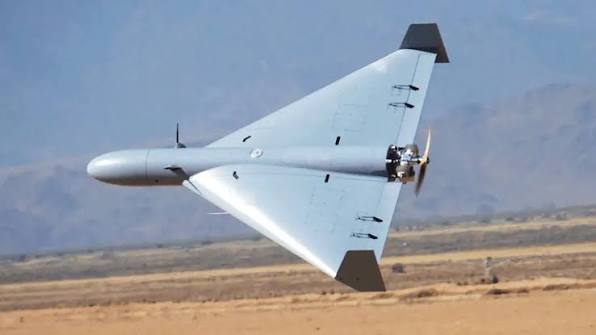
The Geran-5 illustrates why speed changes more than the interceptor requirement. Faster targets demand adaptable sensors, interoperable command systems and affordable effectors that can be upgraded faster than conventional procurement cycles. An interceptor that is fast enough on paper still has limited value if the wider network cannot detect, classify and assign the target early enough for an engagement.
Ukraine’s current interceptor effort provides a timely measure of that challenge. Defense Minister Yevhen Khmara said in Kyiv on Aug. 29 that four prospective systems had undergone field testing against jet-powered Shahed-type drones. He said the task is to bring the designs to the required performance level quickly and scale production to thousands of units. No test results were disclosed, however, and none of the four candidates has been confirmed as ready for mass production.
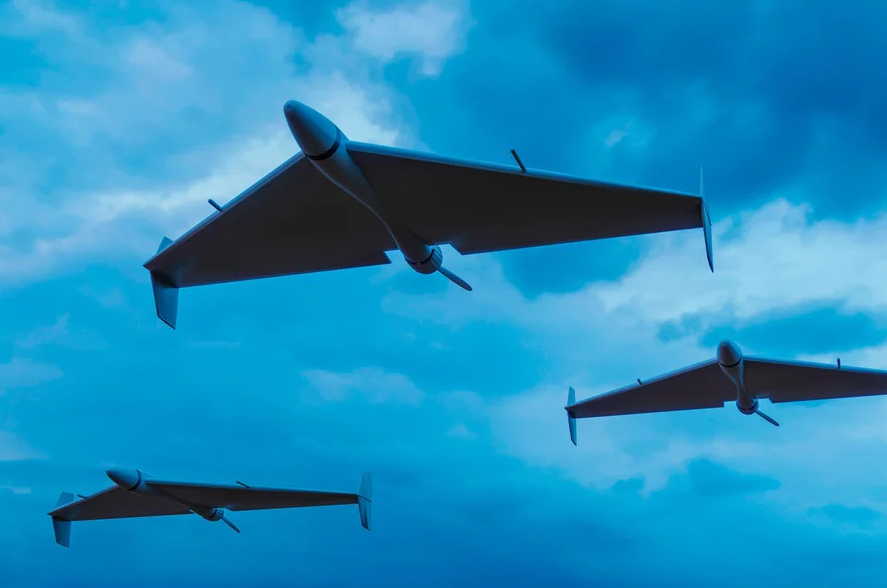
The speed comparison explains the urgency but not the entire engineering problem. Russia’s Geran-4 and Geran-5 are reported to reach as much as 600 kilometers per hour, more than three times the speed of piston-powered Shaheds. Higher speed compresses the time available to detect a drone, establish a track, classify it, assign an interceptor and complete the engagement. It can therefore expose delays across the full system rather than merely outrun a particular aircraft.
The Belfer assessment divides that system into three broad functions: seeing a threat, deciding how to respond and delivering an effector. Europe’s initiative is described as concentrating heavily on multi-year funding for effector production through major contractors. The assessment argues that radar, acoustic, radio-frequency and electro-optical sensors remain poorly integrated across vendors, while the software layer needed to combine their data is further behind.
That distinction matters at continental scale. A standalone interceptor demonstration can rely on a selected sensor and a controlled data path. An operational network must accept information from different national systems, maintain a usable track and pass it to whichever suitable interceptor is available. If those components use closed or incompatible interfaces, Europe could acquire numerous capable products that cannot function as one defense architecture.
The assessment warns that the European Union’s broader funding could produce more than 27 systems that share financing but remain incompatible. Its proposed response is not a single mandated design. Instead, it recommends requiring publicly funded manufacturers to publish application interfaces so funded sensors, command layers and effectors can connect. It also proposes accelerated procurement for frontline states and licensing arrangements that make Ukrainian technology easier to integrate.
This approach would preserve competition among interceptor designs while establishing a common path for sensor and command data. It could also make upgrades less disruptive: a new detector or faster effector would not necessarily require replacement of the rest of the network. That modularity is especially important against a drone family that has repeatedly changed propulsion, navigation antennas and communications equipment.
A CSIS analysis of Geran development describes an iteration cycle driven by rapid field feedback, with successful modifications moving into production far faster than a conventional Western acquisition program could plausibly match. Europe’s risk is therefore temporal as well as technical. A system specified against today’s target may enter service after that target’s communications, electronic-warfare resilience or flight performance has changed.
Production remains an unresolved part of the equation. Ukraine has tested four interceptor candidates and set a goal of manufacturing suitable systems by the thousands, but an effective mass-produced answer has not been confirmed. Europe likewise needs enough affordable effectors to handle sustained activity without relying primarily on scarce conventional missiles or fighter aircraft. Yet buying large quantities before settling detection and interoperability standards could lock funding into systems that are difficult to update or combine.
The civilian consequence is already visible in Ukraine. Officials say launches increasingly spread across the day rather than remaining concentrated in overnight waves. Prime Minister Serhii Koretskyi said prolonged alerts disrupt transportation, logistics, businesses, schools and kindergartens. On Aug. 27, Kyiv recorded 13 alerts totaling nearly 15 hours, while repeated evacuations delayed some trains by several hours.
Europe’s late-2026 milestone will consequently mean little if it measures deployed hardware without measuring how quickly the entire network can adapt. The decisive capability will not be one interceptor’s maximum speed. It will be whether detectors, command software and mass-produced effectors can evolve together before the threat changes again.
| More aerospace and engineering stories, right in your MSN feed. Follow AMI on MSN |
By Stephen Wallace — Editor for AMI’s aerospace integration and unmanned mobility coverage, focused on drone manufacturing, VTOL systems, autonomous networks, and air-ground mobility links.