HAL Completes 40-Plane Tejas Order Decade Late Amid Reported 13-Squadron Deficit
Hindustan Aeronautics Limited has completed the Indian Air Force’s original 40-aircraft Tejas Mk-1 order, but the milestone comes with two substantial qualifications. The final twin-seat trainers arrived roughly a decade after their contractual deadline, while the service reportedly operates about 29 fighter squadrons against an authorised strength of 42.

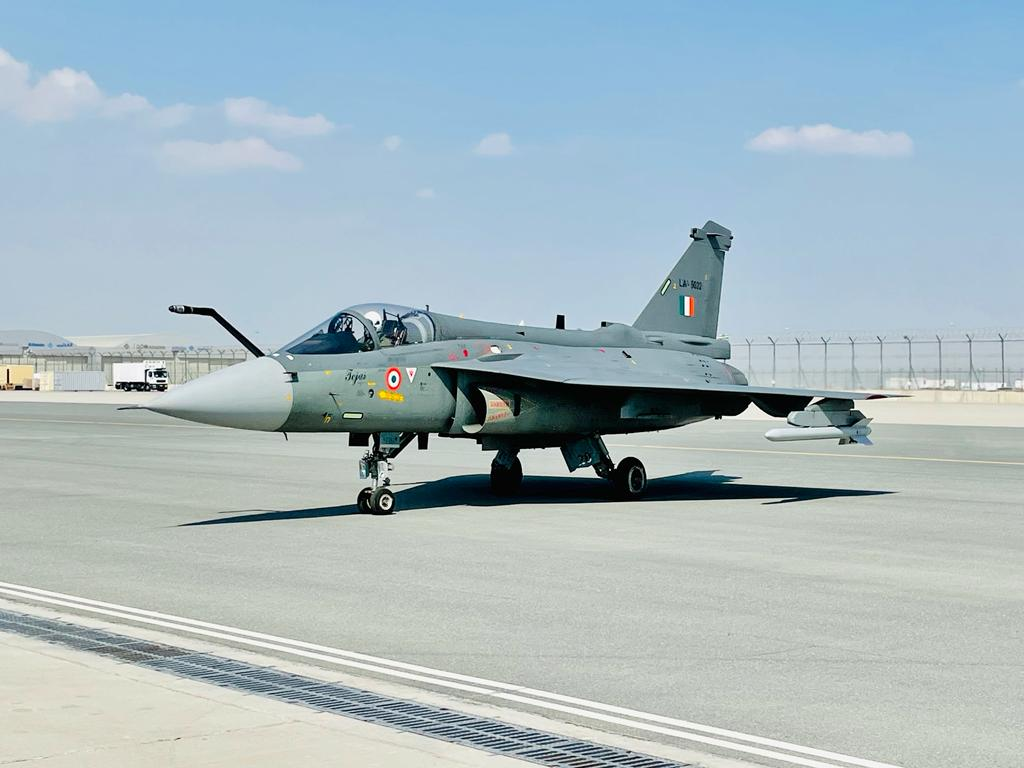
HAL handed over trainers SPT7 and SPT8 in Bengaluru on September 18, closing an order comprising 32 single-seat fighters and eight twin-seat aircraft. All 32 fighters had been delivered by August 2023, leaving trainer production to trail the combat-aircraft schedule. The final handover also follows earlier reporting that the larger Tejas Mk-1A program had yet to begin deliveries more than two years after they were due to start.
A completed order with a long schedule overrun
The original Mk-1 requirement was divided into two contracts. India ordered 20 Initial Operational Clearance aircraft in March 2006, with completion targeted for December 2011. A second contract for 20 Final Operational Clearance aircraft followed in December 2010 and was scheduled for completion by December 2016. Each batch contained 16 single-seat fighters and four trainers.
Production priority went to the single-seat aircraft used by No. 45 Squadron “Flying Daggers” and No. 18 Squadron “Flying Bullets.” No. 45 became the first Tejas unit in July 2016, while No. 18 was re-established with Final Operational Clearance-standard aircraft in April 2020. That priority helped place fighters in operational units, but it pushed the trainer requirement toward the back of the program.
The first series-production Tejas trainer did not make its maiden flight until April 2023 and entered air force service that October. By January 2025, HAL had delivered 38 of the 40 aircraft. At that stage, the remaining trainers were reported not to have fully met the air force’s qualitative requirements. Their September 2026 delivery ends the contractual backlog, but the elapsed time shows why completing a small production run is different from sustaining a larger fleet plan.
The next constraint is converting production into deliveries
Attention now moves to the 83-aircraft Tejas Mk-1A contract signed in February 2021. That order covers 73 Mk-1A fighters and 10 trainers, with the original plan calling for three aircraft in the third year and 16 annually over each of the following five years. That planned rate matters more to squadron recovery than the handover of the last two Mk-1 trainers.
Aircraft production is not simply an airframe count. A deliverable fighter also needs its engine, radar, electronic-warfare equipment, software and weapons integration brought together in an accepted configuration. Testing and certification must then support the handover, while training, maintenance capacity, spares and logistics must grow with the operational fleet. A line producing structures faster than those elements can be integrated creates inventory, not squadron strength.
Information attributed to program sources indicated that HAL had approximately 27 Mk-1A airframes and around 10 engines by September 2026, with radar, electronic-warfare, weapons and software work still unresolved. Those airframe and integration figures have not been independently confirmed and should not be read as delivery-ready aircraft.
Engine supply is one visible part of that production chain. The Tejas uses the imported GE F404 following India’s unsuccessful effort to field the Kaveri engine for the aircraft. GE Aerospace announced that it had shipped three additional F404-IN20 engines to HAL in August, and the broader requirement covers 99 engines. Delays in that supply schedule have affected Mk-1A deliveries, although engines alone do not settle the remaining integration work.
The eight Mk-1 trainers have an important role in preparing pilots and supporting conversion to the aircraft, but they cannot by themselves erase a reported 13-squadron gap. The decisive Mk-1A measure will be whether HAL and its suppliers can turn airframes, engines and mission systems into fully integrated aircraft at a repeatable rate. After a 40-plane order took until 2026 to close, that delivery cadence not the number of partially assembled jets will determine how quickly Tejas can contribute to rebuilding the force.
| More aerospace and engineering stories, right in your MSN feed. Follow AMI on MSN |
By David Whitaker — Associate editor for AMI’s aerospace and drone systems desk, translating flight systems, aircraft programs, spaceflight, and UAV developments into accessible technical stories.