Ukrainian Drone Strikes Push Russian Refining to 20-Year Low
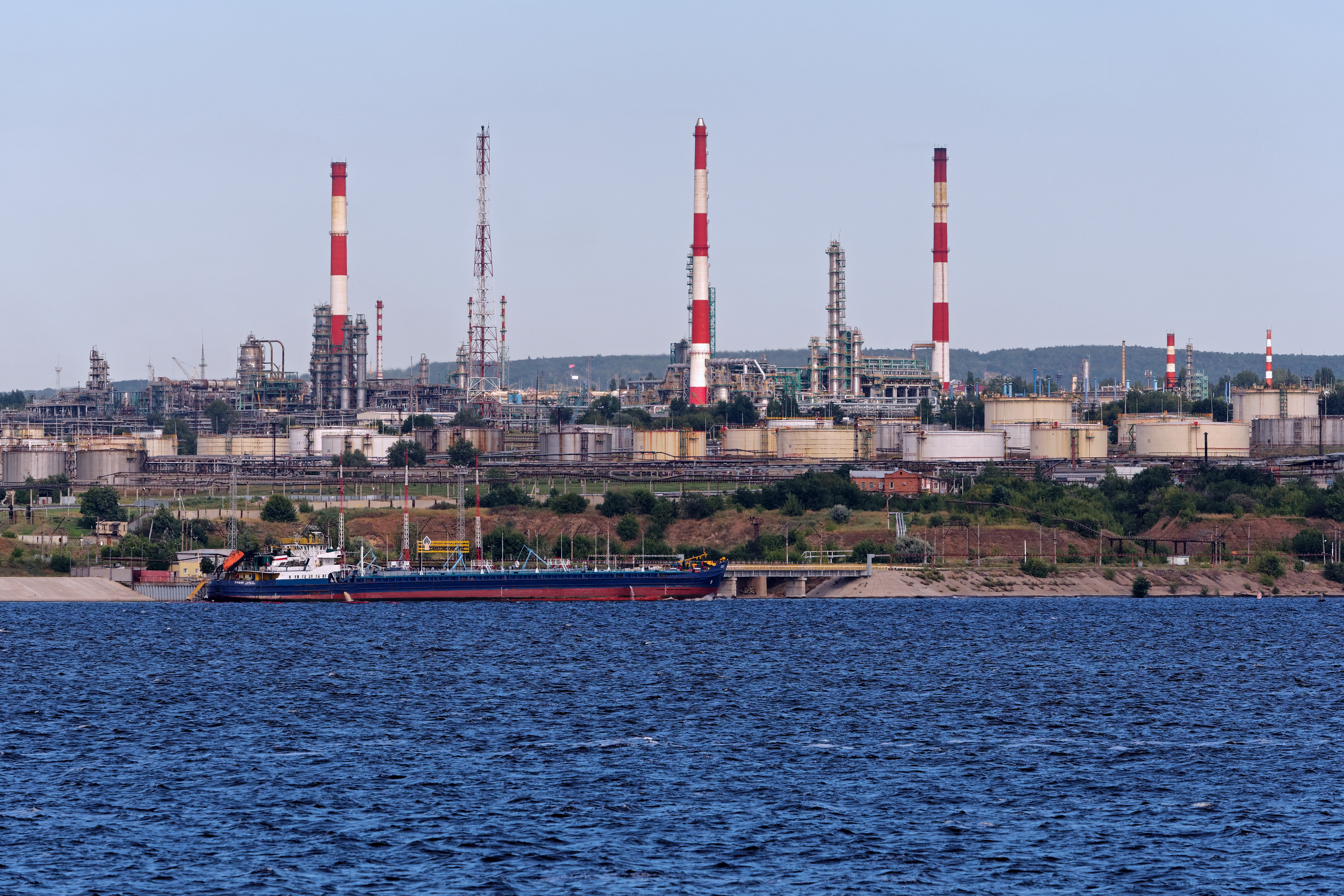
Russian refinery throughput fell to 3.8 million barrels per day in June 2026, about 30% below the level a year earlier and the lowest in more than 20 years, according to an International Energy Agency analysis. Reported gasoline output was down 20% from 2025 levels, while diesel production was estimated to have fallen by nearly 30%.
Those losses pushed Russia to escalate restrictions intended to keep fuel inside the country: a gasoline export ban was followed by the first jet-fuel export ban in mid-June and the first diesel export ban on July 8. Repeated damage attributed to Ukrainian drone strikes has therefore widened what had appeared as regional rationing into a nationwide allocation contest how to divide reduced refinery output among motorists, aviation, agriculture and other domestic users while cutting exports.
The central engineering issue is not simply how much crude oil Russia can produce. A refinery must convert crude into usable products, and its more complex secondary processing equipment helps increase the yield and quality of gasoline, jet fuel and diesel. The IEA said damage has been reported across primary and secondary processing units, with the latter generally requiring longer repairs when seriously damaged.
That distinction explains why repeated attacks can have a cumulative effect beyond a temporary shutdown. The IEA estimated that minor damage to a crude-distillation unit can typically be repaired in one or two weeks, while seriously damaged complex secondary units can take six to eight months on average. Sanctions also limit access to some equipment suppliers, potentially extending replacement schedules.
Russia has tried to preserve production by accelerating repairs, delaying scheduled maintenance and returning mothballed equipment to service. Those steps can restore near-term throughput, but they do not erase the reliability burden created by repeated damage and repair cycles. Deferred maintenance also shifts work into the future rather than eliminating it, narrowing the operating margin available if another unit goes offline.
The scale compounds that maintenance pressure. Russia has 32 major refineries and about 6.5 million barrels per day of installed capacity, according to the IEA. In the first eight months of 2026, a Russian refinery was hit on average once every three days, and only five major refineries reportedly remained untouched by Ukrainian drones as of late August. Claims about individual strikes and damage remain difficult to verify independently during an active conflict, but the national throughput and policy response show a system operating under substantial pressure.
The earlier retail controls offered a preview of how lost processing capacity reaches consumers. After a Ukrainian drone attack reportedly disabled the Orsknefteorgsintez refinery, which has stated annual capacity of 5.7 million tons, Orenburg stations limited gasoline purchases to 30 liters per vehicle, imposed diesel caps and prohibited filling portable canisters. Novosibirsk adopted a retail-markup limit, while authorities in occupied Crimea restored QR-code rationing. Those regional reports require attribution, and not every market intervention has been established as a direct result of the Orsk disruption.
Export controls are the national version of the same allocation mechanism. Gasoline is especially sensitive because Russia historically maintained a relatively tight domestic balance. Diesel represents a larger reversal: Russia previously exported roughly half of its diesel and gasoil output, yet restrictions were extended as harvest-season demand approached its seasonal peak. Jet-fuel export controls add aviation demand to the same constrained pool.
Imports provide another indication that the problem has moved beyond isolated regions. The Centre for Research on Energy and Clean Air reported that Russia imported a record 172,000 tonnes of oil products in August, more than seven times the previous monthly high. The volume was not large enough to replace national refining capacity, but it imposed added transport and handling costs on a country historically structured as a major refined-product exporter.
The consequences also spread outside fuel stations. In occupied Crimea, hotel bookings reportedly fell by more than 70% from the previous July amid fuel shortages and electricity outages. That figure cannot isolate fuel availability as the sole cause, but it illustrates how transport constraints can propagate into tourism and other services dependent on predictable mobility.
Russia still has several buffers: redirecting exports, drawing on inventories, importing products and prioritizing deliveries to vulnerable regions. Each buys supply at a cost, however, and none repairs damaged processing equipment. Reflecting that constraint, the IEA lowered its forecast for Russian refinery throughput to an average of 4 million barrels per day for the remainder of 2026 and for 2027 a projected recovery from June’s low, but still a limited one.
| More aerospace and engineering stories, right in your MSN feed. Follow AMI on MSN |
By Stephen Wallace — Editor for AMI’s aerospace integration and unmanned mobility coverage, focused on drone manufacturing, VTOL systems, autonomous networks, and air-ground mobility links.