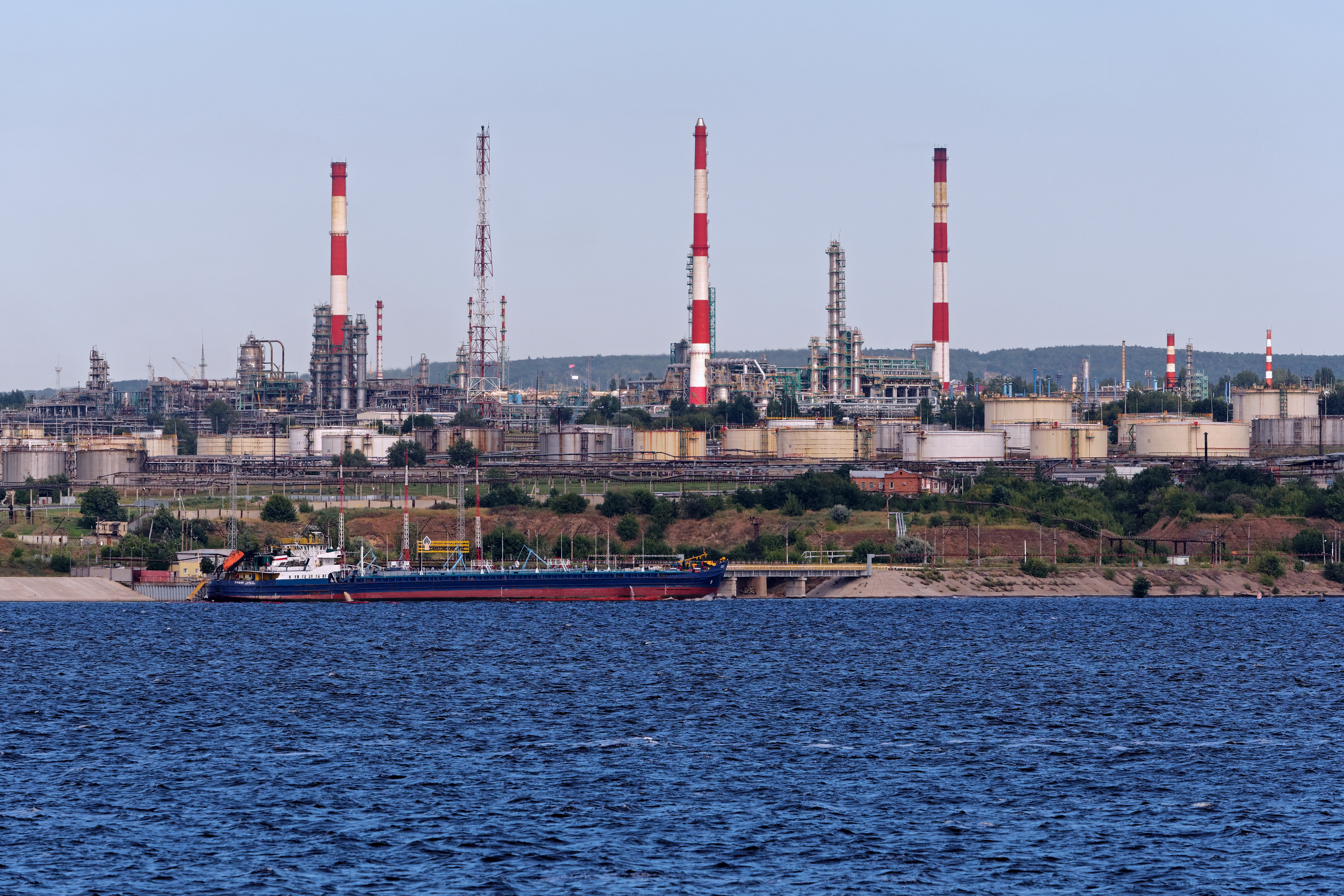
Russia Buys Back Fuel Refined From Its Own Crude as August Imports Top 172,000 Tonnes
Russia imported a record 172,000 tonnes of refined fuel in August 2026, more than seven times its previous monthly high. The shipments included products from South Korea and gasoline refined in India from Russian crude a striking reversal for a country long structured to export petroleum products rather than buy them back from overseas plants.
The import surge followed repeated Ukrainian drone strikes that disrupted Russian refining, while Moscow prioritized domestic fuel supply, restricted exports and watched product shipments decline. According to the Centre for Research on Energy and Clean Air, or CREA, August oil-product imports were also three times Russia’s total for all of 2025. At the same time, seaborne oil-product export revenue fell 32% from July to €78 million per day, and export volumes dropped 21%.
The number matters less as a substitute for Russia’s enormous refining system than as evidence of a changed supply strategy. Russia is using international replacement logistics to cover gaps that domestic refineries and regional distribution can no longer absorb reliably. Imports remain small against national demand, but they introduce extra transport legs, higher freight and insurance costs, and dependence on foreign processing capacity.
A refinery problem becomes a distribution problem
Refineries do more than separate crude oil into saleable products. Their more complex processing units raise the yield and quality of gasoline, diesel and jet fuel. When enough capacity is unavailable, the problem cannot be solved simply by moving crude oil to another Russian region: motorists and industry need finished fuels in the right grades, at the right terminals and at the right time.
The International Energy Agency reported that Russian refinery throughput fell to 3.8 million barrels per day in June, its lowest level in more than 20 years and about 30% below a year earlier. Reported gasoline output was down 20% from 2025, while estimated diesel production fell nearly 30%. Russia responded with export restrictions intended to preserve domestic supplies.
That response explains why imports and declining exports are two parts of the same system adjustment. Russia can redirect product previously intended for foreign buyers, but that buffer shrinks as refinery output falls. CREA found that oil-product loadings at Russian ports in August were less than half their August 2025 level. Domestic prioritization can conserve supply; it cannot manufacture replacement barrels.
The stress has reached retail distribution. Authorities in Orenburg and Lipetsk reportedly imposed purchase controls, while the governor of Voronezh said fuel was being redirected to regions with more acute shortages and offered no indication of near-term improvement. Those local restrictions are important because a national fuel balance can appear manageable while particular regions run short due to distance, transport capacity or the grades available.
India supplied most of the replacement fuel
Gasoline made up 74% of Russia’s August oil-product imports, compared with 6% during 2023 through 2025, CREA calculated. India supplied 70% of all imported products and 94% of the imported gasoline: 120,000 tonnes valued at €78 million. That gasoline was loaded at the Vadinar refinery, which sourced all its crude from Russia during the first eight months of 2026.
The circular trade captures the industrial consequence. Russian crude left the country, was processed abroad, and returned as gasoline because available domestic processing could not fully meet the immediate requirement. South Korea supplied another 18,000 tonnes, mostly gasoil eight times its three-year monthly average for such shipments to Russia. Egypt supplied 25,000 tonnes of diesel.
This is not proof that Russia is running out of fuel nationwide. The August import volume is limited beside its overall market, and Russia retains a large refining base. Refiners have also delayed maintenance, accelerated repairs and returned mothballed units to service, according to the IEA. Those actions can support short-term throughput, although repeated disruptions create uncertainty over reliability and maintenance needs.
Drone scale is testing repair capacity, not only defenses
The pressure comes from repetition across a geographically distributed industrial network. The IEA counted a Russian refinery hit on average once every three days during the first eight months of 2026 and said only five major refineries remained untouched by late August. These figures describe reported strike frequency and reach; they do not independently establish the damage from each event.
Air defense is therefore only one part of the readiness burden. Operators must also protect facilities, assess damage, source equipment, schedule specialist labor and keep unaffected units operating. The IEA said relatively minor damage to basic crude-processing equipment can sometimes be repaired within one or two weeks, while seriously damaged complex units can take six to eight months. The exact condition of individual plants remains dependent on attributed official and commercial reporting.
Orsk illustrates that uncertainty without defining the national picture. Regional officials said the refinery was shut after a strike and warned repairs could take up to six months, but the damage extent was not independently verified. The broader, measurable signal is the supply response: in August, Russia supplemented rationing and export controls by importing more than seven times its previous monthly record, including gasoline made abroad from its own crude.
| More aerospace and engineering stories, right in your MSN feed. Follow AMI on MSN |
By Stephen Wallace — Editor for AMI’s aerospace integration and unmanned mobility coverage, focused on drone manufacturing, VTOL systems, autonomous networks, and air-ground mobility links.