Vanuatu Defends $9 Million Purchase of Two 51-Year-Old Twin Otters
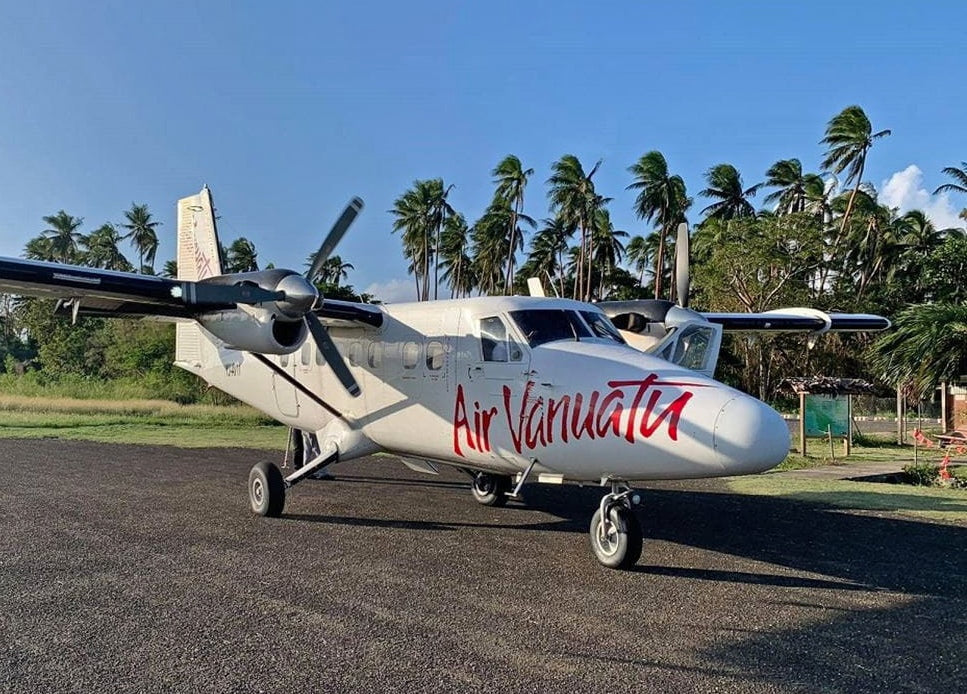
Vanuatu paid VUV1.08 billion, about $9 million, for two Twin Otters built in 1975 because it needed aircraft quickly to restore domestic service. Aviation Management Sales and the government are now defending that purchase, saying extensive rebuilding and regulatory certification give the aircraft more than 15 years of expected service at Air Vanuatu’s operating rate.
The public concern is understandable: taxpayers and domestic travelers are being asked to rely on two 51-year-old airframes that stopped flying for Indonesia’s Merpati Nusantara Airlines in 2014 and were stored for more than a decade. Aviation Management Sales rejects allegations that it supplied unsafe aircraft, and no regulator is reported to have found either aircraft unsafe.
The Florida company acquired the aircraft in 2023, dismantled them, shipped them in containers to Florida and rebuilt them. It agreed in 2025 to sell them to Vanuatu, which leases them to state-owned Air Vanuatu through a special-purpose corporate entity. YJ-AV15, manufacturer serial number 481, reached Port Vila in January. YJ-AV16, serial number 472, arrived in October 2026.
Calendar age is only the starting point
An aircraft’s manufacturing date does not, by itself, establish its airworthiness or remaining useful life. The more relevant measures include accumulated flight hours and cycles, structural life limits, corrosion condition, inspection results, component status, maintenance history and whether modifications were completed using approved technical data.
YJ-AV16 had accumulated 40,399 flight hours across 49,955 flights when its refurbishment was completed. The Prime Minister’s Office says the work left approximately 25,000 hours on its main fuselage and 50,000 hours on its wings. At Vanuatu’s expected utilization, it says those figures represent more than 15 additional years of service.
Those claims describe remaining structural capacity rather than a promise that every installed part will operate for another 15 years without intervention. Engines, propellers, landing gear, controls, hydraulic equipment and other components follow their own inspection, overhaul and replacement schedules. Operating economics will also depend on reliability, parts availability and the maintenance burden that emerges in service.
The government says the rebuild included wing-life extensions, engine and propeller overhauls resetting those units to zero hours, and new wing struts, fuel tanks, cables, windows and hydraulic components. Garmin digital cockpit equipment was also installed. De Havilland Canada’s separate Twin Otter Re-Life programs illustrate the broader engineering principle: approved replacement of critical structures can add defined hours or cycles to specific aircraft sections. Such programs extend the life of identified structures; they do not erase the aircraft’s complete operating history.
The purchase bought time and fleet compatibility
Vanuatu’s case for the transaction rests partly on availability. The Prime Minister’s Office says new Twin Otters would have cost between $8 million and $10 million and required waits exceeding 12 months. The two rebuilt aircraft were intended to restore domestic connections sooner, although the available account does not provide a complete like-for-like breakdown of new-aircraft pricing, refurbishment costs, warranties or long-term maintenance obligations.
Fleet commonality also has practical value. Air Vanuatu already operates three other Twin Otters and an ATR72-600. Adding the same aircraft type avoids creating an additional pilot-training pipeline, engineering qualification requirement and spare-parts inventory. For a small island airline, those duplicated systems can impose substantial costs and reduce availability when specialized personnel or parts are scarce.
The tradeoff is that a lower acquisition cost and faster delivery can transfer more attention to inspection quality, maintenance planning and residual-life tracking. A fair value assessment therefore needs more than the purchase price or aircraft age. It should include expected annual utilization, scheduled heavy-maintenance costs, component warranties, dispatch reliability and the cost per available seat over the planned service period.
Certification answers one question, not every value question
Air Vanuatu engineers inspected both aircraft before their ferry flights, and the Civil Aviation Authority of Vanuatu performed additional inspections and certification after arrival. That certification is the central operational threshold: the aircraft had to meet the applicable requirements before entering service.
Public scrutiny can still reasonably extend beyond basic airworthiness. The strongest independent basis for evaluating the purchase would be the aircraft records identifying approved life-extension modifications, applicable supplemental type certificates, recorded flight hours and cycles, corrosion and structural inspection results, overhaul documentation, component life limits and continuing maintenance requirements.
Those records would allow safety compliance and taxpayer value to be assessed separately. Certification establishes whether an aircraft is approved to operate; it does not by itself determine whether Vanuatu obtained the best price or lowest lifetime cost. Air Vanuatu is already seeking a second ATR72-600, while the government is considering additional Twin Otters and a narrowbody jet. How these two rebuilt aircraft perform in service will therefore influence more than one disputed purchase it will shape the technical and financial basis for the country’s next fleet decisions.
| More aerospace and engineering stories, right in your MSN feed. Follow AMI on MSN |
By Thomas Caldwell — AMI’s senior editor for mechanical and mobility engineering, covering vehicle electronics, systems integration, electrification, chassis systems, propulsion, and safety policy.