




USS Abraham Lincoln’s 264 Days at Sea Reshape Navy Deployment Plans
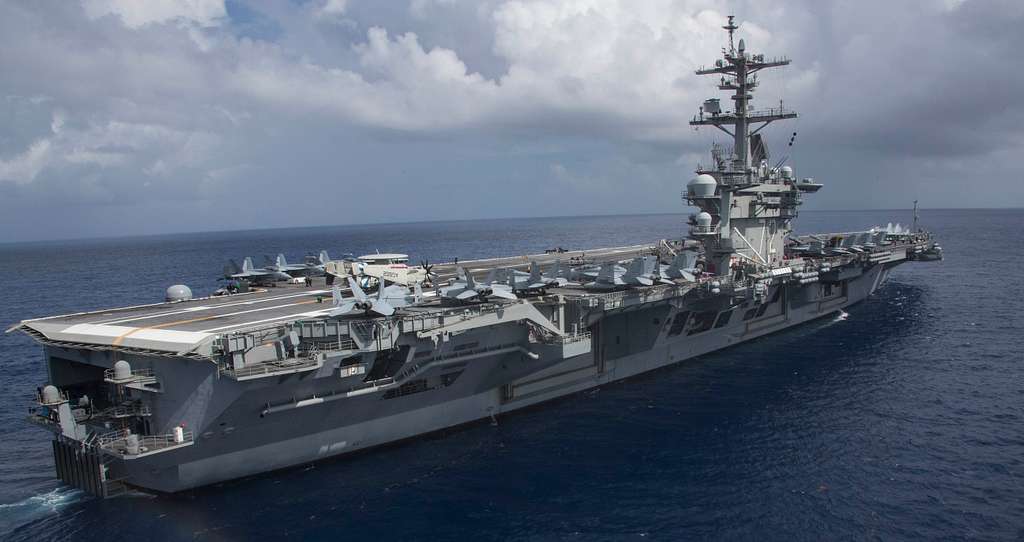
USS Abraham Lincoln finally received its first full port call after 264 uninterrupted days at sea, following its relief by USS George Washington in August. The carrier reached Thailand on Sept. 2, giving roughly 5,000 sailors and Marines a five-day reset before it departed toward San Diego.

Navy leaders now say the lack of port calls not simply the length or operational tempo of the deployment made Lincoln’s experience harder than other extended carrier missions. The service has improved its Arabian Sea resupply chain, is searching for viable port-call options and is trying to give crews and families more predictable deployment timelines.
That distinction matters because a carrier can remain operational at sea while conditions for the people aboard become progressively more demanding. Nuclear propulsion reduces the ship’s dependence on fuel stops, while underway replenishment can deliver aviation fuel, food, parts and other supplies. Neither capability gives thousands of people the equivalent of leaving the ship, resting ashore and temporarily stepping outside an around-the-clock operating environment.
Chief of Naval Operations Adm. Daryl Caudle contrasted Lincoln with USS Gerald R. Ford, which completed a longer 326-day deployment in May but made several port visits. It’s not the operations they’re nearly identical in the combat sortie process that they were conducting, Caudle said. “It’s really the port calls and the ability to reset and take a knee.”
Resupply solves only part of the endurance problem
Lincoln’s deployment exposed two related but separate planning requirements. The first is keeping a carrier strike group supplied. The second is giving its crew a meaningful break. Better logistics can address the first requirement, but port access remains central to the second.
During the earlier part of Lincoln’s deployment, the Navy had to establish a more systematic flow of supplies and parts from several distant support points. Caudle said the resulting logistics chain is now in a better position to sustain two carrier strike groups in the Arabian Sea. That improvement should reduce uncertainty around replenishment for follow-on ships, although it does not eliminate the personnel burden of extended time aboard.
The Navy is therefore examining possible port-call opportunities for carriers operating in the region. Caudle said planners were considering locations in Africa and India, as well as Singapore. The significance is not any one prospective destination, but the attempt to build crew resets into deployment planning rather than treating them as an optional benefit that disappears when schedules tighten.
Lincoln’s Thailand arrival demonstrated how large that gap had become. The ship had been deployed for 286 days by the time it reached port, including 264 consecutive days at sea. Its five-day visit was short relative to the deployment, but it gave the crew its first full opportunity to go ashore.
Predictability is becoming a readiness requirement
The other planning change concerns what sailors and families are told before and during a deployment. Caudle has said repeated extensions in small increments leave families without a reliable endpoint. The Navy is working to provide greater certainty, even when it expects a deployment to run longer than its preferred seven-month target.
Families of personnel assigned to the next deploying carrier group are already being told to plan for an absence exceeding seven months. That approach does not reduce the time away, but it changes the burden from an open-ended series of extensions to a longer period that households can plan around. Weddings, births, childcare, leave and other family commitments cannot always be rearranged, yet earlier notice at least makes the tradeoff visible.
Questions about Lincoln’s crew welfare had already prompted congressional demands for answers and a relief plan. Families and lawmakers cited reported problems involving mental health, food, water, plumbing and sanitation. Navy officials disputed or declined to confirm several accounts and said they had not observed an increase in reported suicidal ideation or suicide attempts at that stage. Those claims should not be treated as established findings, but the disagreement reinforced the need for clearer information about deployment duration and support.
George Washington’s completed relief of Lincoln removes the earlier uncertainty over when the handoff would occur. It does not resolve the underlying fleet constraint. Caudle has warned that longer deployments will probably continue in the near term, while carrier deployments since late 2023 have averaged 8.5 months, according to the USNI News carrier deployment database.
The practical test will come with the carriers that follow Lincoln: whether the Navy’s improved supply chain can sustain them while planners also secure actual breaks ashore. Lincoln showed that replenishment can keep a carrier working for months, but 264 uninterrupted days at sea also showed why keeping the ship supplied is not the same as resetting its crew.
| More aerospace and engineering stories, right in your MSN feed. Follow AMI on MSN |
By David Whitaker — Associate editor for AMI’s aerospace and drone systems desk, translating flight systems, aircraft programs, spaceflight, and UAV developments into accessible technical stories.


