GM Transmission Lawsuit Alleges Lost Forward Drive Across Four Vehicle Lines
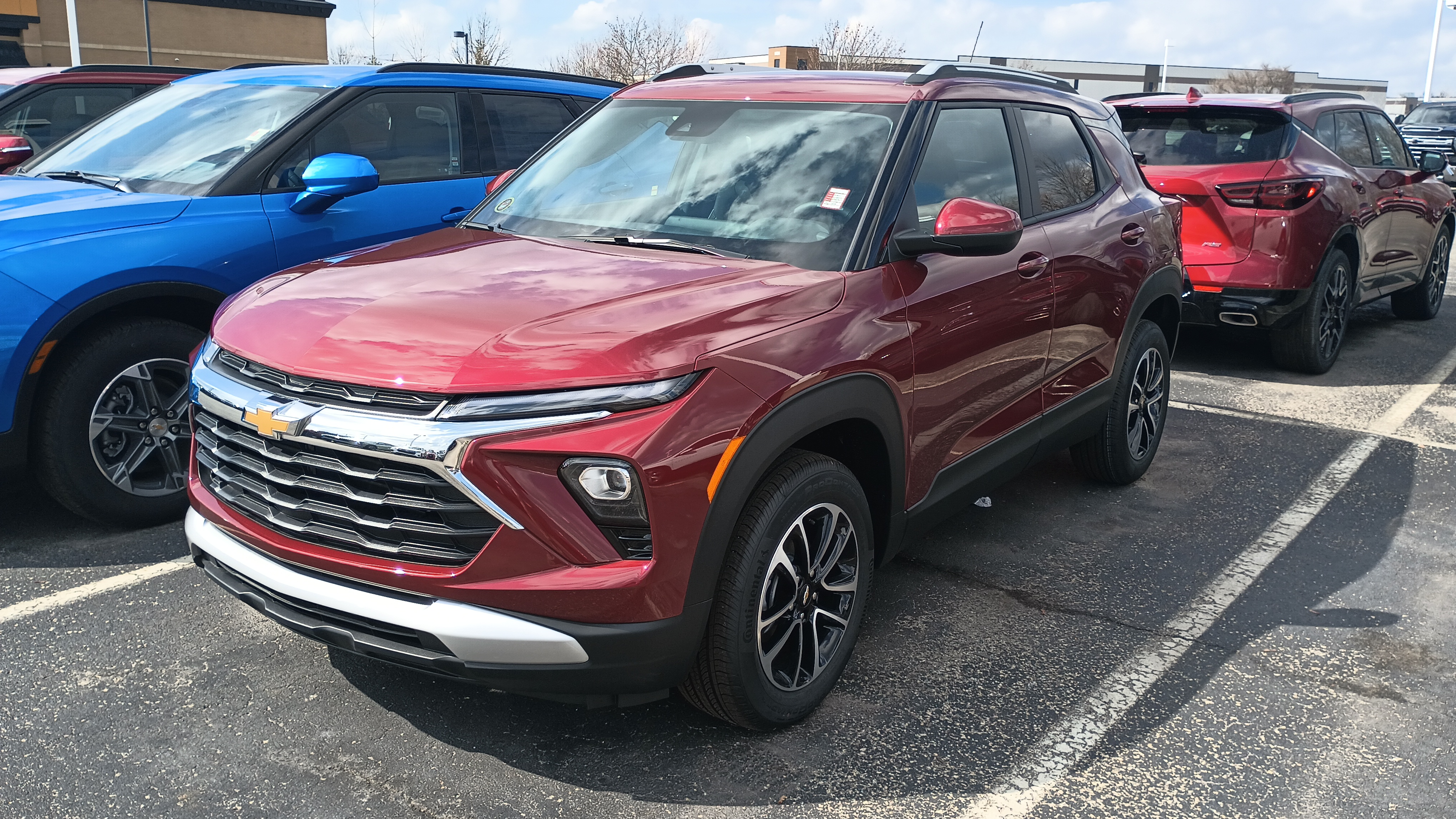
A General Motors owner has filed a proposed federal class action alleging that continuously variable transmissions in certain Chevrolet Malibu, Trailblazer and Equinox vehicles and GMC Terrain vehicles can hesitate, slip or lose forward motion. The case raises a consequential but unresolved question: whether documented service problems in two different transmission families amount to one defect that can support nationwide class treatment.

Williams v. General Motors LLC, No. 1:26-cv-01162, was filed September 15, 2026, in the U.S. District Court for the District of Delaware. GM had not answered the complaint when the case was described, no class had been certified, and no judge had found the transmissions defective or GM liable.
The most specific bulletin covers only two named models
The complaint’s clearest technical support is GM Service Bulletin 24-NA-009. As characterized in the filing and in a published account of the service guidance, it covers 2019 through 2025 Chevrolet Malibu vehicles and 2021 through 2025 front wheel drive Chevrolet Trailblazer vehicles equipped with the VT40 transmission.
That guidance links possible loss of forward engagement or slipping, along with diagnostic code P2714, to a clutch regulator valve sticking in the valve body. The condition may be intermittent or impossible to reproduce during a dealership visit. That matters because a vehicle can display a significant drivability symptom for its owner yet generate a service record saying technicians “could not duplicate” the concern.
The hydraulic mechanism is plausible in straightforward mechanical terms. The VT40 uses separate forward and reverse clutches, while valves and electronically controlled solenoids regulate fluid pressure. If the forward clutch does not receive or retain the required hydraulic pressure, selecting Drive may not produce effective forward engagement even if reverse remains available. The bulletin also warns of possible damage to the forward clutch piston, primary pulley bearing bore and transmission case.
That does not establish that every reported hesitation has this cause. It defines a particular diagnostic pathway for specified VT40-equipped Malibu and front wheel drive Trailblazer vehicles. The named plaintiff’s 2025 Equinox RS is outside that bulletin’s stated vehicle coverage.
The complaint must connect two transmission families
The proposed class extends beyond the VT40. It also relies on guidance concerning the TR690 transmission family, including Service Bulletin 16-151-24R and Preliminary Information bulletin PIP6033. The cited material discusses chain slip, judder, hesitation and damage involving chains, pulleys or bearings, with symptoms potentially progressing to slipping or complete loss of motion.
Those pathways are not necessarily identical to a sticking clutch regulator valve. A continuously variable transmission uses a chain or belt operating between variable diameter pulleys to change ratio without conventional fixed gears. Chain slip, pulley damage, bearing deterioration and failure of a hydraulic valve can all affect torque transfer, but they involve different components and potentially different diagnostic evidence.
The complaint calls the VT40 and TR690 architectures “same or substantially similar.” For class treatment, however, it will have to show that the proposed owners’ claims share sufficiently common factual and legal questions. Combining two transmission families, several vehicle lines and symptoms ranging from rough shifting to loss of motion makes that a central issue rather than a technical detail.
The plaintiff alleges rough operation, not complete failure
John Williams says he purchased a new 2025 Equinox RS for $36,587.12 in October 2024. He alleges that rough or delayed shifting began near 7,000 miles. At approximately 14,000 miles, a dealer replaced the front axles and reported that it had “topped off” the transmission fluid, but Williams says he has not received a permanent repair.
Williams does not allege that his Equinox suffered a catastrophic transmission failure or stranded him. That distinction will matter as the case develops because his experience must support claims extending to owners alleging more severe outcomes, including complete loss of forward motion.
The filing also counts 358 continuously variable transmission or powertrain related submissions among 1,494 complaints made to the National Highway Traffic Safety Administration across the four models. Those submissions are not verified findings, and the broad powertrain category can include engine complaints. They may identify issues worth examining, but they do not independently prove a common transmission defect.
The lawsuit seeks damages and an order compelling GM to issue a voluntary safety recall. It asserts California consumer protection and warranty claims, federal warranty claims, negligence, unjust enrichment and fraudulent concealment. The proposed class excludes people pursuing injury claims.
The complaint also says GM plans to replace the continuously variable transmission with a conventional eight speed automatic in the 2027 Equinox. No cited public GM document explains that decision, so the planned change is not evidence of an admitted defect. The next decisive steps are GM’s response and the court’s examination of whether one plaintiff, two transmission families and several failure pathways can be treated as a common class wide case.
| More aerospace and engineering stories, right in your MSN feed. Follow AMI on MSN |
By Thomas Caldwell — AMI’s senior editor for mechanical and mobility engineering, covering vehicle electronics, systems integration, electrification, chassis systems, propulsion, and safety policy.