Samson Sky Secures $80 Million, but Switchblade Factory Still Needs $20 Million
Samson Sky now has most but not all of the financing behind its proposed first Switchblade production plant. The company announced an $80 million investment from Dubai based Matin Group on September 15, 2026, saying the money would support a 180,000 square foot U.S. factory. Another $20 million remains to be raised, and no location has been announced.

The financing therefore marks a substantial manufacturing step, not the arrival of a delivery ready aircraft. Samson Sky and Matin Group have begun forming a joint venture for the production project, but the factory site, remaining capital, production prototype testing and customer assembly process are still outstanding. The company is targeting summer 2027 for its Builder Assist line to become operational.
The flown prototype is not the planned production aircraft
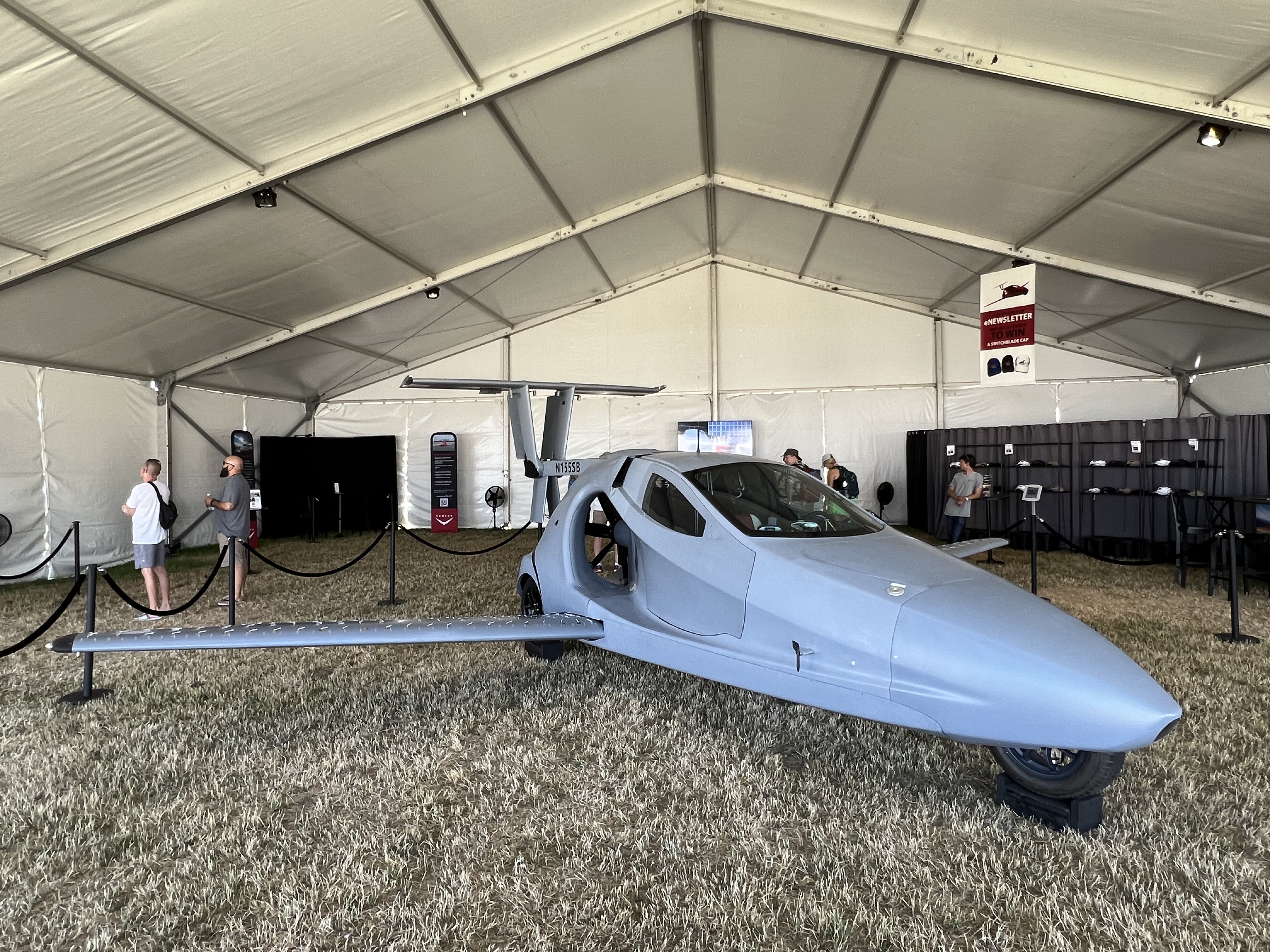
The Switchblade is intended to combine road travel with conventional runway flight. Its basic operating concept calls for an owner to drive from a garage to an airport, deploy the wings and tail in about three minutes, fly to another airport and retract the aircraft components before continuing by road.
An earlier prototype completed its first official flight at Grant County International Airport in Moses Lake, Washington, on November 5, 2023. It climbed to about 500 feet and remained airborne for nearly six minutes. That flight demonstrated that a Switchblade prototype could leave the runway, but it did not validate the substantially revised configuration now intended for customers.
In road mode, the redesigned body is supposed to enclose the wings, tail and propeller. Samson Sky also plans a series hybrid propulsion arrangement in which a gasoline engine powers a generator supplying electricity to separate motors for road and flight propulsion. This architecture must accommodate two operating environments while managing packaging, mass, cooling, electrical distribution and the transition between driving and flying configurations.
Samson Sky is targeting a maximum airspeed of 190 mph, a cruise speed of 160 mph and a flying range of up to 450 miles. Those figures remain targets rather than demonstrated production aircraft results. The company plans to build three production prototypes for testing around late 2026 or early 2027, making those aircraft a more consequential technical milestone than the earlier proof of concept flight.
Experimental status still requires individual certification
Samson Sky intends to offer the Switchblade under the Federal Aviation Administration’s Experimental Amateur Built category. That route does not mean the FAA has approved the kit, its manufacturer or the production design. The agency may evaluate whether a kit allows an amateur builder to comply with the applicable major portion requirement, under which the builder must complete more than 50 percent of the eligible fabrication and assembly for education or recreation.
Samson Sky says its Builder Assist program could allow customers to complete their required share in about a week. Even if that process satisfies the major portion rules, every finished Switchblade would still need to go through an individual airworthiness certification process. Owners would also need private pilot certificates before flying their aircraft.
That distinction matters because the Switchblade is not planned as a conventional factory completed car or a fully manufactured, type certificated airplane. Its ownership model combines aircraft construction, airworthiness review and pilot qualification with registration and insurance needs associated with road use.
Insurance is another unresolved integration issue. Samson Sky acknowledges that no dedicated flying car insurance program currently exists and expects early owners to need separate policies for ground and flight operations. The split reflects the practical boundary between the vehicle’s two modes even though they share one structure and propulsion system.
The company currently estimates a starting price of $200,000 for the visual flight rules kit and approximately $235,000 for an instrument flight rules equipped version, with both figures subject to change. Early production is expected to prioritize customers who previously paid for some of the first delivery positions.
The $80 million commitment could give Samson Sky the manufacturing base needed to move beyond a one off demonstrator. Before customer assembly can begin, however, the company must close the remaining funding gap, select and establish the factory, test three redesigned production prototypes and show that its Builder Assist process fits the amateur built framework. Until those steps are completed, the Switchblade remains a financed production plan built around an aircraft configuration that has yet to fly.
| More aerospace and engineering stories, right in your MSN feed. Follow AMI on MSN |
By Thomas Caldwell — AMI’s senior editor for mechanical and mobility engineering, covering vehicle electronics, systems integration, electrification, chassis systems, propulsion, and safety policy.