Tesla Optimus Output Reportedly Jumps Tenfold, but 1,000-a-Week Target Is Uncertain
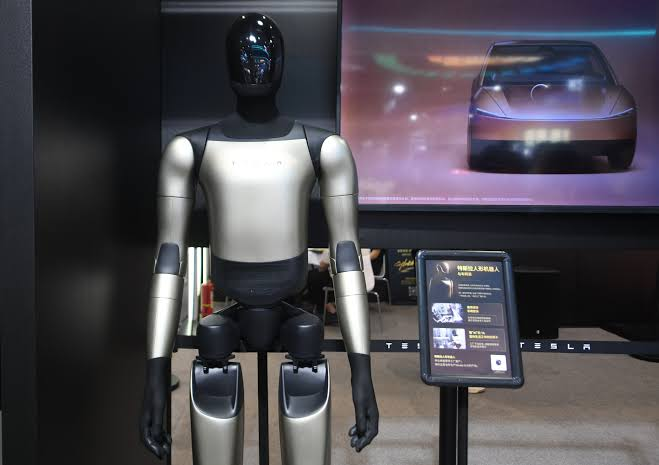
Tesla has reportedly raised production of its Optimus humanoid robot from a few dozen units per week during the second quarter of 2026 to several hundred per week in August. That roughly tenfold increase suggests the program is leaving small-batch assembly behind, but it does not yet establish that Tesla can sustain high-volume production.

The immediate test is a reported internal goal of operating a continuous automated line producing more than 1,000 robots per week by the end of 2026. The current figures, reported on September 26 through Cointelegraph and The Information rather than disclosed directly by Tesla, leave a substantial gap to that target. Intricate hands, automated-equipment problems and supplier constraints are all reportedly limiting the consistency of the ramp.
The distinction between a short output surge and a stable production rate is crucial. A factory can increase weekly completions by adding workers, accepting more rework or pushing partially automated stations harder. Repeatable mass production requires something more demanding: predictable component quality, controlled assembly times, reliable tooling and a low enough defect rate for robots to move continuously through the line.
Optimus hands combine several manufacturing problems
The robot’s hands appear to be a central bottleneck because they compress sensing, actuation and precision mechanics into a small package. The hand and forearm reportedly contain more than 100 screws and small components, with workers still performing substantial assembly manually. Fixtures used for hands, joints and electronics testing have also reportedly struggled to align small, close-tolerance parts consistently.
That complexity creates two linked costs. First, manual assembly limits how quickly a line can cycle. Second, misalignment or inconsistent fitting sends completed assemblies back for adjustment, increasing rework and making output less predictable. A detailed account of the production ramp also describes reliability concerns involving touch sensors and inconsistent supplier quality at higher volumes.
Hands are unusually difficult because mechanical construction is only one part of the system. Dexterous manipulation depends on motors, gears, position feedback, tactile sensing and control software working together. A hand must know where its fingers are, detect contact and regulate grip force without damaging or dropping an object. More joints can improve dexterity, but each additional actuator, sensor, connection and tolerance adds another variable to assembly and testing.
This is where humanoid manufacturing diverges from conventional industrial robotics. A fixed robot arm can use a specialized gripper designed around one component and one repeatable motion. Optimus is intended to operate in spaces and workflows built for people, so its hands must accommodate a much wider range of objects. That flexibility purchases broader potential utility at the cost of greater mechanical complexity, more demanding control and a harder production process.
Suppliers must scale quality as well as quantity
Tesla also depends on outside suppliers for components including motors and precision gears used in robot joints. A supplier may produce acceptable parts in prototype quantities yet struggle to hold the same dimensions, materials and performance across a much larger run. Variation at that level can propagate into alignment problems, calibration work or premature component replacement after assembly.
The concentration of the dexterous-hand supply chain adds another constraint. Smart Analytics Global reported that Chinese companies accounted for 96% of shipments of humanoid hands with six or more active degrees of freedom during the first half of 2026. That figure covers the wider market rather than Tesla specifically, but it illustrates how limited the established high-volume supplier base remains for one of a humanoid robot’s most complicated subsystems.
The Optimus V3 units now being assembled in Fremont, California, also reportedly differ from the version Tesla ultimately intends to offer commercially. Their design, durability and reliability remain under refinement, meaning the line must increase output while the product itself is still changing. Design revisions can require new fixtures, updated work instructions, supplier changes and additional validation, all of which can interrupt manufacturing rhythm.
Tesla described its third-generation Optimus in a January 2026 filing as designed for mass production and said preparations were underway for an initial line, with eventual planned capacity of 1 million robots annually. That capacity figure is a long-term factory objective, not achieved output. The more consequential near-term milestone is whether Fremont can turn several hundred weekly completions into a continuous, repeatable flow exceeding 1,000 by year-end. The reported tenfold jump shows speed; the hands, tooling and supply chain will determine whether that speed can become a production system.
| More aerospace and engineering stories, right in your MSN feed. Follow AMI on MSN |
By Jonathan Barrett — Editor for AMI’s future mobility and autonomous systems section, with two decades covering robotics, e-mobility, drone-vehicle convergence, and transport mechanical systems.