Boeing 737 MAX 10 Approval Delayed Over Navigation Software Concern
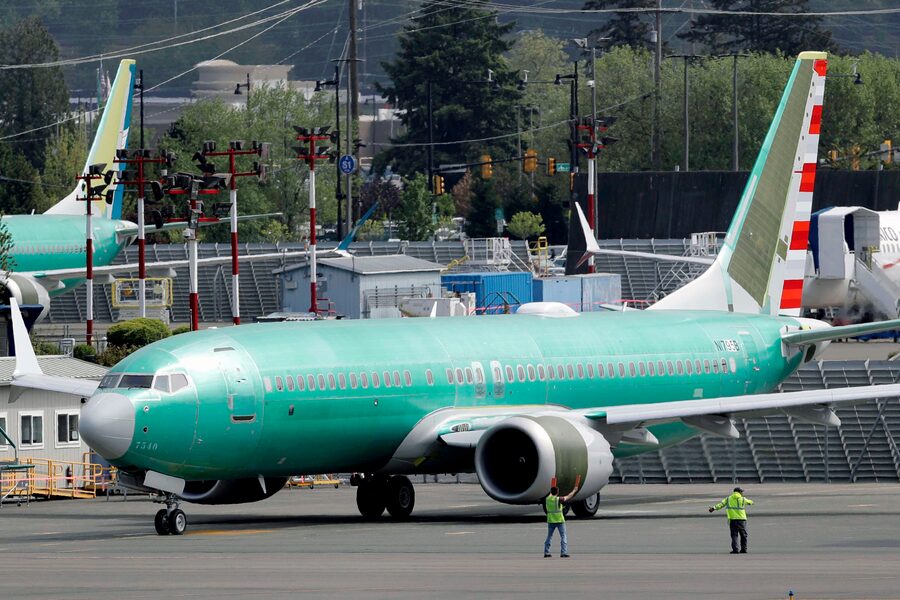
The Federal Aviation Administration has delayed approval of Boeing’s 737 MAX 10 while it examines an unresolved navigation-software concern involving missed approaches. FAA Administrator Bryan Bedford confirmed the decision on September 28, saying the agency would not certify Boeing’s largest 737 MAX variant until it was satisfied that the condition did not present a wider safety issue. The delay has no stated timetable.
That puts Boeing’s expectation of near-term approval on hold and may also require operators using the affected U.14 software to restore an older version. The FAA has not reached a final finding that the condition compromises flight safety, and pilots retain control of the aircraft. The open question is broader: whether the software’s behavior and the resulting pilot actions create an acceptable workload during a demanding phase of flight.
Why manual control does not settle the review
The issue concerns the aircraft’s vertical-navigation function, which helps manage the planned vertical path. Boeing has said the condition can arise after a missed approach when a landing is discontinued and pilots alter a preprogrammed flight path. The software can then affect access to certain automated guidance functions on a subsequent approach, requiring additional pilot steps.
This distinction matters in certification. An aircraft does not necessarily satisfy regulators merely because pilots can continue flying it manually. The FAA also evaluates the interaction among automation, procedures, training and crew workload. A workaround that preserves control can still require review if it changes what pilots must recognize and do, particularly during a go-around and preparation for another approach.
Boeing says pilots are trained to land without the affected automation and that it reinforced existing procedures with operators. It is also developing a permanent update and working to formalize a procedure for restoring automated vertical navigation after the condition occurs. Those measures indicate that continued control and recovery are available, but they do not preempt the FAA’s determination about whether the complete operating arrangement is suitable for certification.
The review therefore has two related but distinct scopes. One is the MAX 10 approval program: the FAA can withhold certification until Boeing demonstrates an acceptable software configuration, procedure or other resolution. The second is the installed fleet, where the agency and operators must identify aircraft carrying U.14 and decide how they should be configured while the review continues.
A software rollback creates its own integration work
Bedford said airlines using the affected newer software would need to revert to an older version until the matter is resolved. That is a containment measure rather than a final technical fix. For operators, changing a software baseline also requires alignment among aircraft configuration, approved procedures, training material and delivery planning. The central systems issue is not simply whether one version runs; it is whether the aircraft, documentation and crew expectations all correspond to the approved version.
The operational reach is narrower than the entire MAX fleet. The condition reportedly applies to in-service MAX 8 and MAX 9 aircraft equipped with U.14, but major U.S. operators described different exposure. Southwest said none of its fleet, including new MAX 8 deliveries, had the version. United said it was not accepting MAX aircraft with the software, while WestJet said some of its aircraft used it but had experienced no related in-service events. An absence of reported events does not resolve the FAA’s certification and workload questions, but it helps distinguish a potential condition under review from a demonstrated accident cause.
The MAX 7 adds an unresolved configuration question. The FAA certified that model in August with the newer software, but available information does not clearly establish whether aircraft can be delivered or operated with an older version. That uncertainty illustrates why software approval cannot be considered only by aircraft name: regulators and operators need to know which version is installed, what functions it affects and which operating material applies.
The delay extends beyond Boeing
The MAX 10 is the final and largest member of the family awaiting certification. Boeing once planned to begin deliveries in 2020, and Chief Executive Kelly Ortberg had recently anticipated a near-term regulatory “green light.” Alaska Airlines, United Airlines, Ryanair, WestJet, Delta Air Lines and Pegasus Airlines each have orders or commitments covering at least 100 MAX 10 aircraft, making approval timing consequential for fleet plans even though no revised certification date has been announced.
The FAA’s decision preserves a deliberate certification boundary: pilot control is essential, but it is not the only test. Until the agency resolves how U.14 affects automated guidance, procedures and crew workload after a missed approach, the MAX 10 cannot move from completed flight testing to final approval and affected aircraft using the newer software may have to remain on an older configuration.
| More aerospace and engineering stories, right in your MSN feed. Follow AMI on MSN |
By Thomas Caldwell — AMI’s senior editor for mechanical and mobility engineering, covering vehicle electronics, systems integration, electrification, chassis systems, propulsion, and safety policy.