NASA Plans Uncrewed Boeing Starliner Test Before 2028 Astronaut Return
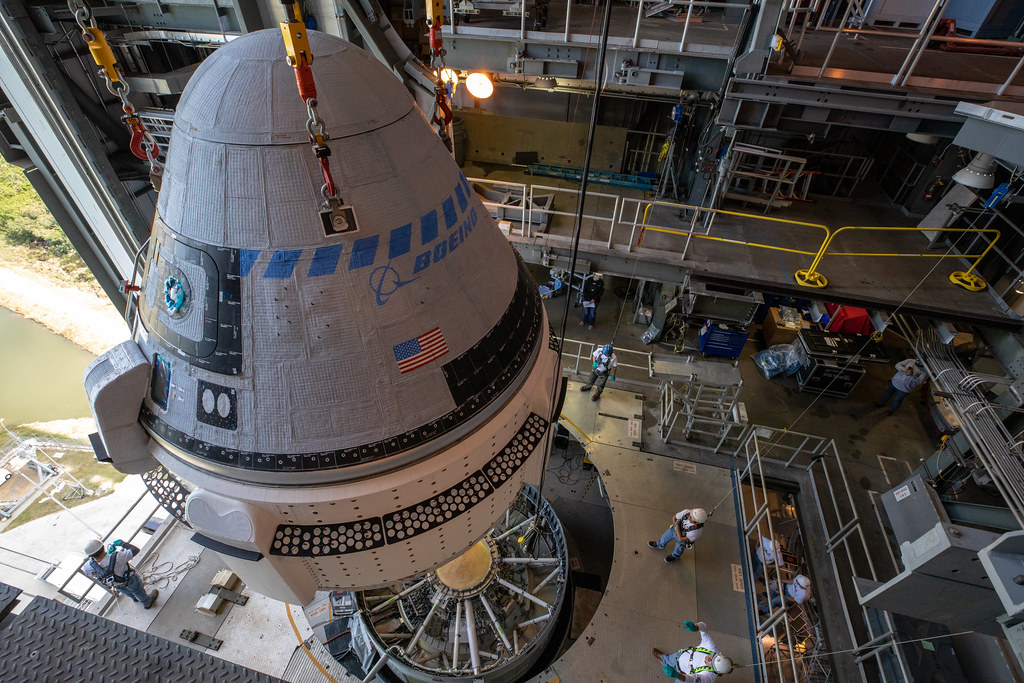
NASA still wants Boeing’s Starliner as a second way to carry astronauts into orbit, but the spacecraft will not immediately return to crew service. Under NASA’s new plan, Starliner must first complete an uncrewed International Space Station flight, produce propulsion-system data and pass further certification work before astronauts can board it again in 2028.

The agency’s current Starliner development plan puts the uncrewed Starliner-1 mission in December 2026 or January 2027. NASA describes it as an engineering evaluation flight intended to validate spacecraft improvements and identify remaining risk. The timing is a target rather than a guarantee, and NASA has not published complete success criteria for advancing to the crewed Starliner-2 mission.
That creates a deliberate test gate between Boeing’s corrective work and another astronaut flight. Starliner-1 is expected to visit the space station and carry cargo, but its central engineering job will be gathering data on the spacecraft’s propulsion performance and thermal environment. NASA Administrator Jared Isaacman said the agency will use what it learns to continue corrective actions and complete the testing and certification required for crewed flight.
The redesign extends beyond one test flight
NASA’s sequence is more involved than flying the present configuration once and approving it if the mission reaches the station. Boeing has already made thermal modifications to Starliner’s service module, which NASA intends to evaluate during Starliner-1. The agency and Boeing also plan an additional design change to valves associated with the service module’s reaction-control thrusters before future crewed flights.
NASA’s investigation found that service-module thrusters operated outside their engineering qualification during the 2024 Crew Flight Test. The agency attributed the performance problems to a combination of the thermal environment and design features. Its Program Investigation Team produced 61 recommendations covering technical and programmatic issues.
Starliner-1 therefore serves as a source of qualification data, not merely a repeat demonstration. NASA wants to verify that the thermal changes improve conditions around the propulsion system and obtain the measurements needed to assess remaining risk. Following the flight, NASA and Boeing plan to complete the thruster-valve modification focused on a poppet-seal problem that can adversely affect thruster performance.
Other planned changes include new crew-module thrusters and batteries, along with minor parachute-system modifications intended to improve performance and reliability. Boeing says the work also includes replacing valves on all 12 crew-module reaction-control thrusters, adding corrosion-prevention measures and recording service-module thruster chamber-pressure data more frequently.
Those changes explain why a successful station visit would not, by itself, clear Starliner to carry people. Engineers must review the flight data, finish hardware modifications and demonstrate that the resulting configuration satisfies NASA’s human-spaceflight requirements. The available plan does not specify how long each review will take or establish that the proposed 2028 crewed flight date will be met.
NASA is preserving a second transport option
The effort follows Starliner’s 2024 crewed test with NASA astronauts Barry Wilmore and Suni Williams. Their station stay was expected to last about a week, but technical problems led NASA to return Starliner without its crew for safety reasons. The astronauts came home aboard another spacecraft after a mission lasting about nine months. NASA later classified the malfunction as a Type A incident, its highest incident category.
Starliner was developed as NASA’s alternative to SpaceX’s Crew Dragon, but repeated setbacks and delays have left Crew Dragon as the only currently operational U.S. spacecraft routinely transporting astronauts to and from the station. NASA has sought two providers so that its access to low Earth orbit does not depend on one vehicle system.
The agency also intends to work with Boeing and United Launch Alliance to certify the Vulcan rocket for Starliner after the Atlas V fleet is phased out. That adds a separate launch-vehicle certification task to the spacecraft recovery effort, underscoring that restoring a second crew service involves more than correcting the capsule’s propulsion issues.
NASA intends to exercise options for fifth and sixth Starliner station flights, signaling that it still sees a longer operational role for the spacecraft. But the immediate decision point is narrower: Starliner must fly without astronauts, generate the required engineering data and support completion of the redesign before NASA decides whether it is ready for a crew in 2028.
| More aerospace and engineering stories, right in your MSN feed. Follow AMI on MSN |
By David Whitaker — Associate editor for AMI’s aerospace and drone systems desk, translating flight systems, aircraft programs, spaceflight, and UAV developments into accessible technical stories.