Nearly 500,000 Reports Show Uneven Russian Fuel Shortages Amid Ukraine’s Refinery Drone Strikes
Nearly 500,000 driver reports indicate that gasoline shortages, lines and purchase limits spread across parts of Russia amid Ukrainian drone strikes on oil refineries but the effects varied sharply by region. Some refinery disruptions were followed by deteriorating local fuel availability, while another examined strike produced no measurable regional decline.
Meduza analyzed 478,685 reports submitted to GdeBENZ, a crowdsourced fuel tracker, from July 4 through August 23, 2026. The reports covered 25,129 gas stations in 83 regions, including 2,438 reports on 578 stations in occupied Crimea and occupied parts of the Donetsk and Luhansk regions. Drivers recorded whether gasoline was available, whether stations had lines and whether sales restrictions applied.
The value of that dataset is not simply its size. Gasoline can disappear from a station and return within hours, making a national average or isolated complaint a poor measure of the system. Meduza assigned each station its most frequently reported daily status, used the latest entry to resolve ties and tested minimum thresholds of one, three and five reports per station per day. It also followed a consistent group of 1,515 stations across every key period.
Those results were checked against 3.9 million records from fuel-availability services operated by Sberbank, T-Bank and Alfa-Bank. Reported availability correlated with card purchases, although the datasets could not match exactly because conditions changed rapidly. That agreement strengthens the case that the crowdsourced reports captured broad supply stress rather than only a cluster of highly visible complaints.
Retail disruption depends on more than refinery status
During July 8–11, gasoline was reported available at 56% to 64% of surveyed stations when locations with lines were counted. On July 11, 55% of stations that had fuel also had reported lines. Among reports identifying a purchase restriction that day, 75% cited a 30-liter limit and 23% cited a 20-liter limit.
Those figures describe a distribution system rationing limited supply, not necessarily a country running out of gasoline everywhere. Retail availability depends on refinery output, inventories held closer to consumers, transport links, wholesale allocation and local demand. A station can remain supplied after nearby production falls if it draws from reserves or another refinery. Conversely, a demand surge can turn a manageable reduction into lines and empty pumps.
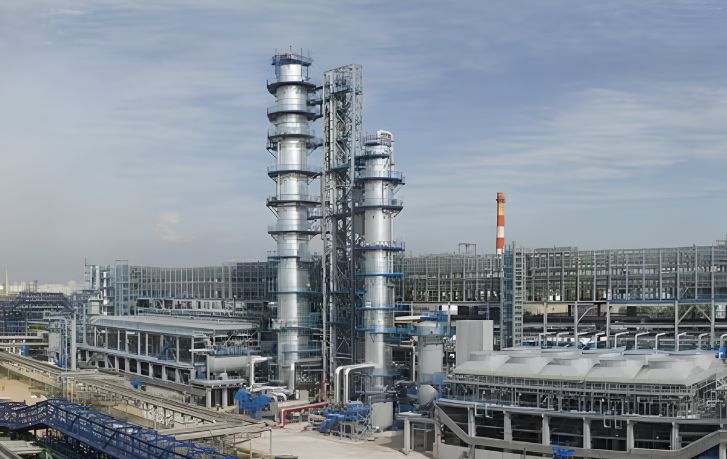
This helps explain the uneven regional response. After refinery disruptions in Perm Krai, Orenburg and Tatarstan, line-free availability fell substantially in the corresponding measurements. Across those cases, the size and timing of the decline differed. Following the July 16 strike on the YANOS refinery, however, measured gasoline availability in the Yaroslavl region improved, while the refinery reportedly maintained about 86% of its usual exchange sales volume.
That contrast prevents a simple strike-equals-shortage conclusion. The relevant engineering question is not merely whether a refinery was hit, but which processing capacity became unavailable, for how long and whether other facilities and distribution routes could compensate. Public data do not resolve those details for every site, so retail measurements cannot independently establish damage severity or attack effectiveness.
Buffers restored supply, but at a cost
Conditions improved later in July as some refineries resumed operation and authorities allowed lower-grade fuels, restricted exports and increased imports. By July 20, gasoline was available overall at 63% to 71% of surveyed stations, although only 33% to 43% offered it without a line. By August 1, overall availability stood at 60% to 64%, with line-free availability at 37% to 45%.
Wholesale activity also recovered. Combined gasoline and diesel sales on the St. Petersburg exchange exceeded 92,000 to 93,000 tons on July 30–31 after sometimes falling to 42,000 to 51,000 tons per day in early July. That rebound shows how redirected supply and restarted production can ease retail pressure even before every disrupted facility returns to normal.
The wider refining system nevertheless remained under strain. The International Energy Agency’s September assessment estimated that Russian refinery throughput fell to 3.8 million barrels per day in June, its lowest level in more than 20 years and about 30% below the previous year. Export restrictions, relaxed fuel standards and imports can protect domestic availability, but each shifts cost or capacity elsewhere rather than repairing damaged processing equipment.
The station data indicate that conditions worsened again in early August, but the available findings do not provide a complete quantified result for that second wave. What the measured July period establishes is narrower and more useful: refinery disruption can propagate quickly to motorists, yet inventories, logistics, demand and the specific capacity lost determine where empty pumps appear and where they do not.
| More aerospace and engineering stories, right in your MSN feed. Follow AMI on MSN |
By Stephen Wallace — Editor for AMI’s aerospace integration and unmanned mobility coverage, focused on drone manufacturing, VTOL systems, autonomous networks, and air-ground mobility links.