Ukrainian Refinery Drone Strikes Push Russian Trucking Rates Up 12% to 15%
Diesel disruption reaches a trucking network through a simple cost equation: when fuel becomes more expensive or harder to obtain, every kilometer consumes more of a carrier’s operating margin. That mechanism is now visible in Russia, where average road-freight rates reportedly rose 12% to 15% in July from the previous month after Ukrainian drone strikes disrupted refinery operations and fuel supplies.
The increase matters because trucks carry more than 70% of Russia’s cargo, according to state statistics cited in reporting published August 13. Fuel prices rose an estimated 16% to 18% during the peak disruption, while some regional freight rates climbed as much as 50%. Those figures were reported by Reuters through interviews with Russian logistics executives and should be treated as attributed industry estimates rather than independently verified national totals.
Fuel costs quickly change which routes make sense
Fuel accounts for roughly 30% of freight expenses, according to Vitaly Kiselev of the Russian Association of Automobile Dealers. A 16% to 18% fuel-price increase would therefore add approximately 4.8% to 5.4% to total freight expenses if other costs and fuel consumption remained unchanged. Logistic Performance reported a similar 4.5% to 5.5% increase in its transport costs.
That direct increase does not fully explain freight-rate jumps reaching 12% to 15%, much less 50% on certain routes. The additional pressure comes from lost utilization. A truck waiting for fuel is not carrying a paying load, while a route with uncertain refueling can require more time without producing more transport capacity. Commercial-carrier fuel discounts also reportedly disappeared, removing a buffer that had previously separated fleet costs from retail conditions.
Long-distance routes become especially exposed because they cross more fuel markets and keep vehicles committed for longer periods. Logistic Performance commercial director Valeria Savenkova said the company stopped interregional long-haul deliveries and concentrated on shorter runs in the Moscow region and deliveries to nearby ports. This is not merely a price response: it is a reduction in the geographic coverage supplied by the road-freight system.
The reported experience in Zabaykalsky Krai illustrates the capacity penalty. Trucks on the major corridor for Chinese imports were said to be waiting two or three days for fuel. At the same time, the cost of moving cargo from China to Moscow increased from approximately $10,000–$11,000 to about $14,000. A queue of that duration lowers the number of trips each truck can complete, leaving fleet owners to spread fixed costs across fewer revenue-producing journeys.
Refinery losses propagate beyond the fuel market
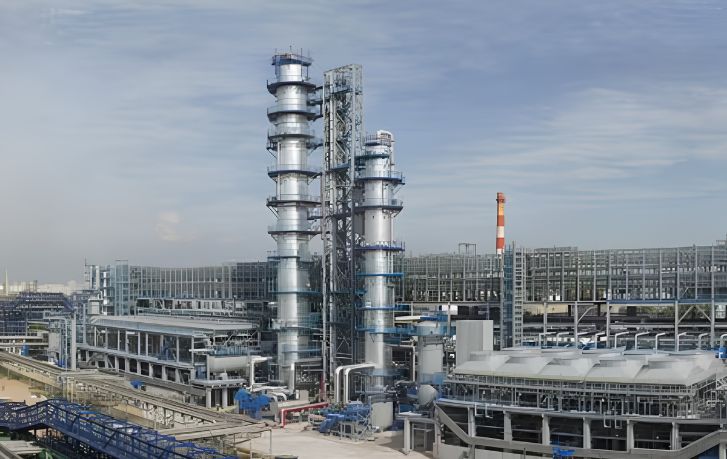
The refining constraint is broader than a temporary shortage at individual filling stations. In a September 17 analysis, the International Energy Agency estimated that Russian refinery throughput fell to 3.8 million barrels per day in June, its lowest level in more than 20 years and roughly 30% below the previous year. The agency estimated diesel production had fallen by nearly 30% and noted that Russia restricted fuel exports to protect domestic supplies.
That sustained pressure distinguishes an industrial disruption from a single isolated outage. The IEA said a Russian refinery was hit on average once every three days during the first eight months of 2026. Without relying on tactical details, the frequency indicates a continuing drone-production and mission capacity that forces Russia to divide resources among air defense, physical protection, repairs and fuel-market intervention. Repeated disruption also complicates maintenance planning: refiners must balance restoring output against the reliability risks of delaying scheduled work or returning equipment to service quickly.
Russia has used export restrictions, imported fuel and temporarily relaxed fuel-quality requirements to stabilize supply. Those measures can increase available volume, but they do not recreate lost refinery capacity without cost. Imported products add transport and handling requirements, while the IEA warned that higher-sulfur fuel can damage vehicle engines or degrade emissions-control catalysts designed for cleaner fuel.
Rail and sea gain cargo, but not for free
Shippers are already redirecting demand. Direct-rail demand reportedly increased 18% to 20%, while demand for sea transport rose 10% to 12%. Rail can reduce exposure to truck-fuel availability over long distances, but cargo still needs terminals, schedules and often trucks at one or both ends. Maritime transport faces its own constraints: Black Sea freight rates reportedly rose as much as fourfold, FESCO suspended operations there, and war-risk surcharges reached up to $2,000 per container.
Even a recovery in fuel supply may not return trucking rates immediately to their earlier level. Carriers have incurred losses from lower load factors, idle vehicles and withdrawn routes, and executives expect them to try to recover those costs. Optimalog founder Georgy Vlastopulo estimated that rates might decline by only 7% to 10% if supplies normalize. The lasting consequence is therefore not just higher diesel prices, but a freight network carrying fewer viable long-haul options while more cargo competes for rail and maritime capacity.
| More aerospace and engineering stories, right in your MSN feed. Follow AMI on MSN |
By Stephen Wallace — Editor for AMI’s aerospace integration and unmanned mobility coverage, focused on drone manufacturing, VTOL systems, autonomous networks, and air-ground mobility links.