Ukrainian Drone Strikes Halt Novorossiysk Grain Terminals, Leaving Only Smallest Operating
A high-capacity export network can be obstructed without every port remaining closed. The critical factor is whether alternative terminals and transport links can absorb the displaced cargo. In Russia’s Azov-Black Sea grain system, they reportedly could not: Ukrainian aerial and maritime drone strikes halted the major grain terminals at Novorossiysk and disrupted other regional ports, leaving only Tuapse the smallest Russian deep-water grain terminal in the region operating at the reported point in August 2026.
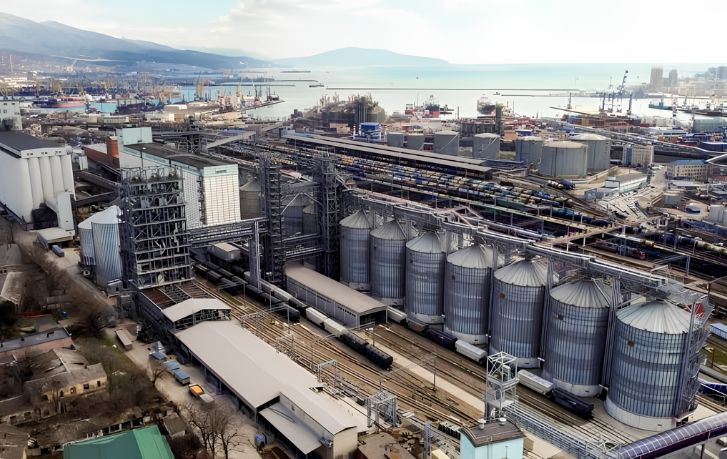
Novorossiysk is Russia’s largest commercial Black Sea port by cargo volume and handles up to one-third of the country’s grain exports, as well as crude oil, metals and containers. SovEcon head Andrei Sisov reported that the Novorossiysk Bread Products Plant and Novorossiysk grain terminal stopped on August 12, followed by the KSK deep-water terminal on August 13. A terminal at Taman had already stopped at the end of July, while shallow-water ports on the Sea of Azov were also reported paralyzed.
Sisov concluded that “virtually all Russian grain exports via the Azov-Black Sea basin” were blocked at that moment. That assessment was a point-in-time account rather than confirmation of a permanent shutdown, and terminal conditions can change quickly. Its importance lies in the scale of capacity taken offline simultaneously, not simply the number of facilities affected.
Why cargo cannot simply move elsewhere
About 90% of Russian grain shipments normally travel through the Black Sea, according to Argus Media. Deep-water terminals accommodate the large-volume flows that connect inland production, storage, rail delivery, vessel scheduling and international buyers. Moving cargo to another coastline therefore requires available terminal capacity, additional rail paths, suitable ships and revised commercial schedules not just a change of destination on paper.
A Center for Strategic and International Studies analysis estimated that the attacks removed about 70% of Russia’s grain-export capacity. It said Baltic terminals and possible shipments through Estonia and Latvia could approach 10 million metric tons, roughly one-fifth of the more than 46 million metric tons exported through the Azov and Black Sea ports during the 2025–2026 season.
That mismatch explains the central constraint. Russia can redirect some grain by rail, through Baltic ports or toward regional buyers, but those channels cannot reproduce Novorossiysk’s throughput quickly. Longer inland movements also consume rail capacity and raise costs. The result is a scheduling bottleneck in which an interruption at several concentrated terminals obstructs a much larger production and export system.
The timing compounds the pressure because late summer and early fall are the principal export window for winter wheat harvested during the summer. Argus estimated that Russia could have 45 million metric tons of wheat available for export in 2026–2027. When outbound capacity contracts during that window, more grain remains in the domestic market. SovEcon subsequently estimated August wheat exports at around 2 million metric tons, 55.6% below the previous year, while domestic wheat prices had fallen by more than 40% year over year.
Lower domestic prices may benefit some buyers, but they put producers under additional financial pressure when selling prices fall below reported production costs. Sisov warned that many producers might not survive the season if the interruption persisted. That forecast is not a confirmed outcome, but it identifies how a port-capacity problem can propagate backward into planting, storage and farm finances.
Oil resumed, but at a higher logistical cost
The oil network did not stop completely. Reuters reported that the Sheskharis terminal, which handles about 700,000 barrels of crude per day, suspended loading on August 14 and resumed two days later. Later monthly data showed that intermittent operation still carried a substantial cost: the Centre for Research on Energy and Clean Air calculated that Novorossiysk crude loadings fell 58% from July and ceased for nine consecutive days during August.
Oil can also be rerouted, but Baltic shipments take longer and available capacity is too limited to replace large Novorossiysk volumes. Every longer voyage or inland diversion adds transportation time, scheduling complexity and cost. Repeated interruptions can therefore reduce monthly throughput even when a terminal returns to service between them.
The same Black Sea constraint affects both sides of the conflict. Russia’s intensified attacks on Ukrainian ports and docked ships have also reduced Ukrainian grain exports. With major harvests in both countries facing restricted access to maritime transport, the unresolved issue is no longer whether some cargo can find another route. It is how much of the region’s export volume those smaller, slower alternatives can carry before the next harvest cycle adds more pressure.
| More aerospace and engineering stories, right in your MSN feed. Follow AMI on MSN |
By Stephen Wallace — Editor for AMI’s aerospace integration and unmanned mobility coverage, focused on drone manufacturing, VTOL systems, autonomous networks, and air-ground mobility links.