Russian Officials Blame 28 Drones as Two Moscow Airports Suspend Flights
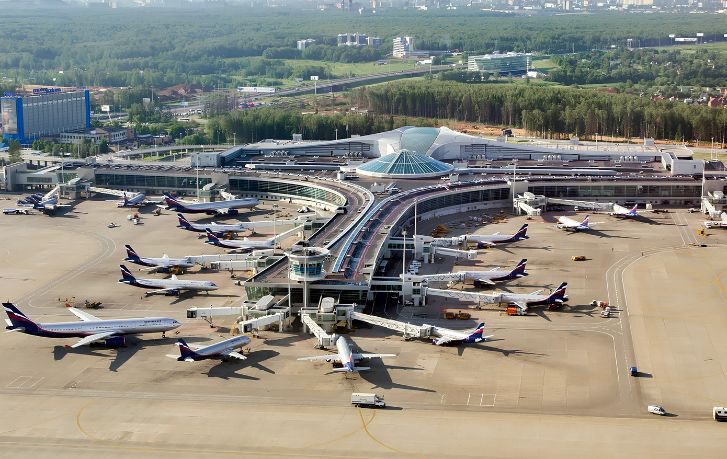
A reported wave of 28 drones approaching Moscow forced flight operations to be suspended at two of the capital’s major international airports on August 18, creating a civilian disruption even as Russian officials claimed the aircraft had been intercepted.

Moscow Mayor Sergei Sobyanin attributed the drones to Ukraine and said Russian air defenses shot them down. Those claims including the number, origin, intended destination and interception results have not been independently verified. Russia’s civil-aviation agency, Rosaviatsia, separately announced that Vnukovo and Sheremetyevo airports had suspended operations because of the drone waves. Officials did not specify how long the restrictions lasted, whether flights had resumed or how many passengers and aircraft were affected.
The immediate operational tension is straightforward: a claimed interception does not eliminate the disruption created by an uncertain aerial threat. Airports do not need to sustain physical damage for airlines to face consequences. Temporary restrictions can stop departures, prevent arrivals and force controllers and carriers to reconsider aircraft already heading toward the affected airspace.
Repeated alerts turn a security response into a network problem
Vnukovo lies southwest of Moscow, while Sheremetyevo is northwest of the capital. Restrictions at airports on different sides of a metropolitan area can reduce the flexibility available to airlines, although the available information does not establish whether diversions occurred during this particular episode.
The disruption was also not isolated. One day earlier, Russian officials said 16 drones aimed at Moscow had been intercepted while Vnukovo, Domodedovo and Zhukovsky halted flights for several hours. Russia’s Defense Ministry separately claimed that 280 unmanned aircraft were destroyed across multiple regions that day. Those totals likewise remain official Russian claims rather than independently confirmed results.
For airport operators, repeated restrictions are harder to absorb than a single interruption because aviation schedules depend on tightly connected resources. Aircraft, crews, gates and departure slots must all be in the correct place. When an arriving aircraft is held or diverted, its next scheduled flight may also be affected. Refueling and repositioning can extend the disturbance after an airspace restriction is removed, while crew-duty limits and slot availability can further complicate recovery. None of those downstream effects has been quantified for the August 18 suspensions, but they explain why reopening an airport does not necessarily restore its timetable immediately.
Later disruption data indicate that this operational burden continued to grow. Aviation-security specialist Osprey Flight Solutions recorded 993 temporary Russian airport-shutdown events during August, or about 32 per day, according to a published review of the company’s figures. Osprey counted 1,923 such events throughout all of 2025, an average of 5.3 per day. Its figures measure restriction episodes rather than unique days, but the comparison shows how frequently airport systems were being forced into precautionary operating changes.
Interception counts do not measure airport resilience
The reported number of drones is only one measure of scale. For civilian aviation, the more consequential measures would include the duration of each restriction, canceled or delayed flights, diversions, passenger disruption and the time required to restore the network. None of those figures was released for the suspensions at Vnukovo and Sheremetyevo.
This distinction matters when assessing readiness. Air-defense agencies may describe an engagement through claimed interceptions, while a civil-aviation regulator measures the same episode through whether aircraft can safely depart or land. Both systems can be responding to the same alert, but they have different thresholds and different definitions of success. A precautionary airport suspension can therefore remain operationally significant even when authorities say every approaching drone was stopped.
Recurring waves also impose a readiness burden beyond any individual alert. Authorities must repeatedly coordinate airspace restrictions across civil and security organizations, while airlines must make decisions with incomplete information about timing and duration. The available facts do not establish how Russian defenses performed against individual drones or how close any aircraft came to airport infrastructure, so broader conclusions about defensive effectiveness would be unsupported.
What is measurable is the repeated effect on civilian aviation: three Moscow airports stopped flights for several hours one day, followed by suspensions at two major international airports the next. The unresolved figure is not the officially claimed interception total, but how long airlines and passengers continued to feel the disruption after each restriction was imposed.
| More aerospace and engineering stories, right in your MSN feed. Follow AMI on MSN |
By Stephen Wallace — Editor for AMI’s aerospace integration and unmanned mobility coverage, focused on drone manufacturing, VTOL systems, autonomous networks, and air-ground mobility links.