Boeing Wins Navy Carrier-Fighter Development Contract Valued Above $20 Billion
More than $20 billion is the stated value of Boeing’s new assignment to develop the U.S. Navy’s next carrier-based fighter. The Navy selected Boeing for the F/A-XX program on September 29, placing the company in charge of designing, building and delivering multiple aircraft for a full-scale development and test campaign.
The official contract announcement says the amount covers full-scale development, including test aircraft for ground, airworthiness, systems and weapons-integration work. It does not, however, specify whether the entire sum has been obligated, represents a maximum contract value or will be distributed through later appropriations and contract actions. That distinction is central to understanding the immediate cost to taxpayers.
A development value is not the same as a production bill
The award moves F/A-XX beyond a conceptual requirement and into the stage where Boeing must turn a design into testable hardware. It does not establish the cost of buying an operational fleet. No production quantity, appropriation profile or detailed manufacturing schedule was included in the announcement.
Full-scale development pays for more than assembling several early airplanes. Ground-test articles can be used to evaluate structural behavior and system installation without consuming flight-test aircraft. Airworthiness aircraft establish whether the design can operate safely through its approved test envelope. Other aircraft support evaluation of mission systems and weapons integration.
Together, those assets allow engineers to find design deficiencies before production expands. They also generate the data needed for the Navy to judge whether the aircraft can progress toward carrier service. How the reported value is divided among engineering, tooling, software, test hardware and supporting work remains undisclosed.
Future congressional appropriations will therefore matter even after the contractor selection. A contract can define a broad development commitment while annual budgets determine how quickly funded work proceeds. Until obligation and milestone details become public, the above-$20-billion figure is best read as the announced value of the development phase not as proof that the entire amount has already been spent or that a production program of a particular size is guaranteed.
Carrier service adds a demanding operating boundary
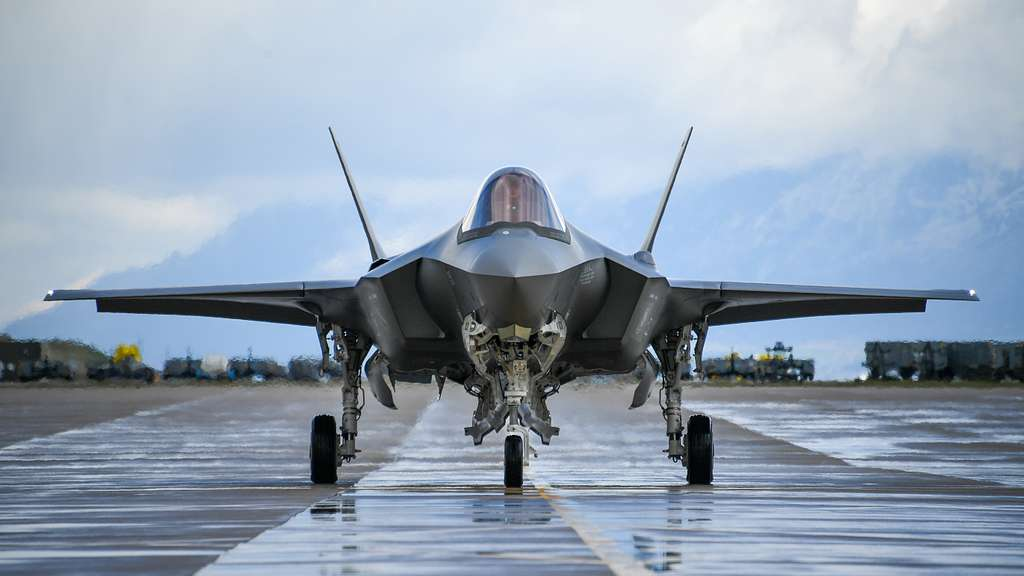
F/A-XX is intended to begin augmenting and eventually replacing the Navy’s F/A-18E/F Super Hornets and EA-18G Growlers in the 2030s. It is also planned to operate alongside the carrier-based F-35C rather than replace that aircraft.
That fleet plan gives the development schedule a practical consequence. The Navy is not simply introducing another fighter; it is preparing a successor for two longstanding aircraft families while preserving a mixed carrier air wing. Any delay would affect how long existing aircraft must remain in service, although the announcement provides no detailed transition schedule from which to measure that risk.
Designing for a carrier also imposes boundaries absent from a conventional land-based fighter. The aircraft must fit within the physical and operating constraints of a ship while delivering the greater reach sought for future carrier operations. Public details about the configuration remain limited, so the award confirms the test mission and intended fleet role without revealing how Boeing will balance those requirements.
The Navy also plans for F/A-XX to work with crewed and uncrewed aircraft, including Collaborative Combat Aircraft. That makes systems testing more than an onboard-avionics exercise. The development program must demonstrate that the fighter can function as part of a wider air wing, but no public test sequence or integration timetable accompanied the award.
Boeing’s capacity now becomes part of program execution
Boeing says it has invested in facilities, technology and personnel to handle concurrent advanced-aircraft programs. Its F/A-XX selection follows its 2025 selection for the Air Force’s F-47, but the Navy announcement does not provide staffing levels, factory allocations or milestones showing how the workloads will be separated.
That leaves industrial capacity as a measurable execution question rather than a settled advantage. Facilities must be completed and equipped, engineering teams retained, suppliers coordinated and test aircraft delivered in the required sequence. Boeing’s assertion that it is prepared to run multiple programs establishes its plan; schedule and manufacturing performance will establish whether that plan is sufficient.
The next clarifying information will be less dramatic than the headline contract value but more useful for judging progress: the amount initially obligated, annual funding, delivery milestones for the test fleet and the schedule connecting ground evaluation to flight testing. Those details will show how quickly a reported commitment above $20 billion is being converted into aircraft capable of proving whether F/A-XX is ready for carrier operations in the 2030s.
| More aerospace and engineering stories, right in your MSN feed. Follow AMI on MSN |
By David Whitaker — Associate editor for AMI’s aerospace and drone systems desk, translating flight systems, aircraft programs, spaceflight, and UAV developments into accessible technical stories.