Reported F-35 Parts Diversion to China Prompts Pentagon Review Request
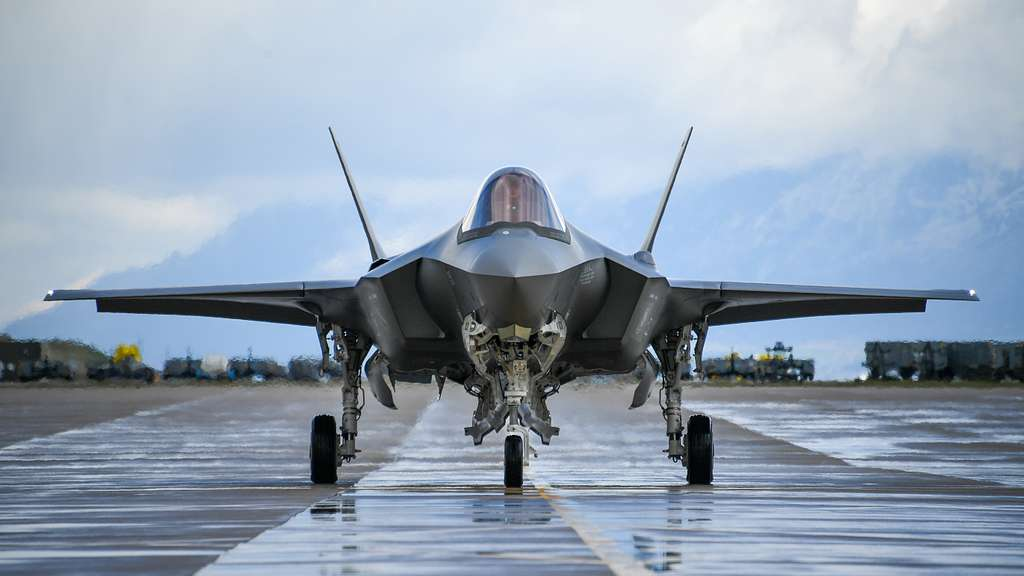
A shipment containing F-35 Lightning II components left Australia for the United States but was reportedly diverted to Hong Kong and taken into Chinese government possession. On September 29, Senate Intelligence Committee Chairman Tom Cotton asked the Pentagon to review its military supply-chain controls, including how contractors and commercial carriers maintain custody, track packages and authorize route changes.

The package was reportedly handled by UPS and included a cockpit canopy and weapons-bay door. The Pentagon’s F-35 Joint Program Office has acknowledged a “shipment issue” involving unserviceable components and said it is working with authorities and industry partners to retrieve them, investigate the incident and prevent a recurrence. That incident investigation is distinct from the broader supply-chain review Cotton requested; the Pentagon has not publicly confirmed that it has opened that wider review.
The unanswered custody question
The central issue is not simply that a package reached the wrong destination. It is whether the organizations responsible for the shipment could see that its custody or route had changed soon enough to intervene.
Chain of custody establishes which organization or individual controls an item at each stage. Tracking establishes where that item is believed to be. Routing controls determine where it is permitted to travel, while exception procedures govern what happens when a carrier changes the planned path. Those functions overlap, but none substitutes for the others. A package can remain visible in a carrier’s tracking system while still entering a jurisdiction that military rules were intended to exclude.
Cotton asked the Pentagon to examine all four layers: custody requirements for equipment carried by contractors and commercial companies; the department’s ability to track locations and routes; procedures for approving and reporting route changes; and safeguards against military material transiting through or being diverted to China or other adversary-controlled jurisdictions.
That scope matters because the F-35 is supported through an international network rather than a single domestic pipeline. Aircraft operators and maintenance organizations need to move components between bases, warehouses and repair facilities. Commercial transportation can offer the speed, geographic reach and flexibility required to keep that network moving. Replacing it wholesale with dedicated military transport would carry its own capacity and cost penalties.
The practical policy question is therefore narrower: which parts require stronger handling, and what controls should follow them from origin to destination? Australian Defense Minister Richard Marles said the components were not sensitive equipment. Cotton argued for a broader standard, saying classified and designated sensitive components should receive heightened protection but that other military material can still reveal information about weapons systems, logistics and readiness.
Tighter controls come with tradeoffs
More restrictive shipping rules could mean approved-carrier lists, tighter jurisdiction limits, faster alerts for route deviations or additional custody documentation. At a high level, each can reduce uncertainty, but each can also add handling time, administrative work and transportation cost. For a multinational fleet dependent on circulating repairable parts, overly rigid controls could slow maintenance support even as they improve security.
That tradeoff affects the U.S. military and allied F-35 operators that rely on the same support network. Taxpayers also carry the cost of both failures: replacing or recovering diverted components on one side, and funding more expensive logistics controls on the other. A review would need to distinguish controls that provide meaningful visibility from paperwork that merely records a problem after a shipment has already left its approved route.
Existing questions about accountability make that distinction more urgent. A separate House oversight request cited a 2023 Government Accountability Office finding that more than one million F-35 spare parts, collectively valued at $85 million, were recorded as lost over five years and that the Defense Department investigated 2% of them. That broader inventory problem does not establish what caused the Australia shipment’s diversion, but it shows why accurate ownership and location records matter across the global parts pool.
Several essential facts remain unresolved. Officials have not publicly explained why the route changed, who authorized or detected the change, which organization held custody at each stage, or who bears responsibility. There is also no public finding that China caused the diversion, and Australian officials have disputed that the parts were sensitive.
The next meaningful milestone is not another expression of concern, but a documented account of the shipment’s route and custody and a Pentagon decision on whether commercial-carrier rules need to change across the wider F-35 support network.
| More aerospace and engineering stories, right in your MSN feed. Follow AMI on MSN |
By David Whitaker — Associate editor for AMI’s aerospace and drone systems desk, translating flight systems, aircraft programs, spaceflight, and UAV developments into accessible technical stories.