


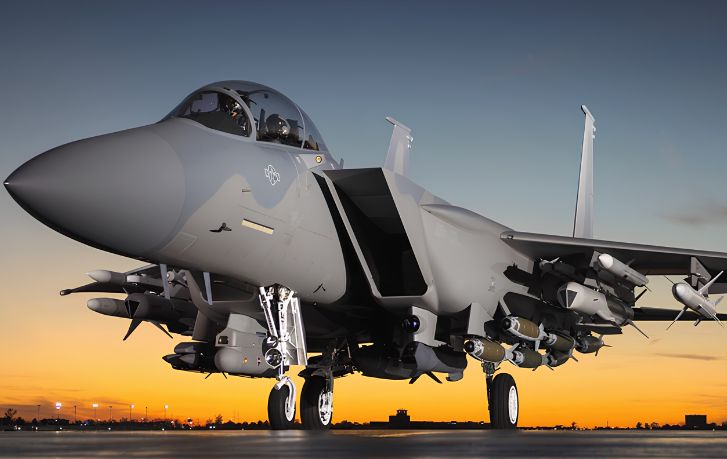
Boeing’s $2.38 Billion F-15EX Order Expands Backlog to 98 Fighters
Boeing now has 120 F-15EX Eagle II fighters under contract for the U.S. Air Force, but only 22 have been delivered. That leaves a 98-aircraft production backlog after the service placed another multibillion-dollar order on a program already confronting schedule pressure.

The $2.38 billion award announced September 29 covers 22 fighters in Lot 7, increasing the contracted total from 98 to 120. The Air Force said the agreement accounts for the effects of a 2025 production disruption and broader defense-industry inflation while keeping all 22 aircraft within available funding.
The contract sustains Boeing’s St. Louis production line, but it does not resolve the delivery constraint. F-15EX-22 was the first aircraft from Lot 3, and Boeing expects to continue delivering that lot through the remainder of 2026. Lot 4 is further behind: deliveries once expected to begin in 2026 are now scheduled for 2028.
A larger order raises the value of production stability
For taxpayers, the central issue is not simply how many fighters have been ordered. It is whether the manufacturing system can convert funded contracts into aircraft on a dependable schedule. The backlog itself is not proof of failure; aircraft contracts routinely precede deliveries by years. The concern is the combination of a growing backlog, documented delays and an Air Force fleet plan that has expanded well beyond the previous procurement ceiling.
Earlier plans would have stopped the F-15EX purchase at 98 aircraft. The Air Force’s latest force-structure plans instead call for more than 260, using the Eagle II to replace older F-15C/D fighters and part of the F-15E Strike Eagle fleet. That change turns production rate from a factory metric into a force-transition constraint. Delayed new aircraft can complicate the timing of retiring or replacing older jets, even when the contract secures future capacity.
Boeing and the Air Force are working toward output of two F-15EX aircraft per month. That rate should be understood as a target, not a demonstrated production level. Reaching it requires more than accelerating final assembly: the flow of completed fuselages, avionics, engines and other supplier-furnished equipment must support the same pace, while inspection and quality work must remain controlled.
The program has previously encountered forward-fuselage manufacturing problems, followed by supply-chain and quality issues. Those constraints help explain why adding contracts cannot by itself produce an immediate delivery increase. A fighter line can carry substantial booked work while still being limited by a small number of late components, rework demands or uneven manufacturing flow.
The aircraft’s architecture adds another long-term consideration
The F-15EX combines a digital cockpit, electronically scanned radar, electronic-warfare equipment and an open mission systems architecture. That modernization supports the Air Force’s plan to use the aircraft over a longer procurement run, but extending production also increases the importance of managing component availability and future technical updates. A larger fleet plan can improve continuity for Boeing and suppliers, yet it also commits the service to maintaining an industrial base capable of supporting many more production lots.
The first operational F-15EX aircraft are assigned to the Oregon Air National Guard’s 142nd Wing in Portland. The Air Force has also begun receiving aircraft intended for Kadena Air Base in Japan, where the type will replace permanently withdrawn F-15C/D fighters. Those assignments give the delivery schedule an operational consequence: production timing affects when units can complete their transition to the newer aircraft.
The Lot 7 agreement preserves production and funds 22 additional fighters despite inflation and disrupted manufacturing conditions. What it purchases immediately, however, is backlog and factory continuity not 22 aircraft ready for service. With Lot 4 shifted from 2026 to 2028, the next meaningful test is whether Boeing can move from today’s delivery record toward the planned two-fighter monthly rate without treating that target as an accomplishment before the line demonstrates it.
| More aerospace and engineering stories, right in your MSN feed. Follow AMI on MSN |
By David Whitaker — Associate editor for AMI’s aerospace and drone systems desk, translating flight systems, aircraft programs, spaceflight, and UAV developments into accessible technical stories.


