Pentagon’s Reported $1 Trillion Funding Meets F-35 Readiness Gap
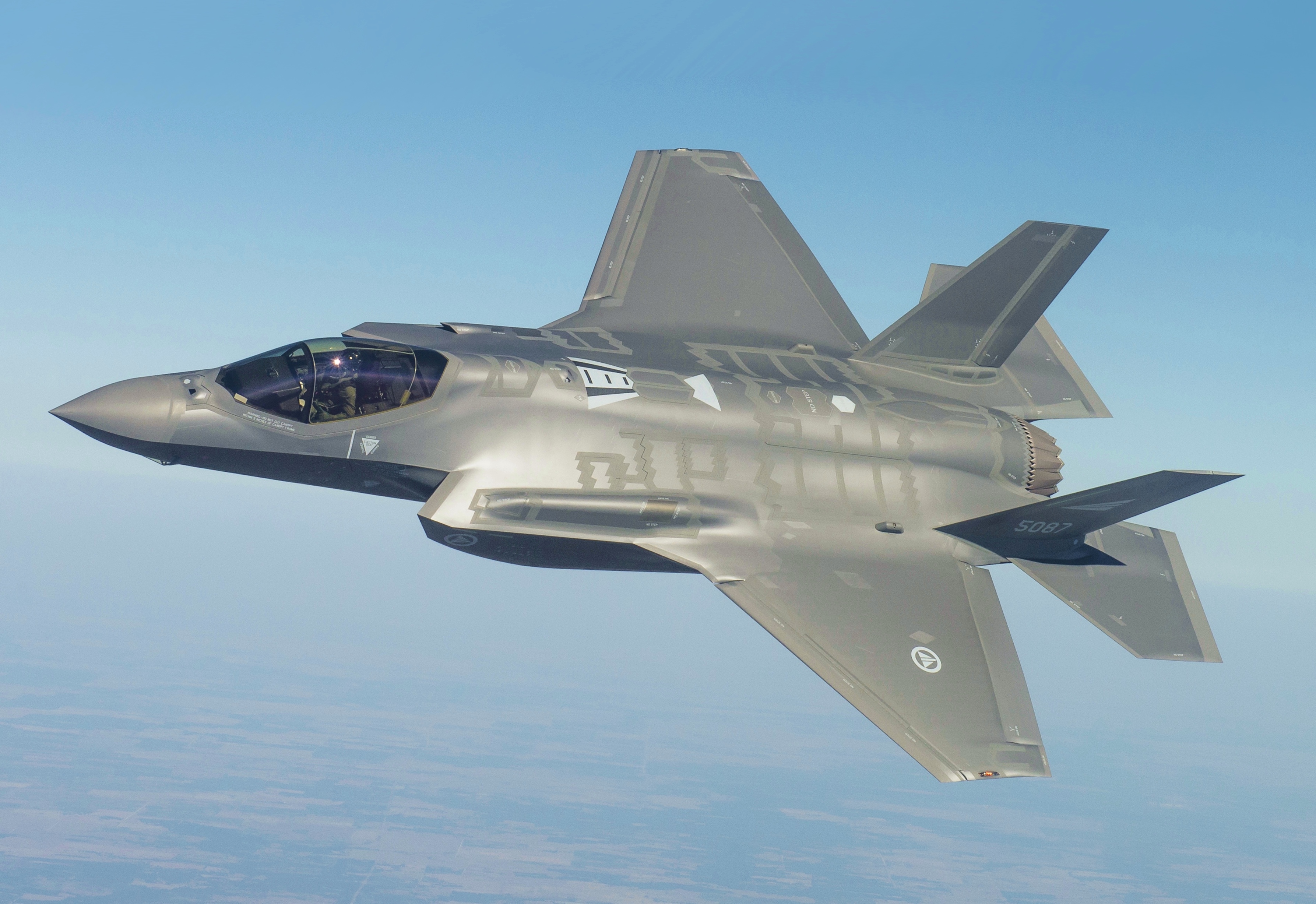
Congress appropriated a reported $1 trillion for U.S. defense this year, but that scale does not translate cleanly into systems delivered on time or ready for every assigned mission. The F-35 alone is anticipated to cost $2 trillion across development, production and maintenance, while Government Accountability Office figures indicate that only about one-quarter of the U.S. fleet was fully mission capable able to perform all assigned missions at a given time.

That readiness figure does not mean three-quarters of the aircraft could not fly or perform any mission. “Fully mission capable” is a demanding measure covering the complete mission set. Still, it is an important test of what the government receives from its most expensive weapon system, particularly when military personnel depend on available aircraft and taxpayers remain responsible for decades of operating and support costs.
Three programs, three different acquisition problems
The F-35 illustrates the cost of buying a large, technically complex fleet before its supporting maintenance system is fully mature. Recent readiness reporting attributed the fleetwide shortfall partly to spare-parts shortages and an earlier decision to prioritize aircraft purchases over depot and repair capacity. The Air Force recorded a 28.5% full-mission-capability rate in fiscal 2025, while Navy and Marine Corps rates ranged from 15.3% to 22%.
Those results also show that readiness is not simply a property fixed at the factory. It depends on spare-parts inventories, repair throughput, trained maintainers, supply-chain capacity and the funding needed to keep those elements aligned with fleet size and flying hours. Lockheed Martin and the military have since modeled the parts required to pursue higher availability, while the company made two $1 billion investments intended to address parts and supplier-capacity gaps. A subsequent $1.6 billion government contract covered critical spares.
The Zumwalt-class destroyer presents a different cost dynamic. The estimated price rose from $1.5 billion per ship in 1998 to more than $10 billion, according to GAO figures cited in the assessment. The Navy built three vessels rather than the 32 originally expected, with the reduced order contributing to the higher per-ship cost. Development expenses and specialized production infrastructure were spread across far fewer hulls.
The canceled Next Generation Operational Control System for GPS satellites shows the risk at the other end of the acquisition process: spending for years without receiving the planned system. Its expected cost increased from $4.5 billion to more than $7.5 billion. The program was canceled after 16 years and $6.27 billion in costs, including payments to RTX.
These cases should not be treated as interchangeable failures. One is a fielded aircraft with a costly readiness problem, another is a radically reduced ship class with sharply higher unit costs, and the third was canceled after prolonged development. Together, however, they expose the limits of judging defense performance from the top-line appropriation alone.
Budget scale does not equal financial visibility
The funding law included $32.6 billion for Air Force procurement categorized as “Other Procurement” and $35.2 billion for defense-wide research, development, testing and evaluation. Categories at that scale can contain many programs, modifications and support activities. Following money from an appropriation table through contract changes, testing, fielding and long-term maintenance therefore requires more than reading the annual headline number.
The Defense Department as a whole has never received a passing grade on a comprehensive financial audit. That does not establish that every dollar is missing or improperly spent. It does mean the department has not demonstrated the financial controls and traceability needed for a clean audit opinion, complicating efforts to connect appropriations with program-level cost, schedule and operational outcomes.
Market structure adds another constraint. Lockheed Martin, Boeing, General Dynamics, RTX and Northrop Grumman received a combined $771 billion in Defense Department contracts from 2020 through 2024. Specialized facilities, security requirements and limited qualified suppliers can make competition difficult once a major program is underway. Experts have also pointed to complex designs and production beginning before design finalization as contributors to cost and schedule problems, although those explanations are assessments rather than universal official findings.
Defense advocates reasonably note that personnel consume a substantial part of the budget, military spending is below historical peaks as a share of the economy and demanding technical standards make advanced systems expensive. Those points explain why a large appropriation cannot be measured only by the number of aircraft or ships purchased. They do not remove the need to measure whether programs meet their own cost, schedule and availability targets.
The unresolved issue is not whether sophisticated military systems can be expensive. It is whether financial records and acquisition reporting can show, program by program, what the public bought and whether the resulting equipment is available when service members need it. A $1 trillion annual appropriation makes that traceability more important, not less.
| More aerospace and engineering stories, right in your MSN feed. Follow AMI on MSN |
By David Whitaker — Associate editor for AMI’s aerospace and drone systems desk, translating flight systems, aircraft programs, spaceflight, and UAV developments into accessible technical stories.