Ukraine-Claimed Drone Strike Leaves Ryazan Refinery Facing Two-Week Halt
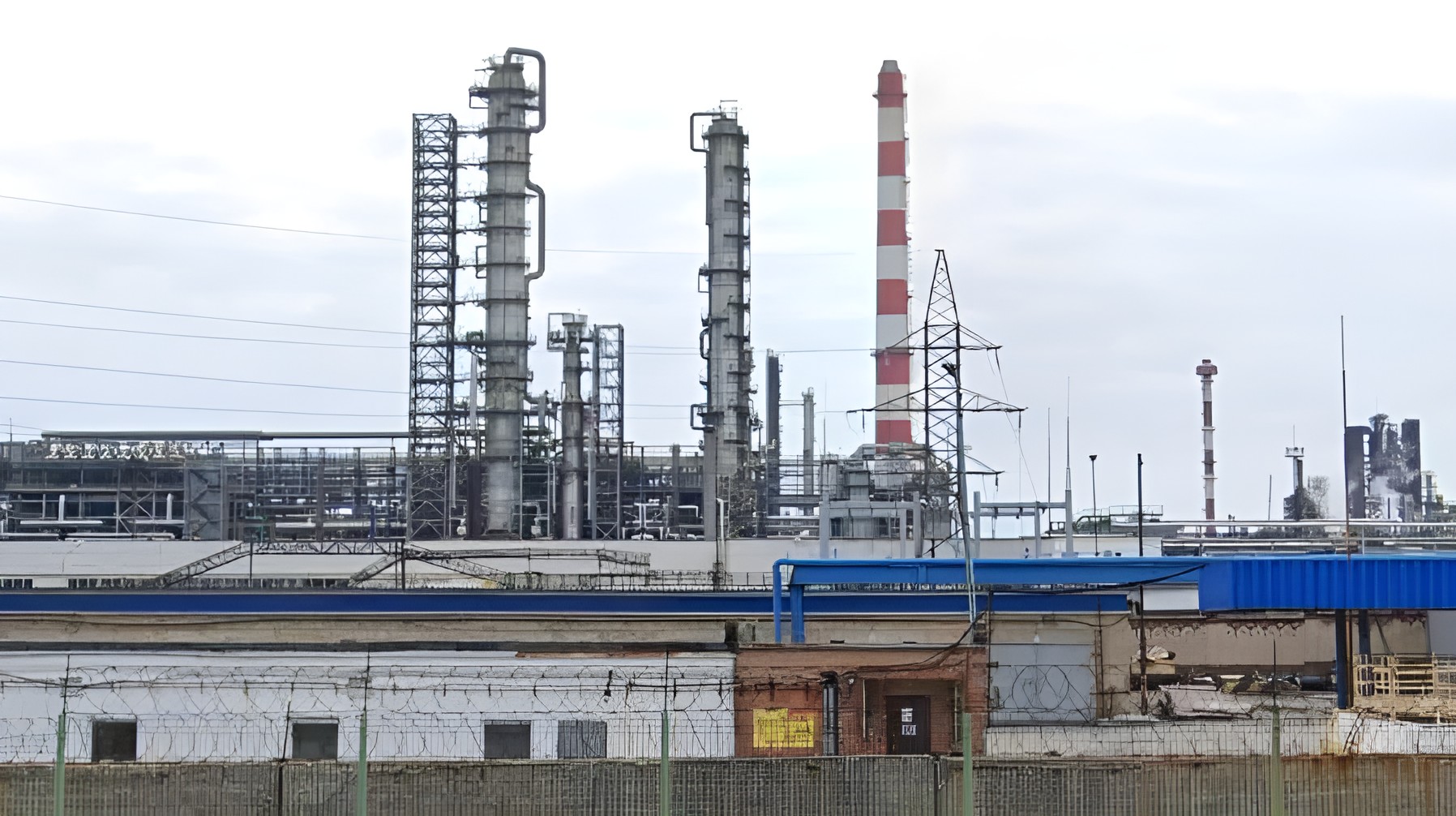
One of Russia’s largest oil refineries stopped processing crude yet continued offering gasoline and diesel for sale a contrast that explains why a major industrial shutdown does not instantly become an empty-fuel-tank problem. Following a drone strike claimed by Ukraine on July 29, industry sources expected the Rosneft-owned Ryazan refinery to remain offline for about two weeks.
Ryazan is consequential because it processed 13.1 million metric tons of crude in 2024, representing approximately 4.9% of Russia’s total refining throughput. Its production that year included 2.2 million tons of gasoline, 3.4 million tons of diesel and 4.3 million tons of fuel oil. Rosneft did not immediately respond to a request for comment on the shutdown.
Why fuel sales can continue after processing stops
A refinery shutdown and a halt to product sales are not the same event. Crude processing describes the conversion activity inside the plant, while exchange offers can involve finished products made before the interruption. Exchange data showed Ryazan still offering gasoline and diesel on the St. Petersburg International Mercantile Exchange on the Thursday after processing stopped.
That continuation provides evidence of a short-term supply buffer, but its limits are unknown. The available figures do not quantify Ryazan’s inventories, identify how much fuel was physically available for delivery or establish how long sales could continue without new production. It therefore would be premature to infer either an immediate shortage or an uninterrupted two-week supply from the exchange listings alone.
The practical consequence depends on the duration of the halt and the relationship between stored products, contractual commitments and customer demand. A brief interruption can be partly separated from the market by fuel already produced. A prolonged shutdown progressively removes that cushion because no new gasoline, diesel or fuel oil is being created at the affected plant.
A refinery cannot simply be switched back on
The two-week estimate reflects the work required after an unscheduled stop, not merely the time needed to extinguish a fire or restore electrical power. Industry sources said primary and secondary processing units must be returned to service, technological processes readjusted and finished products restored to required quality specifications.
Primary units begin the separation and processing of crude. Secondary units carry out additional conversion and treatment needed to increase useful product yields and meet specifications. Bringing those interconnected stages back requires a controlled sequence because material leaving one unit becomes feed for another. Even when equipment can be returned to service, operators must stabilize the process and confirm that its output meets the necessary quality requirements.
The precise condition of Ryazan’s equipment was not publicly detailed, so the expected two-week period should not be treated as a confirmed repair schedule. The plant’s infrastructure was also damaged in a May 15 drone attack that suspended operations, but no public information establishes how the earlier event affected the latest restart estimate.
Scale matters more than a single day’s lost output
Ryazan’s 4.9% share of national throughput makes its interruption material, although it does not mean Russian fuel availability immediately falls by the same percentage. Refining networks can respond through inventories, production at other plants, adjusted distribution and changes in exports. The supplied data do not establish which of those responses were being used specifically for Ryazan.
The shutdown nevertheless sits within broader pressure on Russia’s refining system. A September International Energy Agency analysis said Russian refinery throughput fell to 3.8 million barrels per day in June 2026, its lowest level in more than 20 years and roughly 30% below the previous year. That national figure provides context, but it does not prove that Ryazan alone caused any broader fuel or price effect.
The event also illustrates the readiness burden created by numerous unmanned aircraft. Ryazan regional governor Pavel Malkov said air defenses shot down 45 drones over the region overnight and that falling debris caused fires at industrial sites. Ukraine separately said its military struck the refinery. Those accounts remain attributed: the available information does not independently establish which aircraft or debris caused particular damage at the plant.
For the refinery system, the durable consequence lies in restart complexity. Fuel made before the halt can remain available temporarily, but a plant responsible for nearly one-twentieth of national throughput must still return multiple processing stages to stable operation and recover specified product quality. That is why one overnight disruption could translate into roughly two weeks without new crude processing at Ryazan.
| More aerospace and engineering stories, right in your MSN feed. Follow AMI on MSN |
By Stephen Wallace — Editor for AMI’s aerospace integration and unmanned mobility coverage, focused on drone manufacturing, VTOL systems, autonomous networks, and air-ground mobility links.