13 Senators Question $400 Million, 10-Month Presidential Jet Conversion and Sentinel Funding Shift
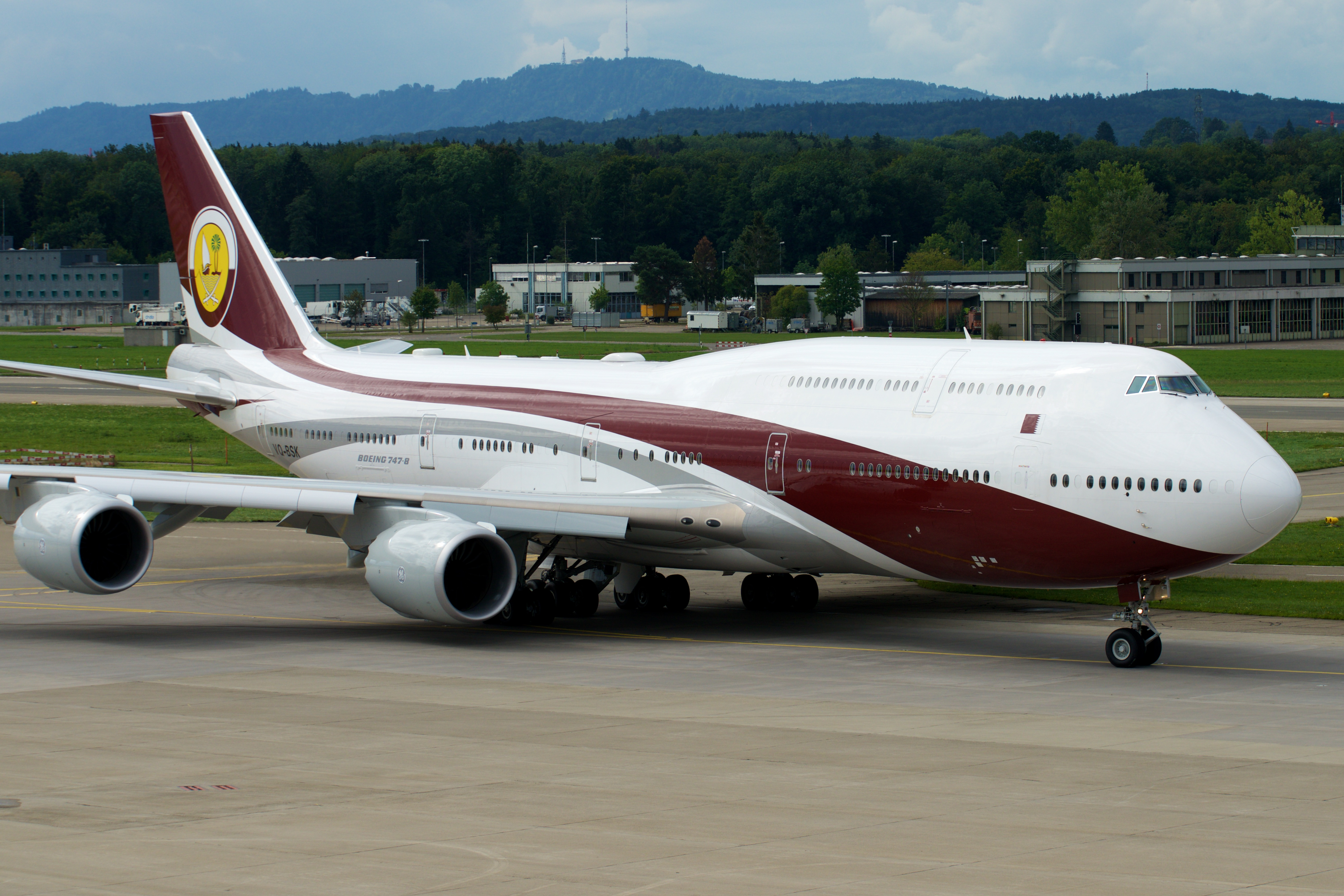
Thirteen senators are seeking a cost and security accounting for the accelerated conversion of a Qatar-origin Boeing 747-8 into an interim presidential aircraft. In a formal oversight request to the Air Force and L3Harris, they asked for written answers to eight questions, including how an estimated $400 million was spent and whether the work redirected personnel, funding or other resources from defense programs.

The request focuses on an unusually compressed schedule. The conversion took roughly 10 months rather than the years normally associated with modifying a large aircraft for the presidential mission. An L3Harris executive said approximately 400 employees worked around the clock toward a July 4 deadline. The aircraft was subsequently accepted at Joint Base Andrews and first carried the president on July 1.
The missing cost baseline
Air Force Secretary Troy Meink told Congress in June 2025 that the conversion should cost around $400 million and that funding was being diverted from the Sentinel intercontinental ballistic missile program. A detailed bridge-aircraft budget has not been released publicly, leaving several basic program-control questions unresolved.
A useful accounting would separate aircraft acquisition or transfer costs from inspection, engineering, modification, labor, testing, certification, facilities and continuing support. Without that breakdown, the $400 million estimate cannot show which expenses arose from the aircraft’s prior configuration, which were required for presidential service and which may have been driven by the shortened schedule.
Schedule compression can alter costs even when the final technical requirement remains unchanged. Round-the-clock staffing, parallel work packages and expedited supplier activity can increase labor and coordination demands. That does not establish that this program overspent, but it explains why the senators requested contract terms, cost details and the basis for the conversion schedule rather than relying on a single top-line estimate.
The resource question is similarly broader than the transferred funding alone. The requested disclosures could establish whether engineers, cybersecurity personnel, test assets or program-management capacity were reassigned from other priorities. The practical consequence depends on both the amount transferred and what planned work, if any, was delayed or reduced elsewhere. No such effect has yet been publicly established.
Airworthiness and mission security are separate questions
A presidential transport must satisfy overlapping but distinct bodies of work. Basic airworthiness addresses whether an aircraft can safely attain, sustain and complete flight within approved limits. The Defense Department’s MIL-HDBK-516 airworthiness framework, for example, describes minimum assessment criteria and reproducible methods, while noting that the handbook is guidance rather than a complete design specification.
Mission security, communications and survivability involve additional requirements that cannot be assessed from an airworthiness statement alone. The senators therefore asked how requirements were formulated and whether any planned upgrades were omitted or constrained to meet the deadline. Those questions should not be treated as proof that equipment was missing or that the aircraft was unsafe.
L3Harris intelligence, surveillance and reconnaissance division president Jason Lambert said company electronic-warfare specialists and U.S. government cybersecurity officials subjected the aircraft to a rigorous inspection before and throughout the conversion. He expressed confidence that it was safe for the mission, but did not publicly identify which survivability modifications were included or excluded. Some answers appropriately belong in a classified setting, which is why the senators also requested a joint classified briefing open to all senators.
A bridge created by replacement delays
The operational rationale is clear: the Air Force says the interim 747 is needed to relieve pressure on its two aging VC-25A presidential transports. Technical setbacks moved the first planned delivery of the purpose-built VC-25B replacement from 2024 to 2028, extending the period during which the existing aircraft must support the mission.
That makes the bridge aircraft a schedule-risk response, not simply another transport. Its value depends on whether it adds usable presidential-airlift capacity without creating disproportionate cost, support or security compromises during a relatively limited service period.
The senators requested written answers by July 27 and a classified briefing by August 6. Defense Department and Air Force representatives said they would respond directly to the lawmakers, while L3Harris did not immediately comment on the letter. The decisive information will be the cost breakout, the documented source of diverted resources and a clear account public where possible and classified where necessary of what the 10-month deadline changed.
| More aerospace and engineering stories, right in your MSN feed. Follow AMI on MSN |
By Thomas Caldwell — AMI’s senior editor for mechanical and mobility engineering, covering vehicle electronics, systems integration, electrification, chassis systems, propulsion, and safety policy.