Reported Ukrainian Attack With Nearly 200 Drones Twice Closes All Four Moscow Airports
All four airports serving Moscow suspended arrivals and departures twice overnight on June 18 during what was reported as a Ukrainian attack involving nearly 200 drones. Vnukovo, Domodedovo, Zhukovsky, and Sheremetyevo briefly resumed operations at 8:00 a.m., following an announcement by Russia’s Federal Air Transport Agency, but flights were suspended again within an hour.
The reversal turned an airspace restriction into a broader airport-system disruption. Roughly 30 Sheremetyevo departures scheduled between 2:00 a.m. and 10:00 a.m. were listed as canceled. Aeroflot advised passengers to check online departure boards and told travelers with canceled flights to arrange refunds or rebooking remotely rather than travel to an airport.
A reopening does not immediately restore the schedule
The second suspension is the event’s most consequential aviation detail. An airport can reopen its runways and airspace, but that does not mean its timetable instantly returns to normal. Flights that have been held, canceled, or prevented from departing still compete for operational capacity once restrictions lift. Another closure shortly afterward interrupts that recovery before airlines and airports can stabilize the schedule.
That stop-start pattern can be more demanding than one clearly bounded shutdown. Each operational change requires airlines, airports, air traffic personnel, ground handlers, and passengers to react to a new status. A reopening creates an expectation that movement can resume; a renewed suspension forces another round of schedule decisions and passenger communication. In this case, the effects progressed beyond delayed movement to canceled departures, closed terminal access, and sheltering.
TASS, citing Sheremetyevo’s administration, reported that passengers and staff were moved to safe locations, including some passengers already aboard aircraft. Access to terminals was closed, while travelers were directed to shelters. The Federal Air Transport Agency said stranded passengers received mats, mattresses, drinking water, and access to free mother-and-child rooms.
Those provisions illustrate how drone-related restrictions can shift the burden from airspace management to terminal operations. Once travelers cannot depart or freely use a terminal, airport readiness includes basic accommodation, controlled movement, current flight information, and assistance for families. Aeroflot’s direction to handle refunds and rebooking remotely also served an operational purpose: discouraging passengers with canceled flights from adding to terminal demand while access was restricted.
A networkwide restriction multiplies the consequences
Moscow is served by four airports rather than one central field, so closing all four removes the usual metropolitan distinction between an affected airport and an available airport elsewhere in the same city. The evidence does not establish how individual airline networks recovered or how long all schedule effects persisted. It does show that the restriction reached the entire Moscow airport system at the same time and did so twice.
For aviation authorities, such an event creates simultaneous pressure on airspace control, airport status decisions, airline coordination, and public communication. The brief reopening demonstrates that restoring service is not simply a final step taken after a disruption has passed. It is a decision that may need to be reversed when authorities judge that operating conditions have changed again.
The reported scale also matters, but it requires careful attribution. The account that nearly 200 drones attacked Moscow is not an independently verified count here, and responsibility remains attributed to Ukraine. A figure of that size does not by itself establish how many aircraft reached the capital, what types were involved, or what happened to each one. It does, however, help explain why authorities were managing a metropolitan-scale interruption rather than an isolated airport restriction.
Readiness pressure in this context is not limited to countering drones. Civil aviation agencies must decide when airspace can be used, airports must protect people already inside controlled areas, and airlines must repeatedly update schedules and passenger instructions. Those functions have different timelines, which is why an official reopening can occur before the wider transportation system has recovered.
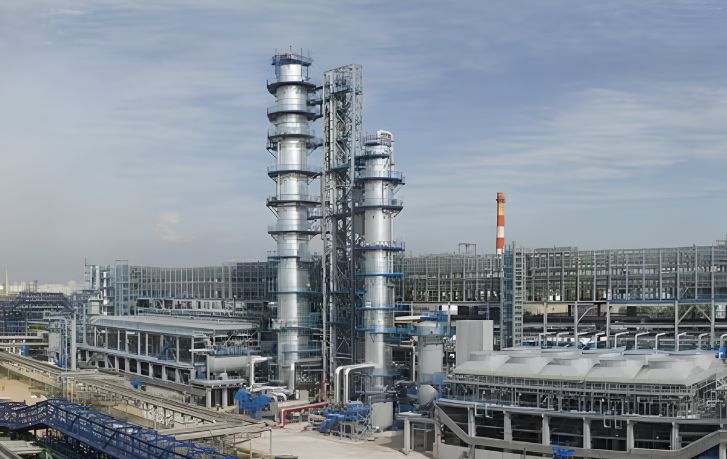
The disruption also extended beyond aviation. The strikes reportedly sparked a fire at a Moscow oil refinery, while authorities restricted traffic on several streets, including part of the city’s ring road. That wider transport impact could further complicate access to airports, although the available information does not quantify that effect.
The defining operational fact remains the rapid reversal: all four airports reopened together, then stopped flights again within an hour. For passengers, airlines, and airport staff, that second shutdown meant the recovery process had barely begun before the entire network had to switch back into disruption mode.
| More aerospace and engineering stories, right in your MSN feed. Follow AMI on MSN |
By Stephen Wallace — Editor for AMI’s aerospace integration and unmanned mobility coverage, focused on drone manufacturing, VTOL systems, autonomous networks, and air-ground mobility links.