Navy Ordered to Plan Fifth Shipyard, but Construction Funding Remains Unsecured
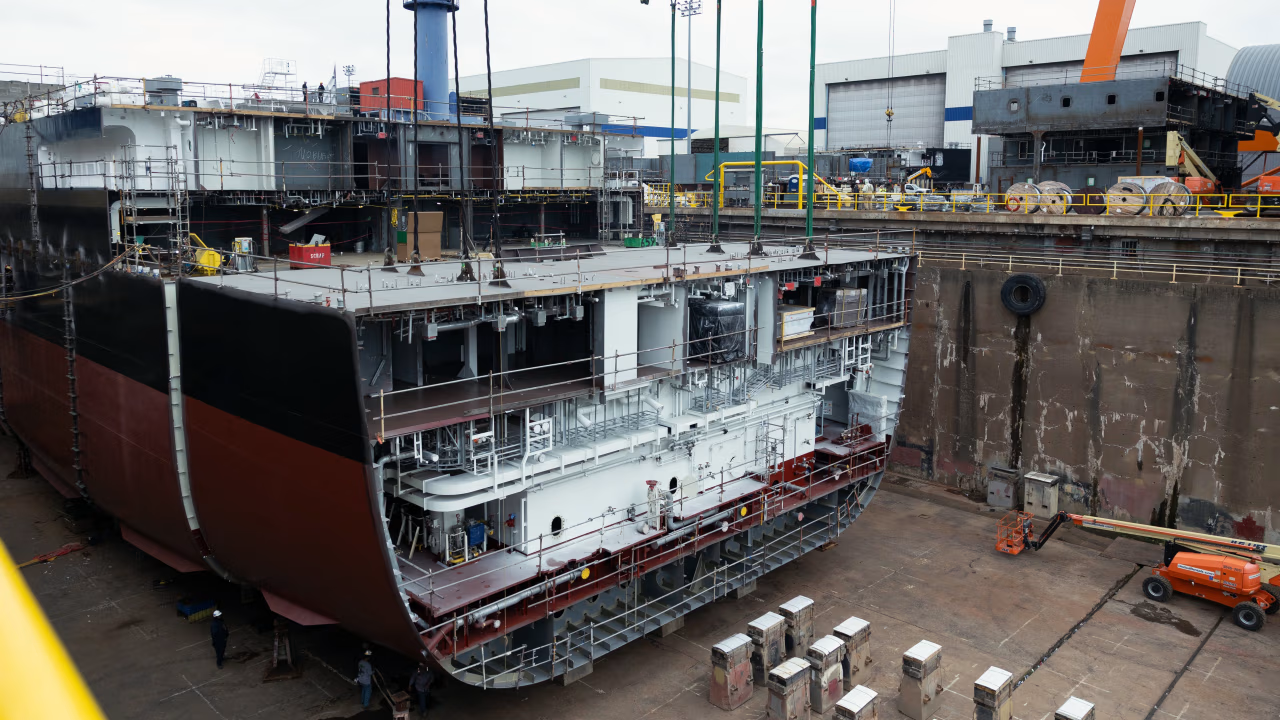
The Pentagon must plan the first new public U.S. naval shipyard in more than 80 years, even as the Navy’s existing submarine-maintenance system struggles with late work. The directive is consequential but limited: it selects no site, authorizes no construction and provides no appropriated funding.

President Donald Trump signed the memorandum, titled Rebuilding the United States Navy and America’s Shipbuilding Industrial Base, on August 13, 2026. It gives the Pentagon 120 days to prepare a plan for a fifth public naval shipyard near the Pacific Fleet and estimate the cost of as many as three drydocks capable of accommodating every current and projected submarine class. Candidate locations may be in the continental United States, Alaska, Hawaii or U.S. territories.
A second plan is due within 90 days for a Component Repair Center holding at least one complete spare-parts set for Los Angeles, Virginia, Seawolf, Ohio and Columbia-class submarines. The memorandum also tells planners to assess public-private financing arrangements, while making implementation “subject to the availability of appropriations.”
More drydocks could address a measurable maintenance constraint
The Navy currently operates four public shipyards: Norfolk, Portsmouth, Puget Sound and Pearl Harbor. All four service nuclear-powered vessels, making their drydocks, specialized equipment and trained workforces central to submarine availability. Philadelphia, Mare Island, Charleston and Long Beach closed during the 1990s after base-closure panels found “considerable excess” capacity.
Conditions have since moved in the other direction. The Government Accountability Office found that attack submarines accumulated 10,363 days of idle time and repair delays from 2008 through 2018. It later reported that 75% of carrier and submarine overhauls completed from 2015 through 2019 were late. Submarine work in that period finished an average of 225 days behind schedule.
A drydock is not simply an additional parking position. It is a large, class-specific industrial asset surrounded by utilities, cranes, shops, controlled work areas and supporting infrastructure. Building one can increase the number and types of vessels a yard can accept, but useful maintenance capacity also depends on staffing, material flow, engineering support and the ability to complete work without disrupting projects already underway.
That is why the proposed repair center matters alongside the shipyard plan. A complete spare-parts inventory for five submarine classes could reduce some waits for components and provide a more deliberate repair pipeline. It would not, by itself, eliminate delays caused by labor shortages, changing work packages, facility limitations or emergent maintenance discovered after a submarine enters an availability.
The existing four-yard overhaul is already expanding in cost and time
The fifth-yard proposal would sit beside not replace the Shipyard Infrastructure Optimization Program launched in 2018 to rebuild the four current yards. That effort was initially described as a 20-year, roughly $21 billion program. A September 2026 GAO assessment now indicates it could exceed $200 billion and continue for more than 50 years, according to a summary of the watchdog’s findings.
The increase illustrates the central public-cost problem facing a fifth yard. Waterfront construction at an operating nuclear-vessel maintenance facility is unusually difficult to scope and sequence. The Navy must maintain current fleet work while rebuilding utilities, transportation routes, shops and drydocks around it. Environmental requirements, site constraints and design changes can add projects and push costs well beyond early planning estimates.
GAO also found that the Navy does not provide Congress with one standardized account covering the modernization program’s total cost, spending, remaining funding requirements, schedule and major risks. That oversight gap becomes more important if taxpayers are asked to finance an additional shipyard while the four-yard program is still establishing a reliable multidecade baseline.
A planning deadline is not a construction decision
The memorandum’s first practical test will be whether the Pentagon can produce credible site, cost and financing comparisons within 120 days. Pacific access narrows the geography but does not settle land availability, environmental review, workforce supply, utility requirements or the cost of creating nuclear-vessel maintenance infrastructure at a new location.
The tradeoff is also broader than choosing between modernization and expansion. Concentrating money on the four existing yards could improve established facilities but leave the Navy with the same basic geographic and drydock limits. Adding a fifth yard could create capacity and redundancy, yet it would require another specialized workforce and compete for construction funding, equipment and skilled labor with projects already extending across decades.
Comparisons with China’s shipbuilding base add urgency but require care. The frequently cited claim that China has 232 times U.S. shipbuilding capacity is based on merchant tonnage, not a direct comparison of warship or submarine production. The documented U.S. problem is sufficiently concrete without that shortcut: repair delays have kept submarines unavailable, and production of Virginia-class boats remains roughly one per year against a target of two.
The order therefore establishes a deadline and a desired expansion, not a fifth shipyard project. The decisive milestones will come after the Pentagon identifies candidate sites and produces defensible cost estimates when Congress must determine whether an additional yard and up to three submarine drydocks justify funding alongside a four-yard modernization effort now projected above $200 billion.
| More aerospace and engineering stories, right in your MSN feed. Follow AMI on MSN |
By David Whitaker — Associate editor for AMI’s aerospace and drone systems desk, translating flight systems, aircraft programs, spaceflight, and UAV developments into accessible technical stories.