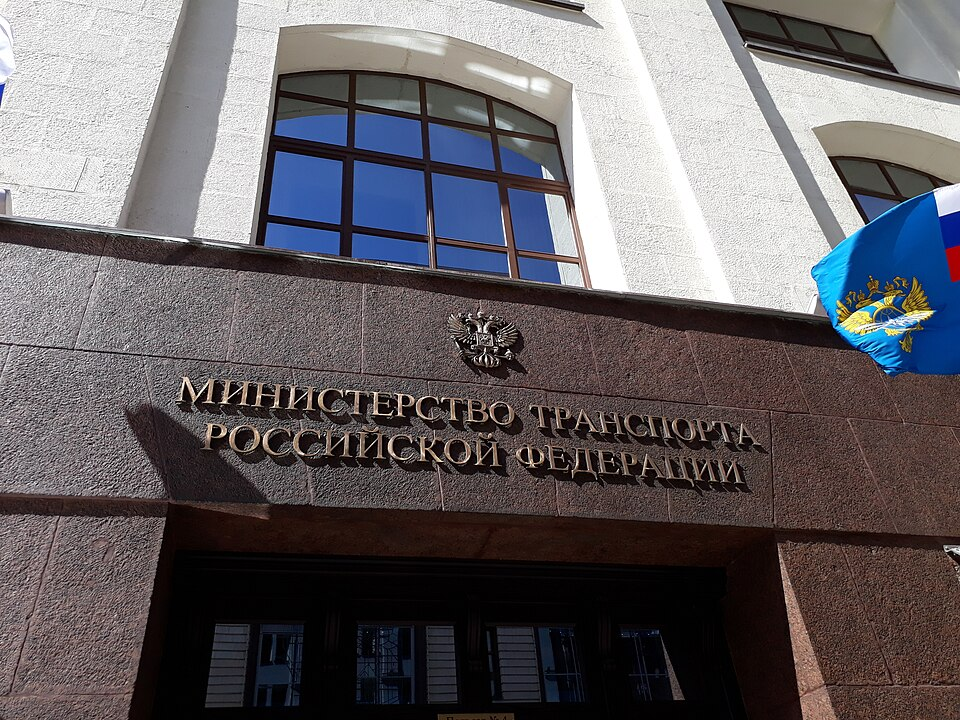
Russian Transport Ministry Proposes More Jet Fuel With Cold-Region Restrictions
Russia’s Ministry of Transport reportedly wants to increase jet-fuel production by relaxing a key cold-weather requirement, but the additional fuel would have a substantially narrower operating area. The August 7 proposal would permit fuel that freezes at minus 50 degrees Celsius instead of requiring a freezing point of minus 60 degrees. It has been circulated for review and has not been described as an implemented standard.

The proposed change could add an estimated 170,000 to 250,000 tons of jet fuel per month following drone-related disruptions to Russian refinery operations. The tradeoff is explicit: the resulting fuel would reportedly be barred from military equipment and from severe or moderately cold regions, including Yakutia, Chukotka, Bashkiria, Tatarstan, Moscow and St. Petersburg.
Ten degrees changes the operating envelope
A fuel’s freezing point is not merely a storage specification. As fuel cools, hydrocarbon crystals can form before the entire volume becomes solid. An unnamed industry source warned that crystallization at minus 50 degrees could obstruct engine fuel lines. That warning is attributed rather than an official safety finding, but it identifies the engineering issue behind the proposed geographic restrictions.
Aircraft fuel temperature is shaped by ambient conditions, flight duration, altitude, tank configuration and the thermal history of the fuel. A ten-degree reduction in cold-weather margin therefore cannot be treated as an administrative change alone. It would require operators and suppliers to ensure that the approved fuel grade matches the aircraft, route and expected conditions.
International fuel grades already illustrate why this characteristic matters. SKYbrary’s aviation-fuel overview lists Jet A with a freezing point below minus 40 degrees and internationally common Jet A-1 below minus 47 degrees, while noting that fuels intended for extremely cold environments use lower freezing points. Those figures do not determine whether Russia’s proposal is acceptable for a particular aircraft, but they show that freezing-point limits are normally connected to a defined operating envelope rather than applied in isolation.
The regional exclusions are consequently central to the plan, not a minor qualification. More fuel would become available on paper, but it could not be distributed as a fully interchangeable replacement for the existing grade. Airports and fuel suppliers would need controls capable of separating grades, documenting their specifications and preventing restricted fuel from reaching an aircraft or destination for which it is not authorized. Each additional restriction increases the importance of labeling, testing, storage discipline and dispatch coordination.
Refinery yield does not equal immediate usable supply
The production benefit comes from allowing refineries to accept a broader fuel composition instead of processing every batch to the more demanding minus-60-degree threshold. Other reported measures include blending heavy naphtha and replacing imported anti-wear additives with domestic alternatives. Together, the blending and additive proposals have been associated with a possible 1.8-million-ton annual increase.
Those measures introduce separate qualification questions. Anti-wear additives serve a functional role, so domestic substitutes would need to deliver the required performance and consistency. Blending can increase finished-product volume, but the resulting fuel still has to satisfy every applicable property, not only freezing point. Aviation fuel is a tightly controlled system because composition, handling and contamination safeguards interact with pumps, lines, seals and engine fuel controls.
Plans to draw more production from small and medium-sized refineries face another limit: analyst Igor Yushkov said many lack the necessary advanced technology. Redirecting output from Novatek’s export-oriented Ust-Luga plant could contribute another 300,000 tons annually to the domestic market, according to analyst Maxim Shevyrenkov, but logistical availability is different from refinery capacity. Fuel must still reach approved airports in the required grade and on the required schedule.
The wider supply pressure remains disputed. Transport Minister Andrey Nikitin said there was no shortage, while regional carrier Azimuth Airlines reportedly called the situation critical and requested government intervention. Russia also imposed a temporary aviation-fuel export ban from June 1 through November 30. Separately, an August analysis by the Centre for Research on Energy and Clean Air found that Russian oil-product exports had reached record lows and fuel imports had risen to 172,000 tons, although those broader figures do not by themselves quantify jet-fuel availability.
The proposal’s decisive next step is therefore not simply approval of a new number. Authorities would need to define which aircraft, airports, routes and temperature conditions can use the fuel and establish controls that keep a production expedient from being mistaken for a universally interchangeable aviation grade.
| More aerospace and engineering stories, right in your MSN feed. Follow AMI on MSN |
By Thomas Caldwell — AMI’s senior editor for mechanical and mobility engineering, covering vehicle electronics, systems integration, electrification, chassis systems, propulsion, and safety policy.