Drone Attack Forces Domodedovo and Three Moscow Airports Into Manual Coordination
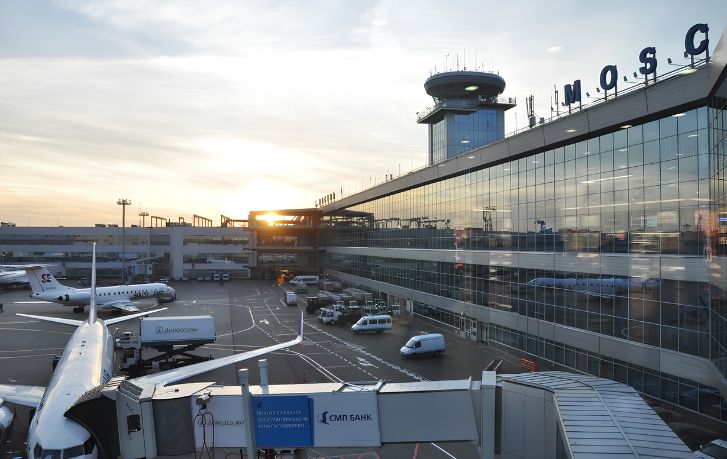
A large drone attack pushed Moscow’s Domodedovo Airport and three other airports away from routine traffic handling on Aug. 18. Flights could continue, but only through manual coordination with the relevant authorities a safety restriction that Russia’s Federal Air Transport Agency, Rosaviatsiya, warned could disrupt schedules.

Vnukovo, Sheremetyevo and Zhukovsky also moved to manually coordinated operations after temporary ground stops and airspace restrictions overnight. The distinction matters: this was neither normal service nor necessarily a sustained closure. It was a constrained operating state in which departures and arrivals required individual approval, leaving airlines and passengers exposed to delays even while airport boards continued showing active flights.
Why an open airport can still lose schedule capacity
Airport operations are not simply “open” or “closed.” Routine schedules depend on predictable flows of arriving and departing aircraft, available airspace and coordinated handling across airlines, airports and aviation authorities. Replacing that routine with manual approvals introduces another control point into each movement.
Rosaviatsiya did not publish an approval rate or quantify the resulting capacity reduction. It is therefore not possible to calculate how many flights the four airports could process under the restriction. Operationally, however, approval-based handling makes traffic flow less predictable because an airline cannot assume that a scheduled movement will proceed at its original time.
That uncertainty can persist after a ground stop ends. Aircraft that depart late may reach their destinations late, while an inbound flight held elsewhere is unavailable for its next scheduled service. Gates, ground crews and passenger connections can consequently fall out of sequence. These are general network effects rather than confirmed outcomes for every Aug. 18 flight, but they explain why Rosaviatsiya warned of schedule disruption despite allowing operations to continue.
The four-airport scope also raises the consequence beyond an isolated terminal problem. Domodedovo, Vnukovo, Sheremetyevo and Zhukovsky share the wider Moscow aviation market. When all four face restrictions during the same period, traffic cannot necessarily be restored simply by shifting demand from one local airport to another. Any recovery must instead be coordinated across a larger airspace and airline network.
Drone scale creates a civil-aviation readiness problem
The operational pressure comes from uncertainty as much as from any confirmed impact near an airport. Civil aviation authorities must protect aircraft while the extent and duration of an airborne threat remain unclear. Temporary restrictions purchase safety margin, but they do so by reducing the predictability on which high-volume schedules depend.
That tradeoff is becoming recurrent rather than exceptional. Aviation security firm Osprey Flight Solutions counted 993 temporary airport closures across Russia in August 2026, affecting 32 airports, according to a September review of the disruption. The summer total reached 2,182 closures, already exceeding the number recorded during all of 2025. Those figures cover a broader period and should not be treated as a count for the Aug. 18 event, but they show the cumulative readiness burden created by repeated drone alerts.
Repetition matters because each restriction requires airports, airlines and airspace authorities to shift from planned operations into disruption management and then rebuild the schedule. Even a relatively short interruption can consume capacity after the immediate restriction has been relaxed. From a systems perspective, resilience therefore depends not only on keeping an airport physically available, but also on how efficiently authorities can restrict, approve and restore traffic without allowing delays to propagate.
The attack totals remain claims, not independently verified counts
Moscow Mayor Sergei Sobyanin claimed that 620 uncrewed aircraft flew toward the capital region between Monday evening and 5 a.m. on Aug. 18, including 180 allegedly intercepted over Moscow Oblast. Russia’s Ministry of Defense separately claimed that 791 drones were intercepted across several Russian regions, occupied Crimea and the Black and Azov seas.
Those totals describe different geographic scopes, and their relationship has not been independently established. They should not be combined or presented as a verified measure of the attack. A reported strike also triggered a fire at a major Wildberries warehouse in Moscow Oblast, but the clearest confirmed aviation consequence was the operating change at the four airports.
For passengers, the immediate tension was straightforward: flights were still moving, but normal timetable certainty was gone. For airport operators, the harder challenge is sustaining a safe approval-based system as repeated drone alerts turn temporary restrictions into a recurring demand on civil-airspace coordination.
| More aerospace and engineering stories, right in your MSN feed. Follow AMI on MSN |
By Stephen Wallace — Editor for AMI’s aerospace integration and unmanned mobility coverage, focused on drone manufacturing, VTOL systems, autonomous networks, and air-ground mobility links.