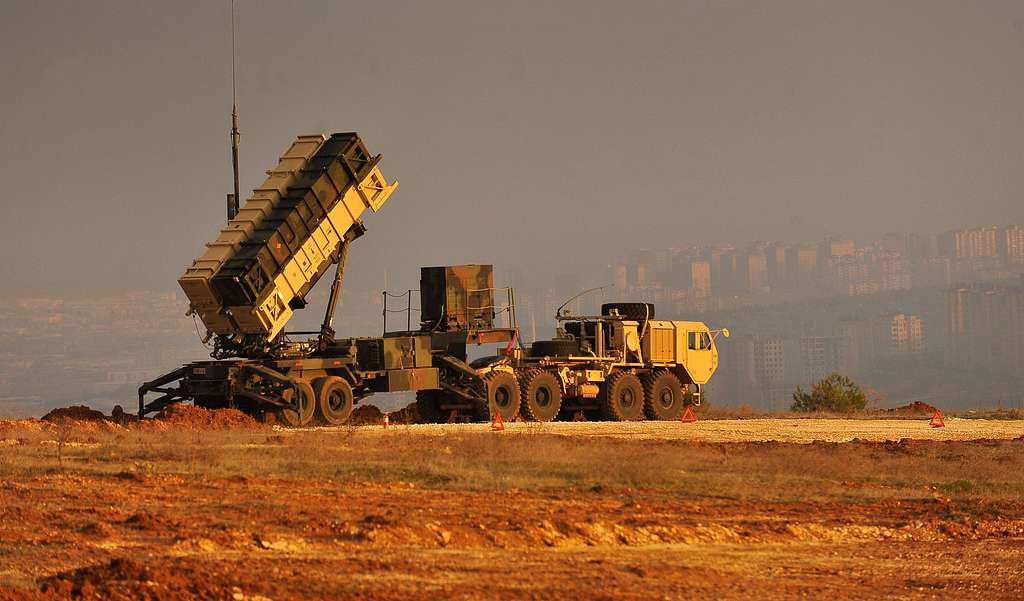
Pentagon Gives Missile Makers 21 Days as Patriot Supplies Tighten
A 21-day deadline can produce a plan. It cannot produce a Patriot interceptor.
That is the central tension behind an Aug. 5 Pentagon memorandum directing major U.S. defense manufacturers to propose “significantly faster, more aggressive delivery schedules” or increased production for critical capabilities. The deadline was Aug. 26, but the Defense Department had not publicly disclosed the number of industry responses or the timelines offered 26 days later, according to a Sept. 21 update.

The request arrived as demand for Patriot and Terminal High Altitude Area Defense, or THAAD, interceptors put pressure on U.S. inventories and supplies available to other operators, including Ukraine. Exact military inventories are classified. Public estimates therefore should not be treated as confirmed Pentagon counts, and a separate media claim that 80% of both reserves had been consumed by early August remains an attributed leak rather than an independently verified figure.
A production problem measured in years
Deputy Defense Secretary Steve Feinberg’s memorandum asked manufacturers to identify faster production and delivery options, required capital investments and facility expansions, and ways the Pentagon could enable higher output. It covered 16 critical programs, with the responses intended to inform the fiscal 2028 budget request.
The timing mismatch is severe. Center for Strategic and International Studies estimates cited in subsequent reporting put production timelines at about 42 months for the advanced Patriot interceptor and 53 months for a THAAD interceptor. Before the conflict with Iran, contractors were producing roughly 620 Patriot and 96 THAAD interceptors annually. CSIS estimates indicate that restoring prewar levels could take until at least mid-2029.
Those figures are estimates based on public budget and acquisition records, not official inventory disclosures. Even so, they illustrate why an administrative deadline is only the beginning. Missile output depends on trained labor, specialized facilities, qualified suppliers, propulsion components, electronics and extensive quality controls. Adding factory space or another supplier does not instantly yield accepted hardware. Tooling must be installed, processes validated and completed units tested without weakening reliability.
The Pentagon has already moved beyond asking for proposals. It announced long-term framework agreements for propulsion and other components supporting Patriot and THAAD interceptors. Publicly stated goals call for tripling production capacity for the advanced Patriot interceptor and quadrupling THAAD capacity, subject to annual congressional funding. Lockheed Martin also said it received its first Patriot housing components from GM Defense 22 days after their production contract was signed, using the automaker’s casting and machining capabilities.
That is a useful example of what automotive manufacturing can contribute: additional machining, casting and production engineering capacity. It does not mean automakers can convert a missile supply chain into an automotive-style assembly line. A housing can move quickly while propulsion, guidance, electronics or final acceptance remain on longer schedules. The slowest qualified element can still set the delivery rate for the complete interceptor.
Demand is broader than one inventory
The same production base must serve U.S. forces, Ukraine and other countries operating Patriot systems. Ukraine’s president has said the country holds only a fraction of the interceptors it needs as Russian air attacks continue. Any new production arrangement would still face long lead times and high unit costs, so authorization alone would not provide immediate missiles.
The demand problem is also economic. Sophisticated interceptors costing millions of dollars and requiring lengthy production are being consumed in an environment where much cheaper drones can sustain pressure on defensive magazines. That does not make Patriot or THAAD interchangeable with lower-cost defenses: the systems address different threat classes and mission requirements. It does mean planners need a layered mix so the most capable interceptors are not the only answer available for every aerial threat.
Former Defense Secretary Robert Gates warned years ago about relying on central weapons systems that take years to build, arguing for lower-cost options capable of supplying “75% of the solutions.” The current production squeeze gives that argument renewed industrial weight. More Patriot and THAAD interceptors remain necessary, but output growth alone does not resolve the cost and manufacturing imbalance.
The Pentagon’s 21-day exercise will matter only when private proposals become funded orders, supplier expansions and accepted missiles. For now, the department has announced ambitious capacity goals but not whether the deadline changed procurement quantities or delivery dates. The calendar that counts is no longer the one used to collect plans; it is the multiyear schedule required to turn new factories and suppliers into deployable inventory.
| More aerospace and engineering stories, right in your MSN feed. Follow AMI on MSN |
By David Whitaker — Associate editor for AMI’s aerospace and drone systems desk, translating flight systems, aircraft programs, spaceflight, and UAV developments into accessible technical stories.