Navy Awards USS Truman $5.1 Billion Overhaul for 25 More Years
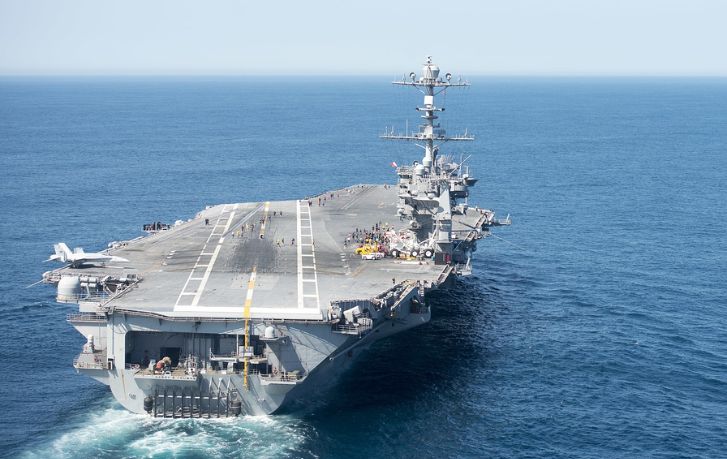
The U.S. Navy is spending at least $5.10 billion to give USS Harry S. Truman roughly 25 more years of service seven years after abandoning a proposal to retire the nuclear-powered aircraft carrier around 2024. The decision converts that policy reversal into a long-duration industrial commitment, with taxpayers funding the carrier’s reactors, machinery and major ship systems for the second half of its planned life.

The Navy awarded the fixed-ceiling incentive contract to HII’s Newport News Shipbuilding division on September 29, 2026. Its value could rise to $5.18 billion if all options are exercised. Truman moved from Naval Station Norfolk to the Virginia shipyard on September 30, beginning the main shipyard phase of its overhaul, according to the Navy’s official contract announcement.
This is not simply an expensive maintenance visit. A Refueling and Complex Overhaul is the one midlife intervention intended to divide a Nimitz-class carrier’s service into two operating lives. The Navy says it represents nearly one-third of all maintenance and modernization the ship will receive across more than 50 years.
What $5.1 billion buys
The defining task is refueling Truman’s two nuclear reactors. That work is paired with extensive renewal of the propulsion plant, electrical network, combat systems and aircraft launch-and-recovery equipment. Shipyard teams will also remove or repair major mechanical components including propellers, shafts and rudders, while working through thousands of compartments and tanks.
That scope explains why the price cannot be judged like a conventional repair bill. The contract is purchasing a recapitalized carrier rather than addressing one failed component or a short list of deferred maintenance items. Reactor work, heavy mechanical maintenance and system modernization must also be integrated, restored and tested as a complete ship before Truman can return to sea.
The fixed-ceiling incentive structure is intended to share risk between the Navy and shipbuilder while rewarding schedule performance. It does not eliminate execution risk. Years of industrial production will be followed by system restoration, propulsion-plant testing, total-ship testing, crew certification and sea trials. The Navy’s current target is completion in November 2031, but that date and the eventual total cost remain projections rather than guaranteed outcomes.
The alternative was losing a carrier early
Truman was commissioned in 1998 and is the eighth of 10 Nimitz-class carriers. A fiscal 2020 budget proposal called for retiring it around 2024 instead of paying for the overhaul. Congress opposed that plan, the proposal was abandoned in 2019, and the Navy subsequently funded advance procurement and planning.
The tradeoff is now concrete. Retiring Truman would have avoided this particular multibillion-dollar overhaul but removed a carrier well before the end of its planned 50-year life. Proceeding preserves one ship in the Navy’s 11-carrier force, although Truman will be unavailable for operations while the work proceeds. Its sailors, the shipyard and suppliers will instead spend years moving through production and testing milestones.
For taxpayers, the fairness question is less about whether $5.1 billion is a large number it plainly is and more about what capability the expenditure retains. The Navy is not buying an additional carrier hull. It is paying to prevent an existing one from reaching the end of its usable nuclear and mechanical life at midpoint. The return depends on whether the overhaul delivers the intended decades of service within an acceptable cost and schedule.
Two carrier generations will overlap
The award also extends the period in which the Navy must operate and support two carrier generations. USS Gerald R. Ford, commissioned in 2017, is the only Ford-class carrier currently in active service. The future USS John F. Kennedy is scheduled for delivery in 2027, while the future USS Enterprise remains under construction at Newport News.
Truman’s overhaul therefore does not represent a simple transition from old carriers to new ones. It commits the Navy to maintaining a modernized Nimitz-class ship alongside the expanding Ford class. That means continued demand for class-specific maintenance knowledge, reactor work, parts, training and shipyard capacity even as newer carriers enter the fleet.
Industrial capacity is already engaged elsewhere: USS John C. Stennis is undergoing the same once-in-a-lifetime overhaul at Newport News. Truman’s arrival adds another long, tightly sequenced engineering program at the only yard identified here for this work. The most consequential milestones will not be the contract award itself, but whether the yard can move Truman through restoration, testing and sea trials toward its planned November 2031 redelivery and convert a $5.10 billion commitment into approximately another quarter-century at sea.
| More aerospace and engineering stories, right in your MSN feed. Follow AMI on MSN |
By David Whitaker — Associate editor for AMI’s aerospace and drone systems desk, translating flight systems, aircraft programs, spaceflight, and UAV developments into accessible technical stories.