


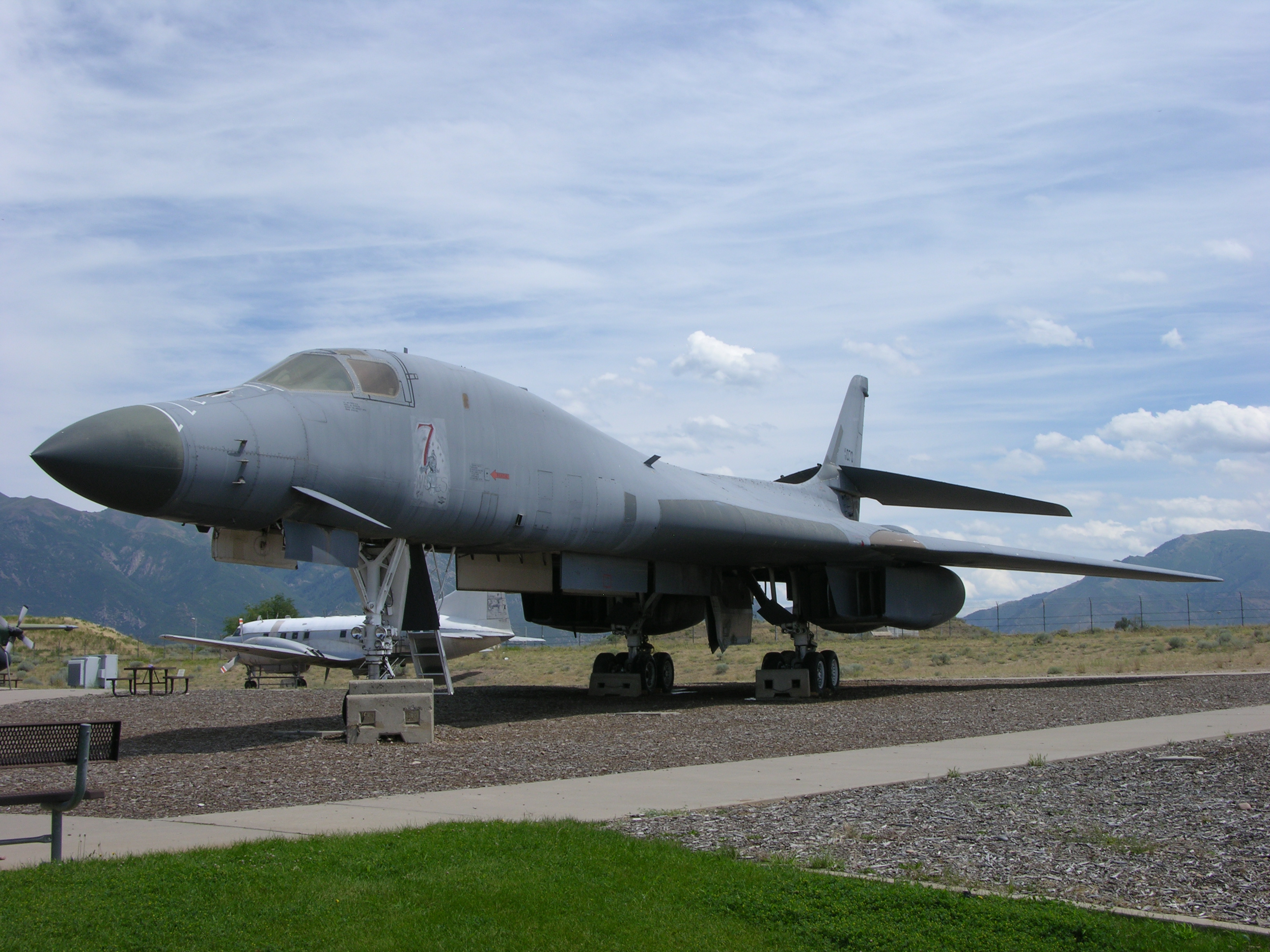
Air Force Replaces 33 Feet of B-1B Spine Three Months Early
Repairing an aging bomber starts with a basic problem: the aircraft in the hangar is no longer identical to the aircraft preserved in its original drawings. Decades of manufacturing variation, accumulated wear and earlier repairs can leave engineers working on a structure that differs in small but consequential ways from the design record.

To close that gap, Wichita State University’s National Institute for Aviation Research, or NIAR, dismantled retired B-1B Lancers and scanned their components down to individual fasteners. That digital work supported the replacement of a 33-foot section of one operational B-1B’s load-bearing upper spine. The joint U.S. Air Force and NIAR team returned the bomber to airworthy condition approximately eight and a half months into an authorized one-year schedule about three months early.
The repaired aircraft, tail number 86-0117, was the first fielded repair completed under the BackBONE Project. Its new Forward Intermediate Fuselage section sits ahead of the wings and contains structural members affected by fatigue cracking, including dorsal and shoulder longerons running along the bomber’s spine.
A digital model built from real bombers
Original engineering drawings remain important, but they describe the intended design rather than every detail of an aircraft after decades of service. A high-fidelity digital twin can capture the physical condition of an actual airframe, including manufacturing deviations and previous repair work that may not be fully represented in the original documentation.
NIAR began obtaining mothballed B-1 airframes from the 309th Aerospace Maintenance and Regeneration Group in Arizona in 2020. The retired bombers were transported to Kansas, dismantled and scanned component by component. Wichita State reported that NIAR had delivered more than 24,000 digital models by early 2024.
That database gave engineers a more realistic basis for designing replacement structure and planning how parts would be manufactured and installed. For a 33-foot fuselage replacement, the value is not simply a better three-dimensional picture. Engineers must understand how the replacement interfaces with structure that remains on the aircraft and establish a work sequence that can be executed without relying on idealized geometry.
The early completion indicates that the digital approach helped on the first fielded aircraft, but it does not establish that every subsequent repair will follow the same timeline. Fatigue-aged airframes can differ because of their production history, flight exposure and prior maintenance. The next measure of the project will be whether the process remains repeatable as teams encounter those differences across multiple aircraft.
A repair with fleet-level consequences
The scale of the potential workload makes that repeatability important. Nearly half of the Air Force’s 45 B-1Bs may require the same major structural work. Even at the pace achieved on tail number 86-0117, a repair lasting many months represents a meaningful availability constraint when several aircraft could eventually need attention.
The fleet has little excess capacity to absorb further losses. The Air Force retired 17 of its least-serviceable B-1Bs in 2021, reducing the inventory from 62 aircraft to 45. The remaining bombers are intended to stay operational during the transition to the B-21 Raider, which the Air Force describes as the eventual replacement for both the B-1 and B-2.
The B-1B was designed around an original low-level, high-speed nuclear-penetration mission and a service life of approximately 8,000 to 10,000 flight hours. Its operating history has since extended across decades and different mission demands. Fatigue cracking in primary load-bearing structure is therefore not a cosmetic maintenance issue; restoring that structure requires controlled engineering, manufacturing and airworthiness work.
Finishing the first BackBONE repair early establishes a possible path rather than a fleetwide solution. If nearly half the active inventory needs the same 33-foot replacement, the decisive engineering test will be whether the Air Force and NIAR can turn one successful overhaul into a consistent production process without assuming every aging bomber matches the last one.
| More aerospace and engineering stories, right in your MSN feed. Follow AMI on MSN |
By David Whitaker — Associate editor for AMI’s aerospace and drone systems desk, translating flight systems, aircraft programs, spaceflight, and UAV developments into accessible technical stories.




