Kyiv Installs Bridge Nets After Russian Drone Strikes Cause Citywide Gridlock
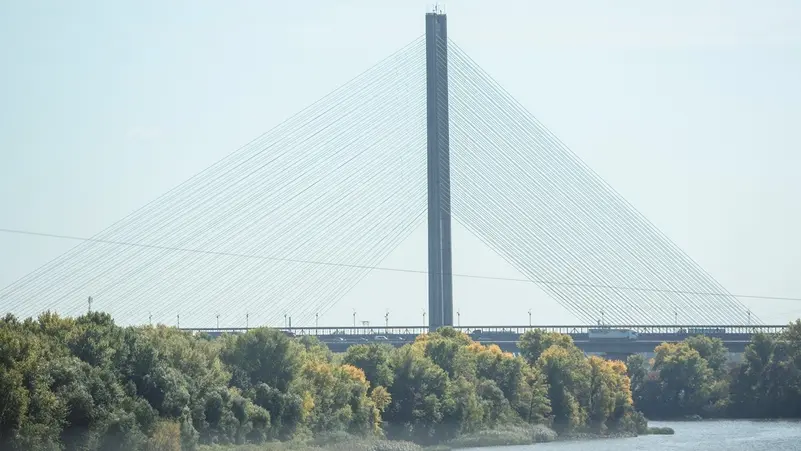
Ukraine has begun installing protective nets on Kyiv bridges for the first time after Russian drone attacks repeatedly forced crossing closures and produced gridlock across the capital. Large nets were observed along the sides of the North Bridge on Tuesday, October 6, marking a visible shift in how the city is protecting transport infrastructure used by roughly three million residents.
The installation follows attacks on river crossings that began the previous week. Traffic has been suspended repeatedly as authorities responded, turning disruption at individual bridges into delays across the wider road and public-transport network.
Similar barriers have been widely deployed around transport routes near front-line areas in eastern and southern Ukraine. Their arrival in Kyiv shows a passive counter-drone measure moving into major capital infrastructure more than four and a half years after Russia began its full-scale invasion in February 2022.
Bridge closures spread delays through the city
Kyiv depends on eight main road and rail bridges to connect communities and move workers, goods and public transport across the Dnipro River. The bridges collectively carry about 500,000 vehicles a day, according to BBC reporting on the recent attacks and restrictions. That concentration of traffic explains why even a temporary closure can have consequences well beyond the affected crossing.
When one route becomes unavailable, traffic shifts toward the remaining crossings. Those alternatives must absorb vehicles and passengers they were not handling moments earlier, while buses and other services can be delayed by the same congestion. Repeated closures make that pressure harder to manage because operators, businesses and commuters cannot rely on a stable crossing schedule.
This is a network-resilience problem rather than simply a question of whether a bridge remains standing. A crossing can continue to exist structurally while restrictions, inspections or repair work sharply reduce its practical capacity. The recent gridlock demonstrates that keeping traffic moving is itself an essential operational objective.
A passive layer with limited confirmed scope
Protective netting is a physical barrier, meaning it does not depend on electronic detection or an airborne interception to stand between a small drone and protected infrastructure. At a high level, that makes it a passive layer that can supplement other defenses. The Kyiv installation does not, however, establish how effective the nets will be under different conditions or whether they will prevent future closures.
No confirmed citywide installation scope, completion schedule or performance result has been announced. It is therefore too early to conclude that all eight principal crossings will receive nets, that the barriers will cover every relevant section or that traffic interruptions will decline immediately. The observed work confirms an operational change, not a completed protective system.
The barriers also introduce ordinary infrastructure-management considerations. Equipment placed around an active bridge must coexist with traffic operations, inspection access and maintenance, while remaining serviceable in an exposed outdoor environment. Those requirements matter because a protective measure has to remain reliable without creating an unacceptable burden for the transport asset it is intended to support.
The timing reflects a broader rise in pressure on the capital. An AFP analysis of ACLED conflict-monitor data found that Kyiv was experiencing an intensity of Russian attacks not seen since March 2022. Mayor Vitaly Klitschko separately described strikes on bridges and energy infrastructure as “tearing Kyiv apart” and called for the capital to operate on a war footing. His language was an attributed assessment, not an independent technical finding.
Kyiv’s bridge nets now extend a front line style protection concept to infrastructure at the center of a major city. The decisive measure of the project will not be how visible the barriers become, but whether the protected crossings can stay available more consistently when the transport network is under pressure.
| More aerospace and engineering stories, right in your MSN feed. Follow AMI on MSN |
By Stephen Wallace — Editor for AMI’s aerospace integration and unmanned mobility coverage, focused on drone manufacturing, VTOL systems, autonomous networks, and air-ground mobility links.