About 60 Paid-For Patriot Missiles Reportedly Blocked From Ukraine Transfer
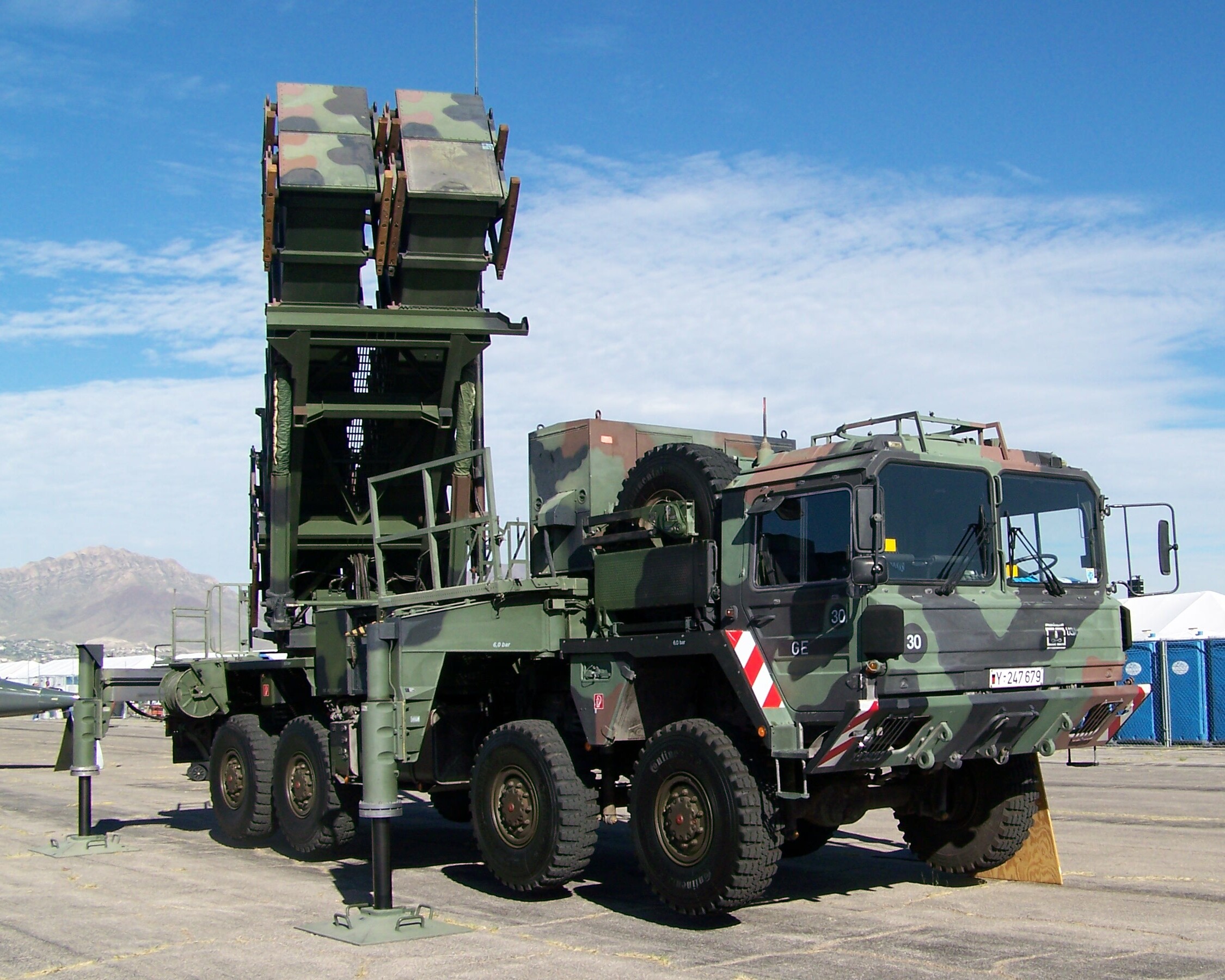
About 60 Patriot air-defense interceptors allocated to Ukraine reportedly remain unavailable because the required U.S. transfer approval has not been issued. Some of the American-made missiles are already held in European arsenals and are being financed by Ukraine’s Western allies, according to a November 24 Reuters account of Financial Times reporting. Reuters could not independently verify the report, and the Pentagon did not immediately answer its request for comment.

The unresolved authorization turns what appears to be a straightforward logistics job into a readiness bottleneck. Funding, allocation and physical proximity do not by themselves make a U.S.-origin interceptor transferable. American approval remains a required link between a missile sitting in an allied inventory and its delivery to another country.
Four scheduled batches remain uncleared
The reported backlog combines two Patriot interceptor types. Ukraine was scheduled to receive eight PAC-3 interceptors in September, 10 in October, 10 in November and 12 in December. Those four batches total 40 missiles, and none has reportedly been approved for transfer. Approximately 20 older PAC-2 interceptors have also been allocated but remain awaiting authorization.
That distinction is technically relevant. PAC-3 interceptors are described in the reporting as Ukraine’s primary Patriot defense against ballistic missiles, while PAC-2 is an older member of the wider Patriot family. The delayed package is therefore not a single uniform lot: it includes different interceptor generations intended to replenish an established air-defense system.
The reported hold-up has been attributed to Defense Secretary Pete Hegseth, who has not yet approved the transfer. A Pentagon spokesperson told the Financial Times that U.S. policy on support for Ukraine had not changed. A Pentagon official also said the department continued pursuing several efforts to accelerate transatlantic industrial cooperation on Patriot with European partners and Ukraine.
Why missiles in Europe still need Washington
U.S. controls continue after an exported defense article reaches its original buyer. The Defense Security Cooperation Agency’s security-assistance rules state that purchasers and grant recipients may not transfer title or possession of a defense article to another country without prior consent from the U.S. Department of State. Those retransfer restrictions explain how missiles funded by allies and stored outside the United States can remain unavailable to their intended recipient.
The process protects sensitive technology, preserves end-use controls and lets Washington review where U.S.-origin military equipment ultimately goes. Operationally, however, it means an approval queue can become as consequential as manufacturing capacity or transportation. An interceptor already built and positioned in Europe still cannot enter Ukraine’s inventory until the administrative chain is complete.
The scale is meaningful for replenishment. Ukrainian President Volodymyr Zelensky has said Russia launches between 30 and 40 ballistic missiles during each large-scale assault. Using that stated range only as a measure of demand, a backlog of about 60 interceptors is smaller than two missiles for every ballistic missile across two attacks of that size. Actual defensive requirements depend on the attacks and how air-defense commanders employ the available systems, but the comparison shows why dozens of delayed rounds can affect planning.
Production expansion cannot solve an approval delay
The Patriot supply problem also has an industrial side. Northrop Grumman announced a $1.6 billion order in November to expand production of solid rocket motors and ignition-safety devices for PAC-3 Missile Segment Enhancement interceptors. The company said the multi-year work is intended to accelerate deliveries to U.S. and allied forces.
More factory capacity addresses the long-term constraint: how many interceptors the supply chain can build. It does not release completed rounds caught in a transfer process. Production and export authorization are separate gates, and increasing output at propulsion plants cannot substitute for government consent to move missiles from one national inventory to another.
Ukraine is separately awaiting Pentagon approval to establish domestic Patriot-interceptor production lines. That initiative would still involve U.S. authorization because it concerns controlled American defense technology and licensed production. Meanwhile, Washington has reportedly cleared a separate backlog of missiles for the Norwegian-designed NASAMS air-defense system, with those weapons now said to be on their way.
The next material change will not be another funding pledge or factory expansion. It will be formal clearance of the four scheduled PAC-3 batches and the roughly 20 PAC-2 interceptors approval that would convert about 60 allocated missiles from allied inventory into usable replenishment.
| More aerospace and engineering stories, right in your MSN feed. Follow AMI on MSN |
By David Whitaker — Associate editor for AMI’s aerospace and drone systems desk, translating flight systems, aircraft programs, spaceflight, and UAV developments into accessible technical stories.