

KLM’s First Airbus A350 Arrives, but 34 Business-Class Seats Remain Blocked
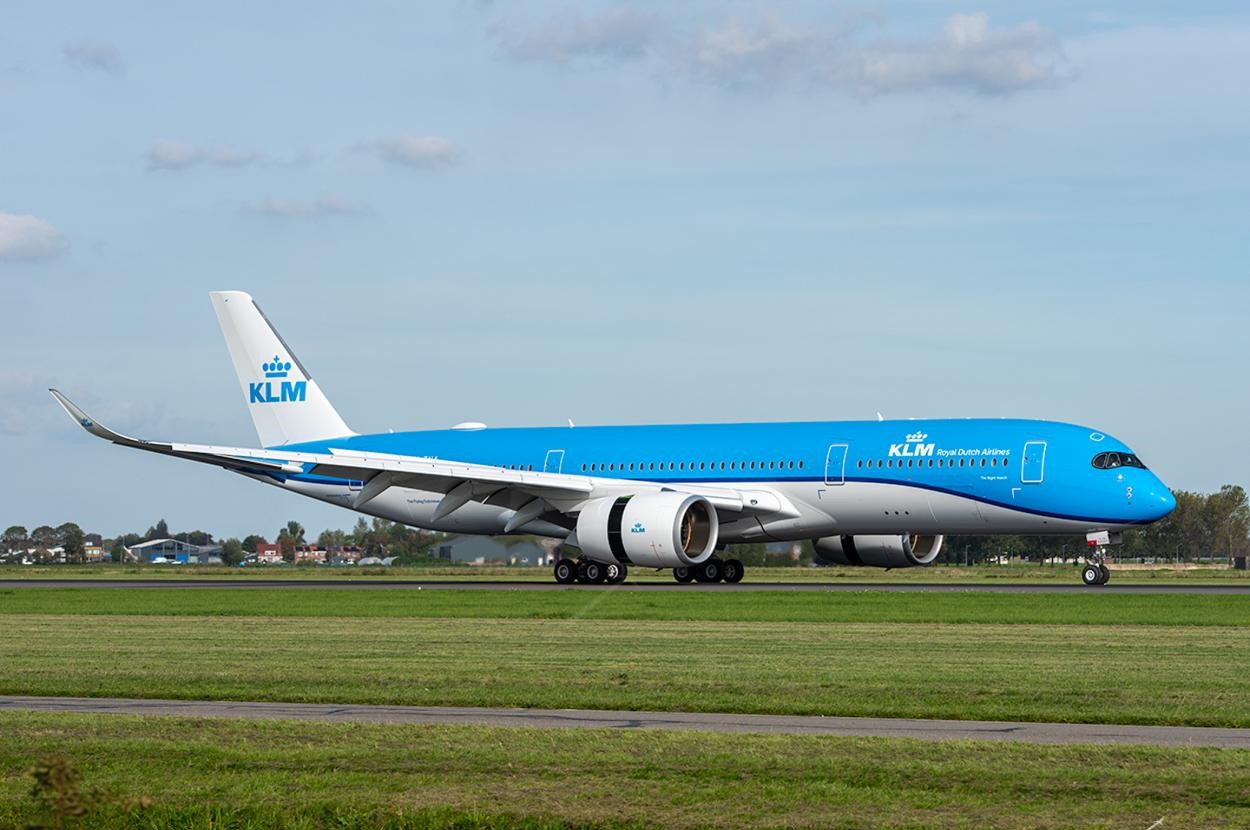
KLM has taken delivery of its first Airbus A350-900, yet passengers cannot book any of its 34 World Business Class seats. The unresolved certification step leaves the newly delivered aircraft with 297 of its 331 installed seats available for sale more than a 10% reduction in capacity and the loss of its entire highest-priced cabin.

The aircraft, registered PH-ZNA and named The Night Watch, arrived at Amsterdam Airport Schiphol following its October 2, 2026 delivery. KLM plans to introduce it on routine long-haul service to Toronto after familiarization work, but its booking system is offering those planned flights without World Business Class availability.
Approved test results are not final certification
The distinction at the center of the delay is easy to miss. According to KLM, the European Union Aviation Safety Agency has approved the business-class seat test results. The airline’s own delivery announcement, however, says that approval allows the certification process to begin. It does not by itself clear passengers to occupy the seats.
That separation reflects how aircraft approval works at the systems level. Delivery confirms that the airframe has reached an important contractual and operational milestone, but it does not necessarily mean every installed cabin feature is cleared for commercial use. A seat installation must satisfy the applicable requirements in the configuration in which passengers will actually use it. Until that process is completed, KLM must treat the 34-seat cabin as unavailable rather than as sellable capacity.
KLM has not announced when the remaining certification work will be finished. That makes the operational effect clear but its duration uncertain. The aircraft can still carry passengers in its other two cabins: 26 Premium Comfort seats and 271 Economy seats. Together, those account for the 297 places currently available for sale.
The same seat platform does not mean the same approval
KLM’s World Business Class cabin is based on the Stelia Opera seat platform, which is also used on Air France A350s. That prior service history does not automatically certify KLM’s installation. Certification applies to a defined configuration, not merely to a commercial product name shared across airlines.
Differences in how a seat is arranged, integrated and documented can require their own compliance findings even when the underlying platform is familiar. Air France’s use of Opera therefore establishes that the seat family can be operated on an A350, but it does not prove that KLM’s particular cabin configuration has completed its approval process.
KLM has attributed the prolonged delay largely to miscommunication in the regulatory process and approval requirements that it says became harder to meet. Those are the airline’s explanations; no regulator documentation provided here independently establishes the cause. It would therefore be premature to assign responsibility or infer a broader safety problem from the blocked cabin.
A fleet-renewal aircraft with constrained capacity
The limitation comes as KLM begins using the A350 to renew its intercontinental fleet and eventually replace aircraft including Airbus A330s and Boeing 777s. The new type is intended to provide a long-term improvement in fuel use, noise and passenger accommodation, but its initial commercial configuration is incomplete while the premium cabin remains blocked.
The financial effect cannot be calculated reliably from the seat count alone. Business-class seats generally command higher fares, but any estimate would require route-specific pricing, demand, load factors, schedule duration and information about how KLM accommodates affected customers. Approval before Toronto operations begin would produce a different result from a restriction lasting into routine service.
For now, the measurable consequence is physical rather than speculative: a 331-seat flagship has been delivered, but only 297 seats can be sold. The next decisive milestone is not another aircraft handover or route announcement it is final certification allowing passengers to occupy those 34 installed business-class seats.
| More aerospace and engineering stories, right in your MSN feed. Follow AMI on MSN |
By Thomas Caldwell — AMI’s senior editor for mechanical and mobility engineering, covering vehicle electronics, systems integration, electrification, chassis systems, propulsion, and safety policy.