

Ukraine Says DOT-Chain Defense Shipped 1.2 Million Systems in Its First Year
More than 1.2 million drones and other systems moved through Ukraine’s DOT-Chain Defense marketplace during its first year, according to figures released by the country’s Defense Ministry on August 18, 2026. The ministry says selected equipment reached military units in less than 24 hours a striking contrast with procurement pipelines that previously took months.
The figures describe a digital procurement network operating at substantial scale, but they remain official Ukrainian claims. No independent audit, category-by-category shipment breakdown or definition of when the delivery clock begins was provided. Those gaps matter when assessing whether the reported speed applies broadly or mainly to products already manufactured, authorized and positioned for distribution.
Units choose equipment while the platform handles administration
DOT-Chain Defense gives combat units allocated funds and lets them select equipment suited to their stated needs. The platform then manages contracting, payment and delivery. It supplements Ukraine’s centralized state-supply system rather than replacing it.
Units can choose among 1,181 products from 300 domestic manufacturers. An online configuration tool also allows users to customize drone specifications before ordering, while a training course for marketplace users has been added to the Army+ mobile app.
This division of work helps explain the claimed acceleration. Selection moves closer to the end user, while recurring administrative functions remain inside a common digital system. Manufacturers gain a more direct route to orders, and units do not have to manage every contract and payment step separately.
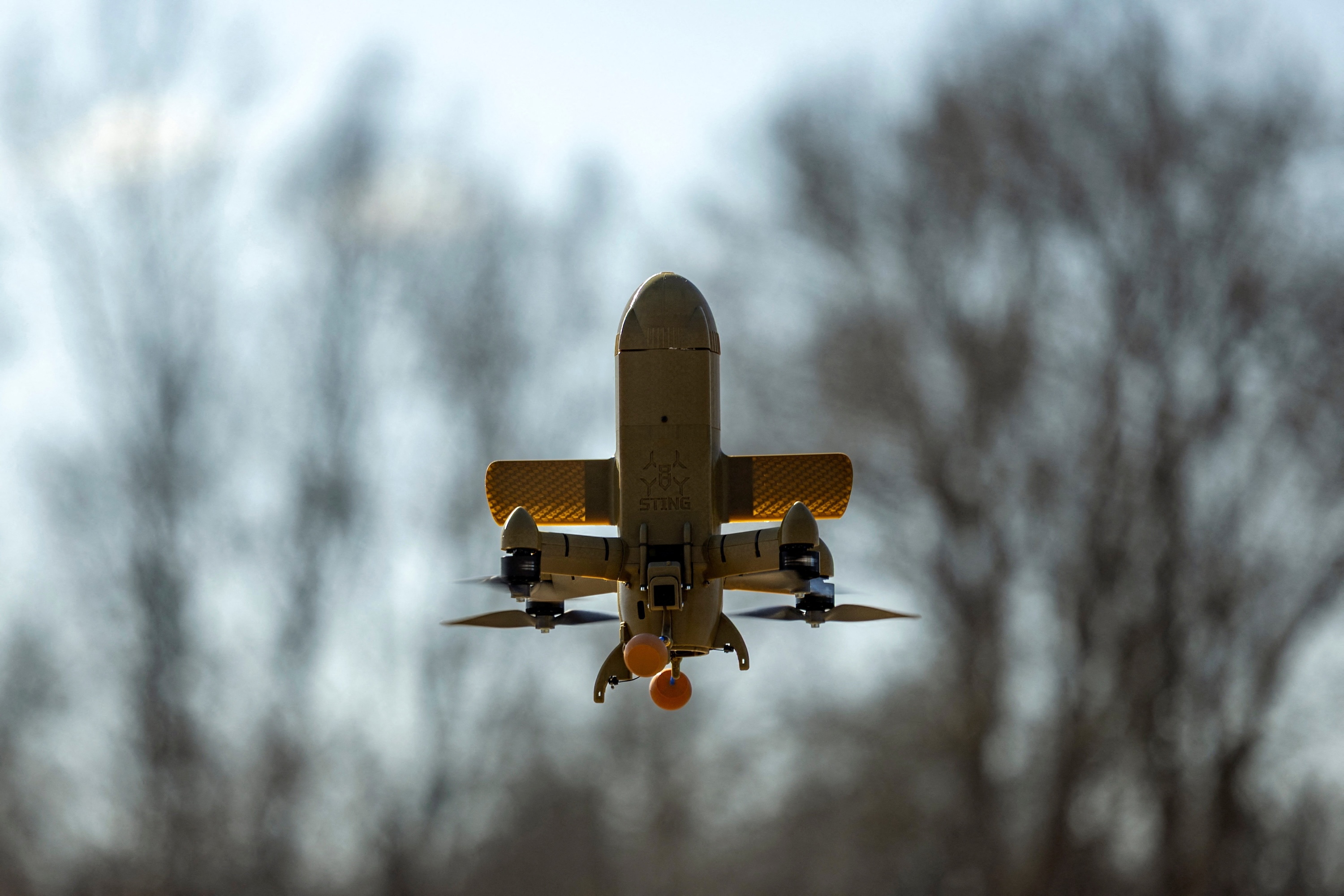
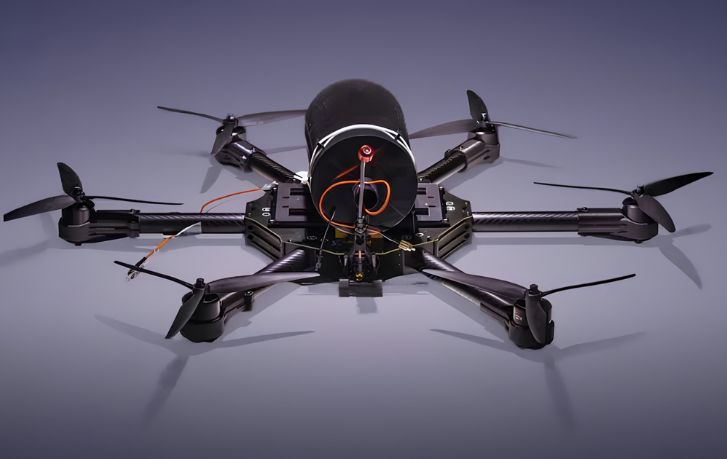
The Defense Ministry said delivery times had fallen “from months to a matter of weeks, and often to days.” It reported delivery within 24 hours for selected electronic-warfare equipment, ground robotic platforms, reconnaissance and bomber drones, interceptor drones, and fiber-optic- and radio-controlled first-person-view drones. Ammunition for unmanned systems reportedly arrived within six days.
Domestic production supports the marketplace’s scale
A catalog is useful only when suppliers can fill its orders. Ukraine’s ministry says domestic manufacturers produce 90% of newly authorized systems, placing local industrial capacity behind the marketplace. It also reported about $8 billion in drone contracts during the first half of 2026, twice the value recorded in the same period a year earlier.
Authorization remains distinct from ordering and delivery. Before an unmanned aircraft can enter formal supply channels, its design, documentation and performance must undergo applicable verification and testing. A description of Ukraine’s drone-approval process identifies technical documentation, expert review and practical flight testing among the steps used to confirm compliance with customer and safety requirements. Faster purchasing therefore does not mean that engineering approval disappears; it means the marketplace is intended to shorten what happens after eligible products and suppliers are available.
The 300-manufacturer base also reduces reliance on a handful of production lines, but a large supplier pool introduces its own control demands. Configuration management, consistent acceptance standards, component traceability and field feedback become more important as units order many product variants from different companies. The published first-year totals do not show rejection rates, repeat-order rates, product availability or how consistently manufacturers met delivery commitments.
DOT-Chain Defense is not Brave1 Market
DOT-Chain Defense should not be conflated with the related Brave1 Market program. More than 400 combat units reportedly use Brave1 Market, where points tied to confirmed battlefield activity can be exchanged for equipment. DOT-Chain Defense instead uses allocated funds and handles the commercial and administrative path from unit selection through delivery.
That distinction is important because the first-year result is fundamentally a procurement and logistics claim, not a measure of battlefield effectiveness. Shipment volume establishes throughput, but it does not reveal reliability, mission success, maintenance burden or whether each delivered system matched its unit’s requirements.
The reported 24-hour performance is therefore best understood as a demonstrated claim for selected categories, not a universal delivery guarantee. The next useful measures would be category-level volumes, the starting and ending points used for delivery timing, order-fill rates and independently reviewed performance data. Until those appear, DOT-Chain Defense’s clearest documented achievement is its reported scale: more than 1.2 million systems routed through a marketplace connecting military demand with 300 domestic manufacturers in one year.
| More aerospace and engineering stories, right in your MSN feed. Follow AMI on MSN |
By Stephen Wallace — Editor for AMI’s aerospace integration and unmanned mobility coverage, focused on drone manufacturing, VTOL systems, autonomous networks, and air-ground mobility links.